Vinyasa Yoga Shoulder Pain
Vinyasa Yoga is an excellent method to strengthen and balance the body, but some aspects of practice can also cause some imbalances if we aren't careful.
In most Vinyasa sequences, Chaturanga is often practiced where we come down into a low plank position and transition between up dog and down dog. This is especially common in Ashtanga Yoga, for example, and is an excellent movement to build strength in the shoulders, serratus, upper back and the core of the body, which provides stability and upper body strength.
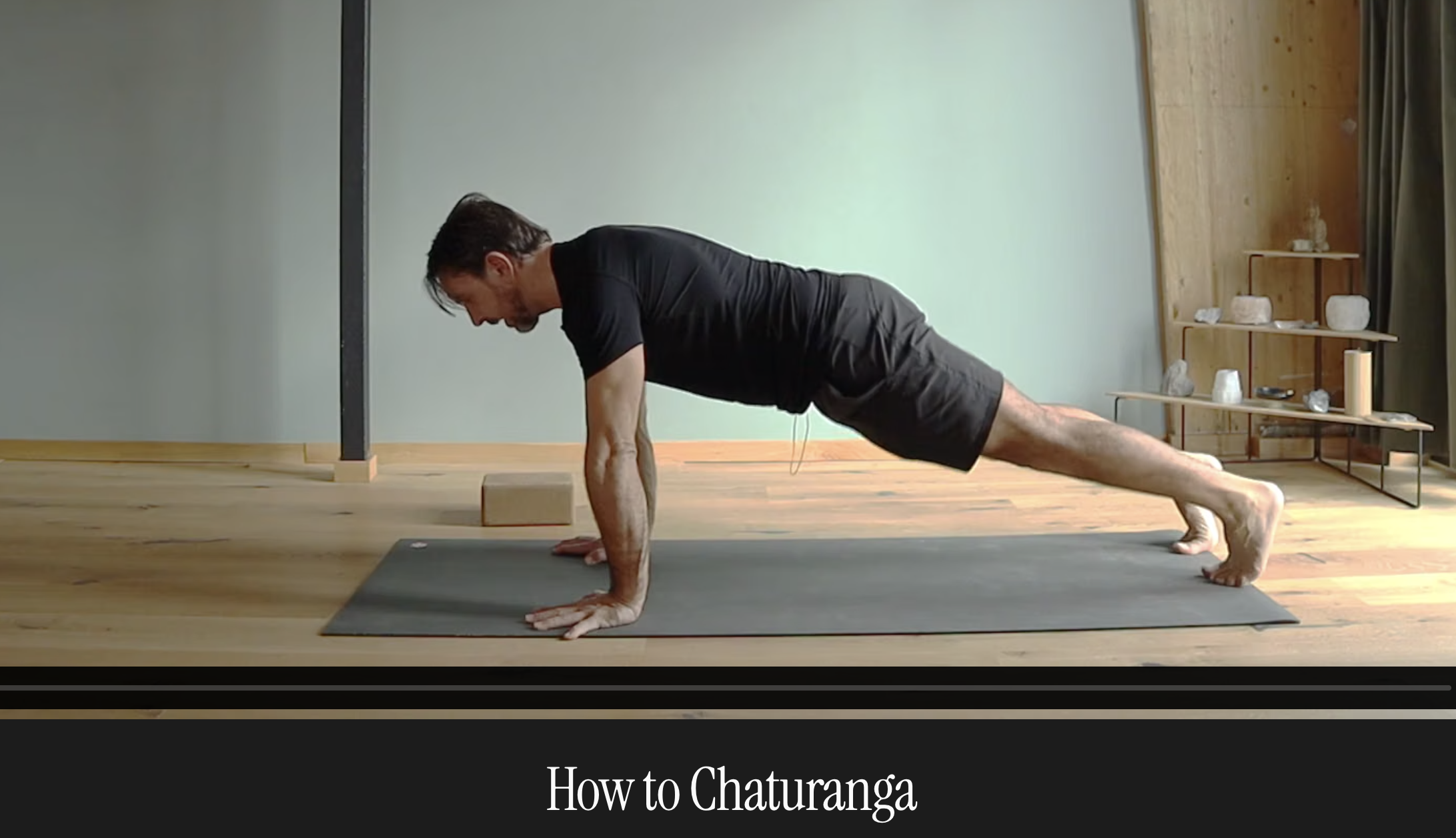
Developing strength in Chaturanga
What I have seen as a teacher and as a practitioner is that if the front side of the body and upper chest and shoulders become too dominant, and aspects of the rear of the shoulder are underdeveloped somewhat, students can suffer from shoulder pain, especially in the rotator cuff.
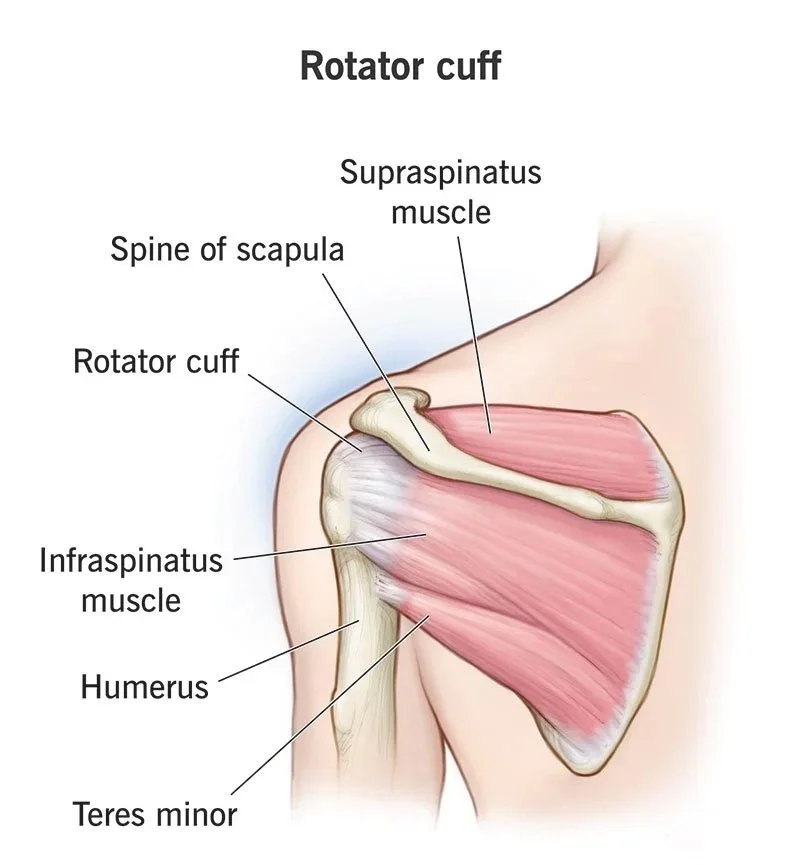
The rotator cuff
The rotator cuff is a group of four muscles and tendons (supraspinatus, infraspinatus, teers minor, and subscapularis) that stabilize the shoulder joint and help you lift and rotate your arm.
We can feel pain in this area for many different reasons, but when we have a muscular imbalance as described earlier, this pain can be very uncomfortable and limit our range of motion. Common symptoms include:
Dull ache at the rear of the shoulder that feels worse at night when sleeping.
Pain reaching back behind you.
Limited range of motion lifting the arm over the head.
Generally stiff pulling the arm across the chest.
Pain when lowering down into a press up position.
I would say a common symptom with this kind of imbalance is when in bed at night. Low hormone levels, lack of movement, drop in cortisol, reduced blood flow, and quiet surroundings make nighttime pain feel much worse, and this is a clearer sign that we aren’t dealing with any joint issues.
When performing arm balances, for example, we build up strength in the deltoids, serratus, pectoralis major and latissimus dorsi. If these become too dominant, the antagonist muscle groups run into problems and we start to experience pain.
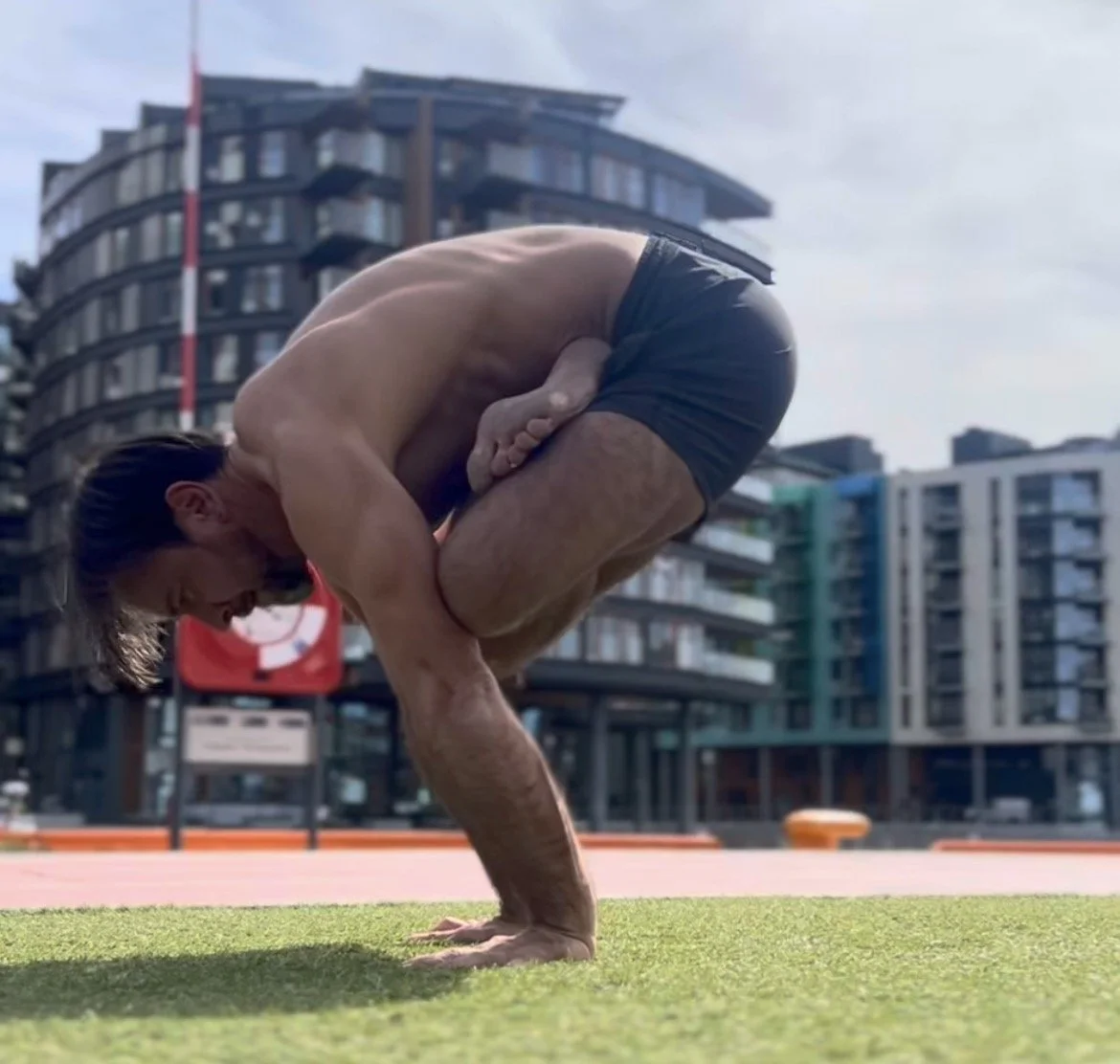
Strengthening the front side of the body.
This is something I have observed personally and when students are learning the arm balance postures in the third series of Ashtanga Yoga. This sequence is very demanding on the muscles in question and as we develop the strength to work through these asanas which are grouped together, it can develop the imbalances at the rear of the shoulder.
The good news is that this is not serious and without any damage to any tissue or joints. The body is telling us something is not right and needs some change. Rest is not the answer here, although some students will feel some relief by backing off of arm balances, but what we need to do is to strengthen the rotator cuff, and specifically in a certain plain of motion.
Some relief can be found from massage and trigger point therapy, by releasing tension in the lats and back of the shoulder. This can help stimulate blood flow to the area to release tension as shown in an example below.

Releasing tension in the lats.
What we need to do is load and strengthen the supraspinatus, infraspinatus, teres minor, and subscapularis to the point of failure. I would say performing the following exercises every day: 3 to 4 sets and to failure, which will depend on the weight.
I have seen the best results using a 3kg weight, 4 sets and 12 reps daily.
We begin lying on our side with the elbow tucked tight to our waist, holding the weight palm down.

3kg weighted rotations to strengthen the rotator cuff
From here we take the weight up vertically to our maximum range and contract strongly the rear of the shoulder at the top.
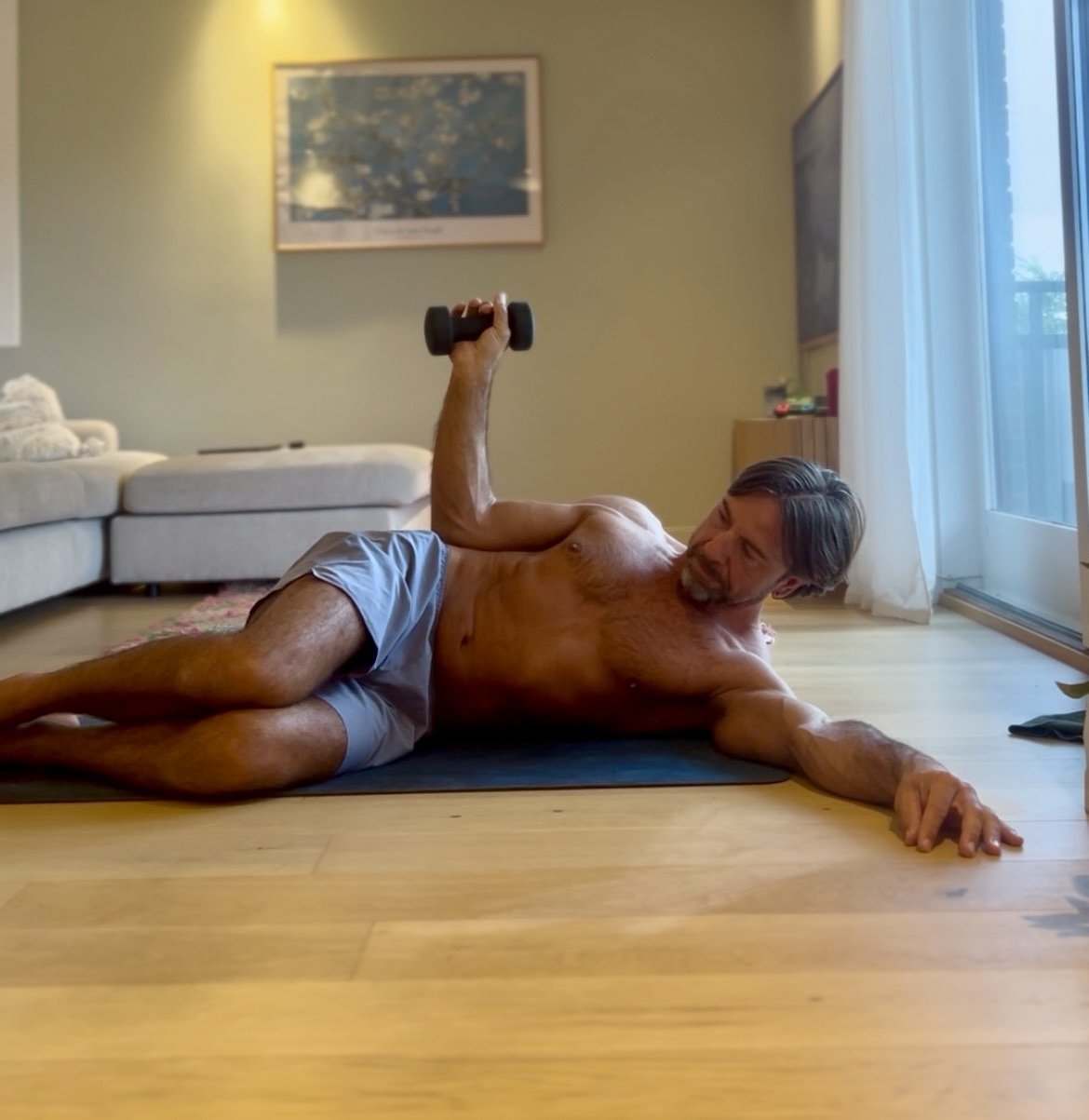
Full range contracting at the top
What you want to do is lower the weight back down very slowly, performing a negative motion. This will help strengthen the rotator cuff.
Attempt to perform 12 repetitions for 3 to 4 sets, but most likely by 8 or 9 the muscles will fatigue. This is actually what we want to build strength.
There are other methods using rubber bands, but I have personally seen the best results as shown above.
Usually within a week or two of these exercises students start to see a noticeable change in reduced pain and improved mobility.
Lastly I will say that pain in the body is often thought of as tightness or if something has torn. Usually in my experience is is more often than not from weakness and strong imbalances, which is why isolated stretching doesn’t work. Students need a whole body system of yoga that addresses these imbalances.