Are you ready to begin Intermediate Series?
A question that often comes up for Ashtanga Yoga practitioners is when are they ready to start the second series. The answer to this is complex and, in my opinion, is very specific to each individual student.
An answer students will usually receive is that you can start the second series when you have completed the Primary Series and can stand up and drop back in Urdhva Dhanurasana.
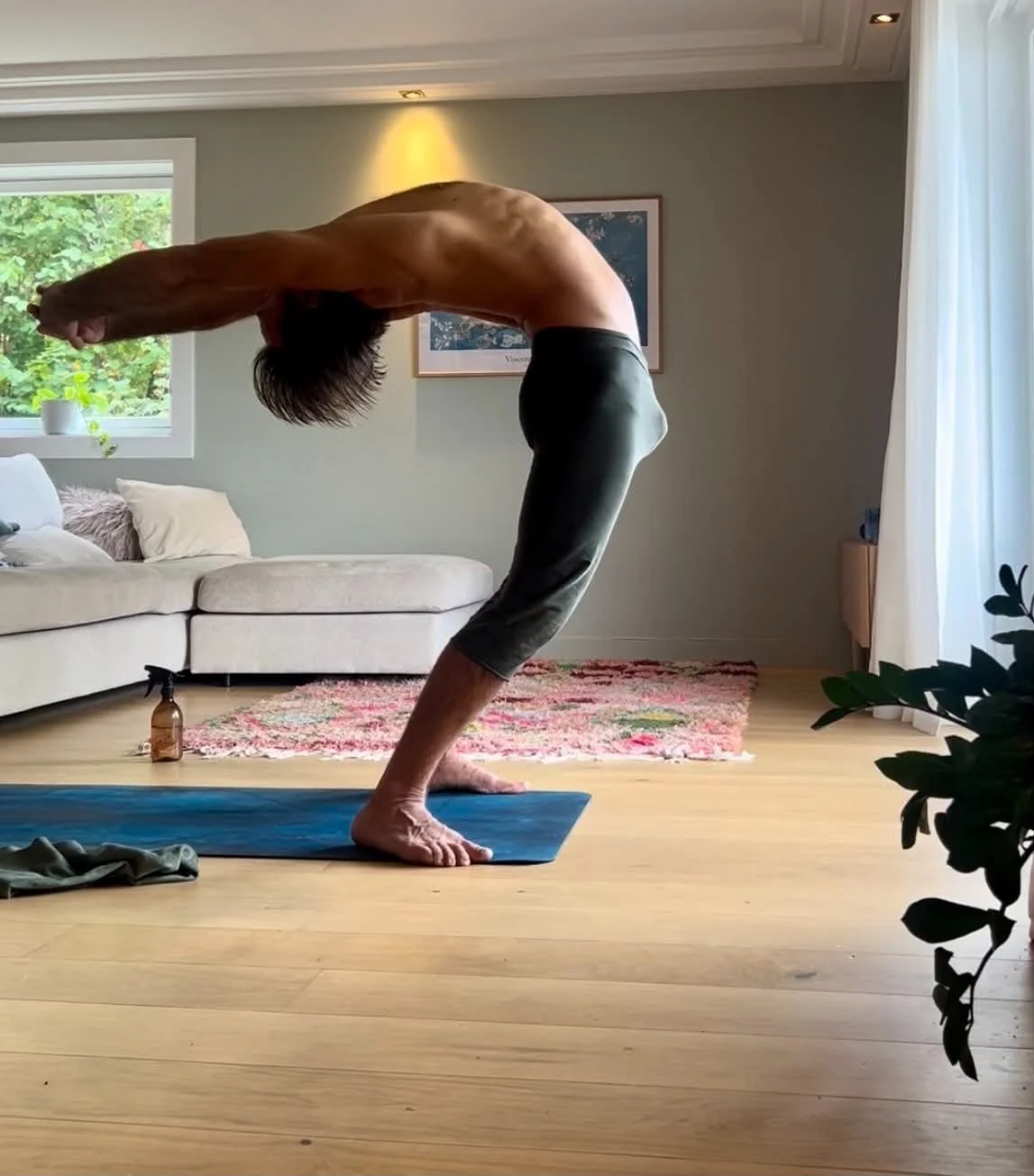
Drops backs in Ashtanga Yoga
In my opinion, as a practitioner who learned this transition in its strictest form, it is incorrect. Incorrect in the sense that for most practitioners to learn drop backs without any other back bends after Primary Series doesn’t help a large proportion of students.
I would say, as a teacher, around 10 to 20% of my students could learn this transition without any other extra help, and the rest most definitely need more help and to learn ways to open their back, shoulders and hip flexors to prepare for drops backs so they understand the mechanics better and strengthen their posterior chain of muscles and gain the necessary length in the front side of their body.
Practicing Primary Series and drop backs for those 80% without any extra help leads to pain and potentially injury. Most definitely, it hindered me in my progress and I can’t see any benefit from it looking back, other than to follow certain dogmatic ‘rules.’
As a teacher, I decided to teach this differently.
I have seen huge benefits from teaching students other ways to prepare their bodies for back bending at the end of Primary Series and less pain and injuries in my Shala. Usually only a few modifications are needed, and it does not take away from the intention or focus of the practice. It helps it, in fact, and gives students more freedom and trust in the practice as it is more pragmatic in nature and less of a top-down approach to adhering to dogmatism.
Aside from drop backs, I would say there are numerous reasons a student might work in Primary Series for a longer period before moving into Intermediate Series. A few examples that would need to be embodied could be:
A deep and flowing established Ujayi breath that is synchronised with the sequence.
A competent effort to lift and jump back, so the philosophy of Banda is beginning to be established.
Concentration and focus within the student towards the series.
Control within the Vinyasas and a full memory of each asana.
A steadiness and calmness in the practitioner that is felt and seen in their practice.
Asana competency so that practice is safe and not injurious.
This is a brief summary and, in reality, it is a much more personal exchange as a relationship is established between the teacher and student and an understanding of the students' personality and vibe that goes towards moving further along in the series. The goal is not to overwhelm the student, so that each asana is benefiting the students' practice and life and that they are not taking on too much, causing instability.
Also, the ‘gate keeping’ of postures and a need to perfect asanas has had a negative effect on teaching the Ashtanga Yoga system, where what I believe was a need to control large groups of people in a room led to less personal interpretation of the system defined by each teacher to adjust and change it as they see fit for each individual student, which I believe to be a truer transmission of yoga.
Seeing a student individually and applying changes and edits to each person's practice is more complex and requires more effort and energy towards teaching.
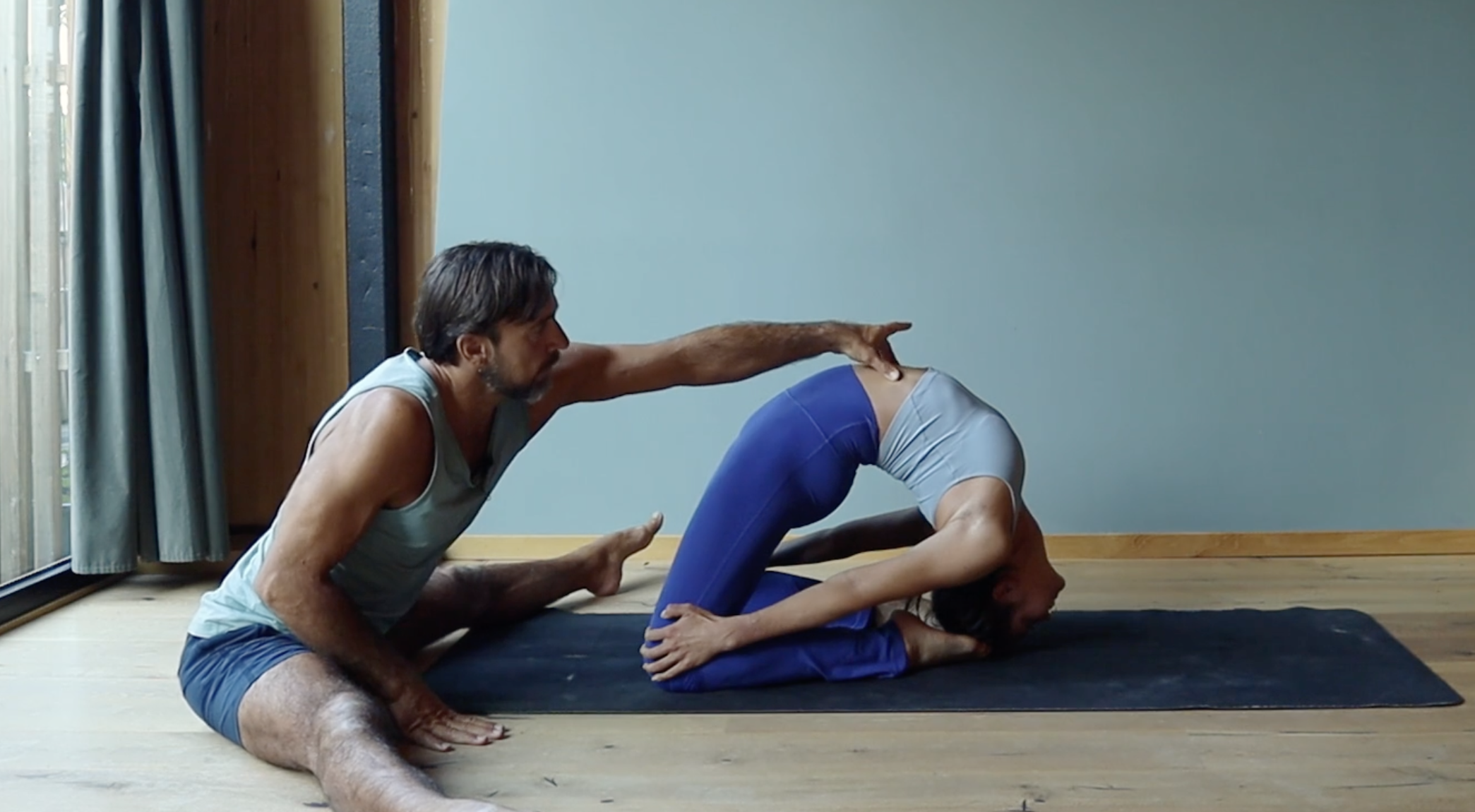
Laghu Vajrasana B
You need to know your student more personally
Taking on Second Series has its challenges and stimulates the nervous system in a completely different way to Primary Series.
Primary Series, by its nature of predominately forward folds (Apanic Postures) is very grounding and calming for most students. It is designed this way to gradually take students into yoga without destabilizing them.
Intermediate Series is the opposite. It has a steady progression to deep back bends (Pranic Postures) followed by deep forward folds and other transitions. This opens students in a way that requires attention and care as each student progresses through the sequence. Their personality and the embodiment of Banda (balancing of opposite energies) are necessary for them to be practiced safely and mindfully.
This approach to Ashtanga yoga comes from a place of care from teachers who understand these transitions well and want the best for their students, which is why a steady approach to practice is necessary and requires an experienced teacher to help students through this metamorphosis.

Changing in yoga
It is very common for students to undergo many physical changes as they learn the system and this coincides in their private lives that play a critical role. Having a good connection to a teacher during this session is essential.
If you are a home practitioner and are looking at the Second Series and are unsure, I would always suggest trying to practice with a teacher to help you through this transition.
If you don’t have access to a teacher in your local area and need help with back bending / drop backs, then I would suggest looking for extra help outside the system. As I said, most students' bodies aren’t prepared enough to learn drop backs after Primary Series and an intelligent approach to aiding this is essential.
I have created my Ashtanga Made Available version of Primary Series especially for this scenario. Adaptations to Primary Series so more care is taken to opening the hips for half the lotus and additions to prepare for back bending without having to move fully into Second Series.
This sequence and my Asana Breakdowns to support this method can be found in The Online Studio, so you learn the mechanics of the movements and can practice these more safely along with a full breakdown of Primary Series and Intermediate Series.
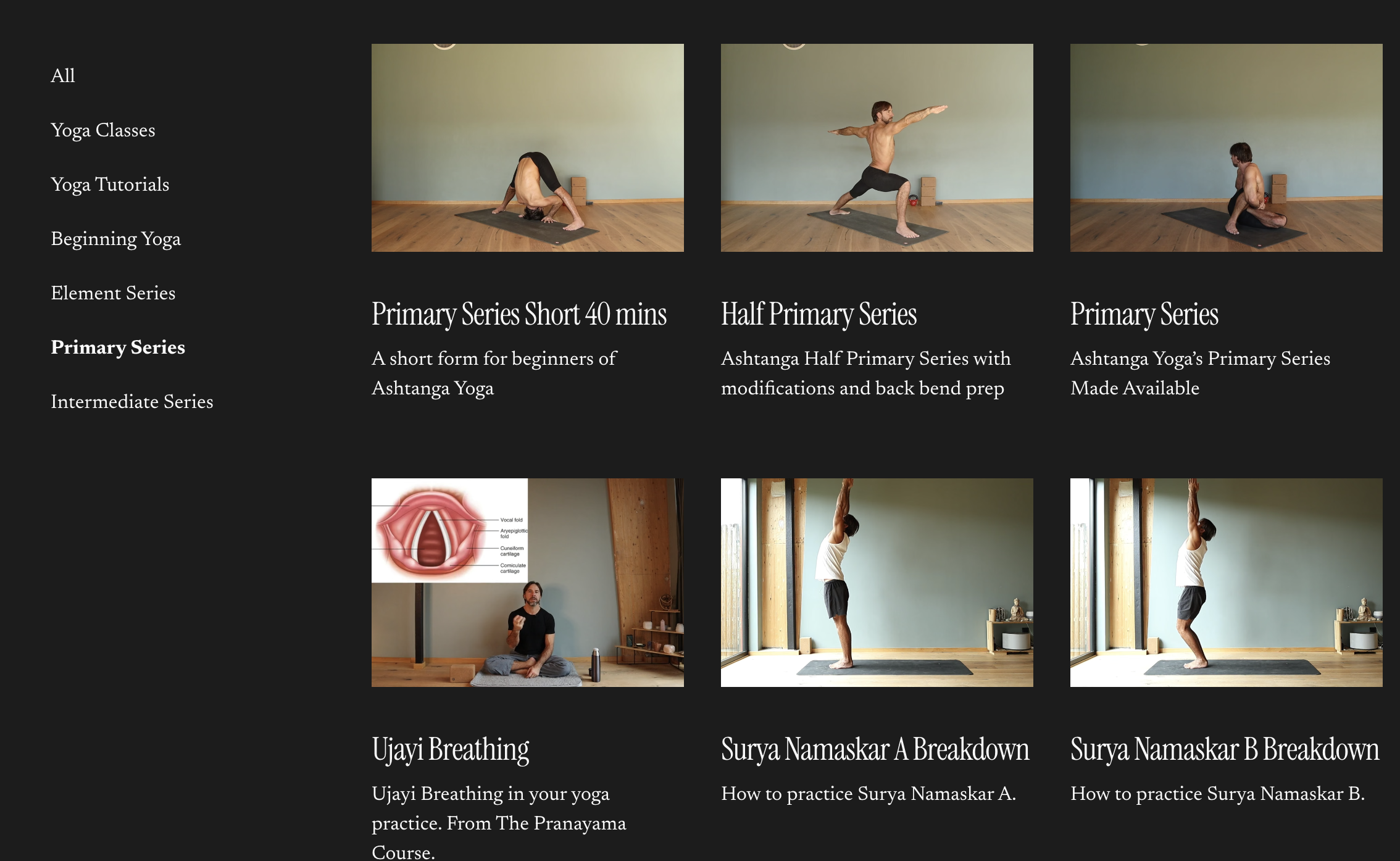
Primary Series Made Available
You also have the option to practice Mysore Style with me live online if you wish to receive personal support.
For a deeper look at Intermediate, head to the following link where I discuss this on my podcast.

Yoga podcast