Starting a yoga practice can often be confusing for new students as there are so many different styles nowadays, and yoga might seem intimidating for some. In this post I’ll give my thoughts on the best practices for new students entering yoga.
Ashtanga Yoga
Mysore style
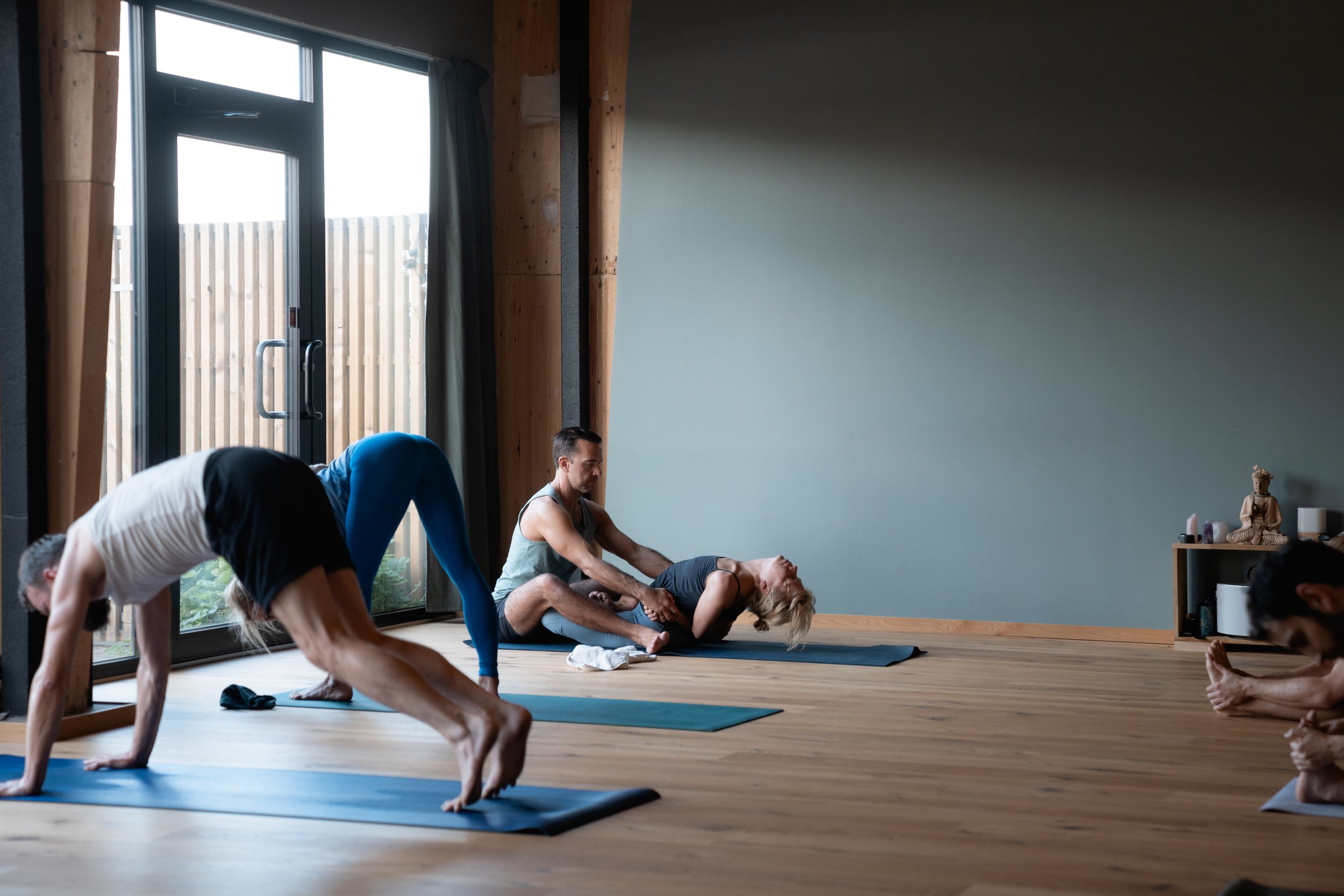
In my personal opinion, if you are looking to start practicing Ashtanga Yoga you should try to find a local shala that has a Mysore Style program. Starting with a home practice can be a good entry into the method, but the Mysore Style of teaching is the only legitimate way to learn the system of Ashtanga Yoga and will give the most benefit to the student.
What I usually recommend is to try some different shalas and teachers and get a feel for the space and that particular teacher’s style and methodology as no teacher or space is the same. This is a very personal thing, and can only be fully understood with trying it out. Usually you’ll know fairly quickly if you have connected with the right place.
The Mysore Style method of teaching is a completely different animal of practice and teaching which is why I have separated it so distinctly in this post. Undertaking a commitment to the system and it’s methodology is something on it’s own.
Other Styles
Other stylers of yoga fall into another category altogether where the format is more common in western culture. That being where a teacher is guiding a class in a ‘led style’ format showing postures and talking students through a sequence. There are so many styles and each student can be drawn to various teacher personalities / spaces / music / no music / chanting / philosophy and soft / dynamism.
I would usually recommend visiting different spaces in the beginning and seeing what you connect with. Start with something shorter, softer and not so often. See whether you like music, lots of verbal instruction or minimal, male or female instructors and a time of day that suits your lifestyle. In the beginning we are mostly looking for some kind of connection that resonates with us. Call it intuition.
Finding the right space is essential
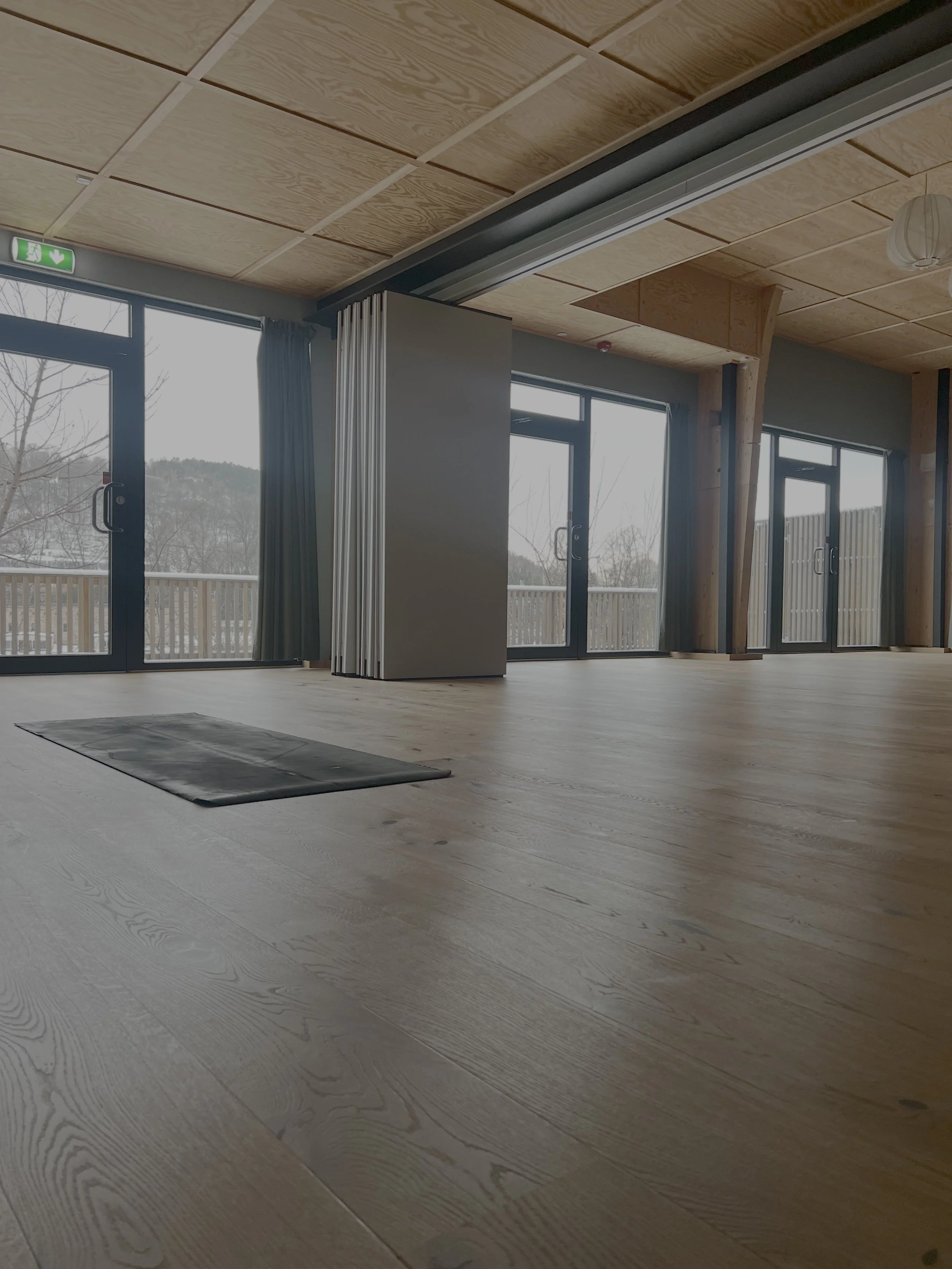
Our space in Oslo
Yoga is for everyone
When you have found a teacher, space and class that fits I would recommend to go slowly in the beginning. Take your time to let the movements slowly integrate and be very vocal to your new teacher about what is going on in your body. It’s a two way relationship and is essential as to not overload your system, especially if you are new to body movement / stretching.
If you are nervous, or feel in anyway inadequte then this is also a challenge. Often new students can feel like that if they go to yoga then everyone is going to be this super flexible athlete and they will feel inferior in some way. This is definitely not the case, as a good studio should have a large variation of body types, ages and abilities. Yoga is for everyone. We need to swallow our pride and test out ego a little in the beginning to start something new. We have all be new to something in out lives. It’s a worthwhile test, so be brave and put yourself out there.
Practicing from home
I personally self practice most of the time and began in many ways like this. It can be a very individual, comforting and introspective space to practice at home and is something I love and enjoy deeply.
What I recommend is to find a teacher and sequence you connect with and setting aside a space and time specifically for this practice period. Often at home we practice in a variety of spaces but it helps a lot to have a ‘sacred’ space in some ways to roll out your mat.
It doesn’t have to be a room or large area, but somewhere that is just for you and you alone. It becomes a ritual and something loved and cherished.
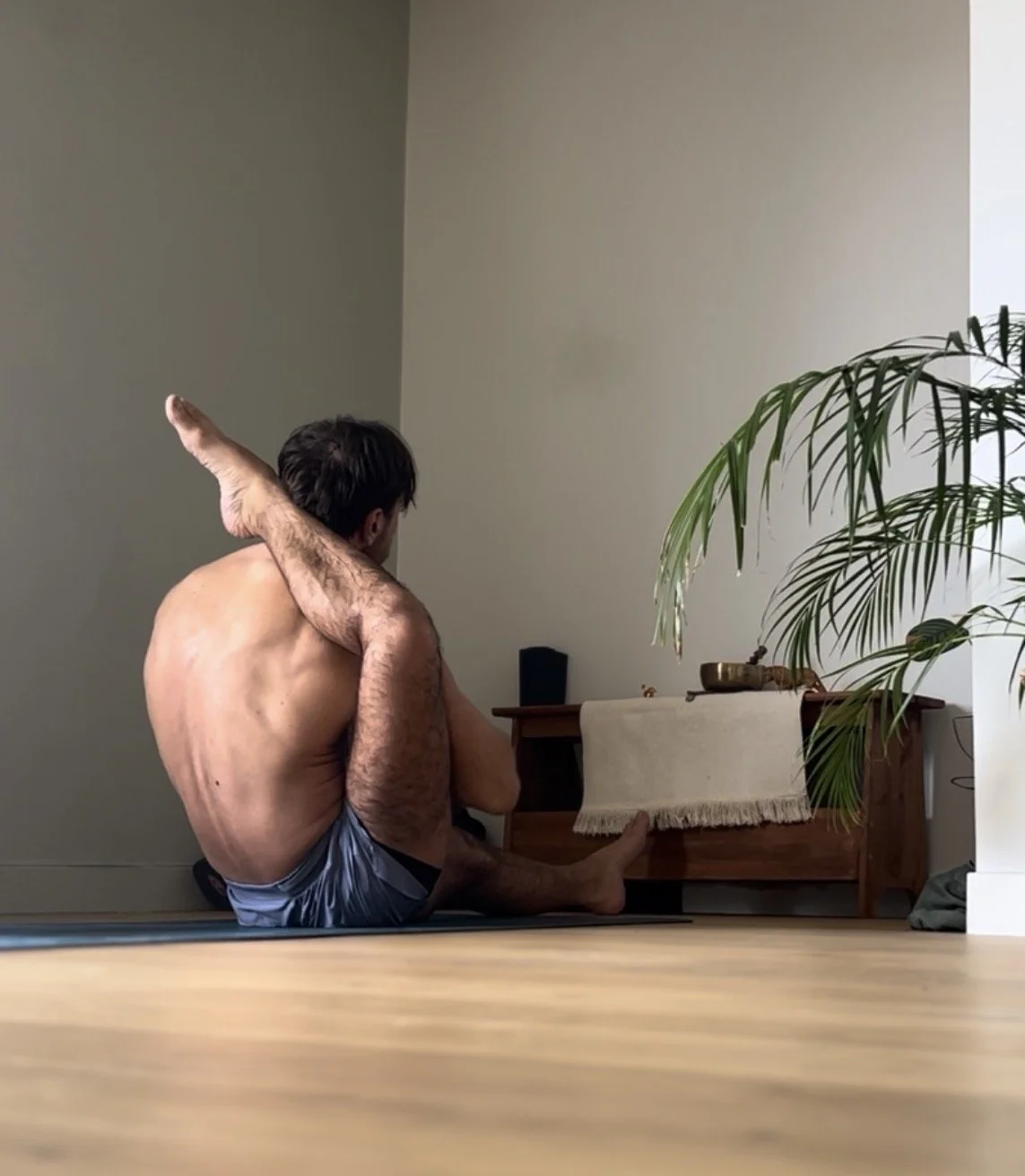
My simple home shala
Start Slowly
When we begin a home practice the most important thing is to not overwhelm the body / nervous system, especially without the direct guidance from a present teacher.
If you are new to yoga, start with a very basic sequence such as my Supine Sequence to get the body used to this way of moving and connecting movements to the breath. This can take some time and there is no rush.

Susanne practicing The Supine Sequence
From there you’ll want a sequence that is intelligently structured to progressively and mindfully open the body so that you aren’t doing too much and the body loosens and gains strength in a thought out way.
My Element Series after years of testing and application is specifically designed to do this. More on The Element Series here:
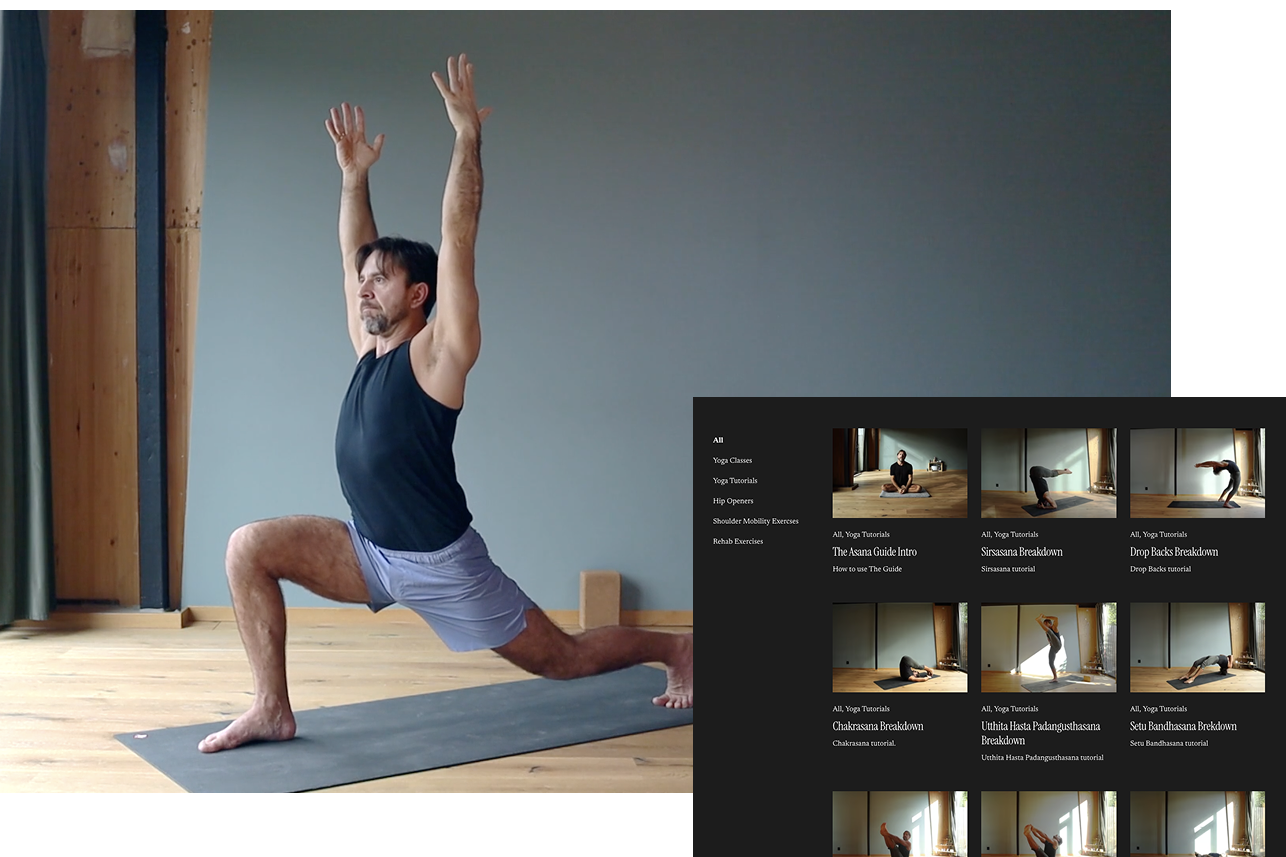
Element Series Vinyasa Yoga
Yoga sequences are designed for a variety of different reasons and intentions, so it is important to find the one that connects with you and what you are looking for in your practice.
When practicing from home you will want a visual aid with the sequencing so you can follow along. Often students will have a laptop next to their mat so they can use this or maybe even on the TV which can be even better to have a larger picture.
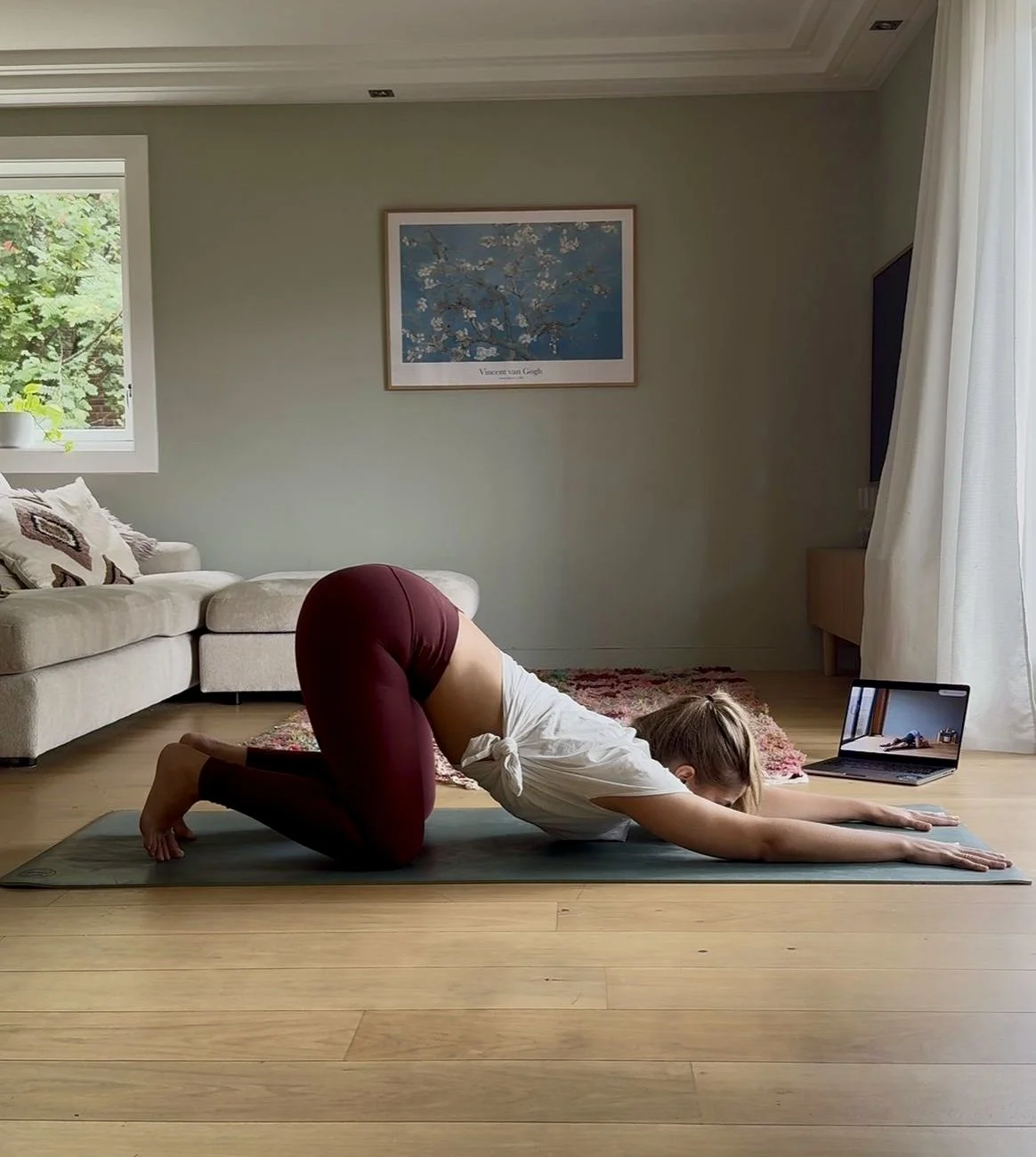
Home practice
As you begin to learn and integrate the sequence you will potentially drop the visual aid as the sequence has been embodied and remembered. This is ultimately what we are looking for so we just refer to audio instructions as the movements are learned.
From this point we now have an established and learned sequence we can drop into whenever we want from the comfort of our home and move freely.
Yoga is a beautiful inward journey that for me and many of my students has been life changing.
If you are new to yoga and would like to start to integrate vinyasa yoga into your life, sign up for my 7 Day Yoga commitment challenge which is free.
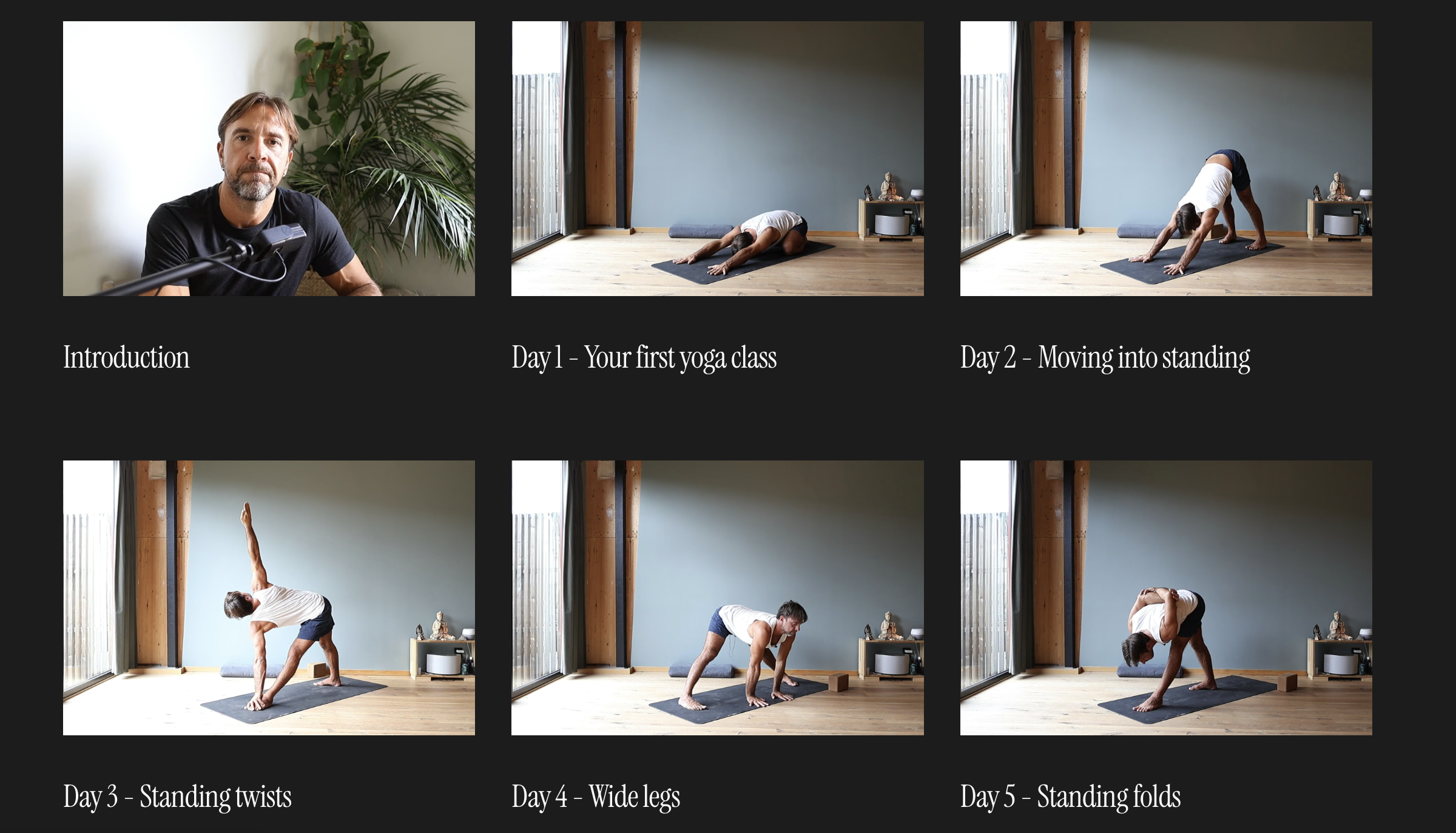
Beginning Yoga