How to jump into Bakasana
One of the challenges in Intermediate Series in Ashtanga Yoga is jumping in to Bakasana. Bakasana B. In this post I’ll give some tips on how to work toward this fun and dynamic asana.
This can be a very challenging jump for many practitioners for a number of reasons and can take some time build the necessary strength and control for it to feel safe and stable.
If you are an Ashtanga practitioner it also has another element of difficulty as it occurs just after a very deep back bend. Kapotasana. These are opposite movements.
Kapotasana being very Pranic in nature
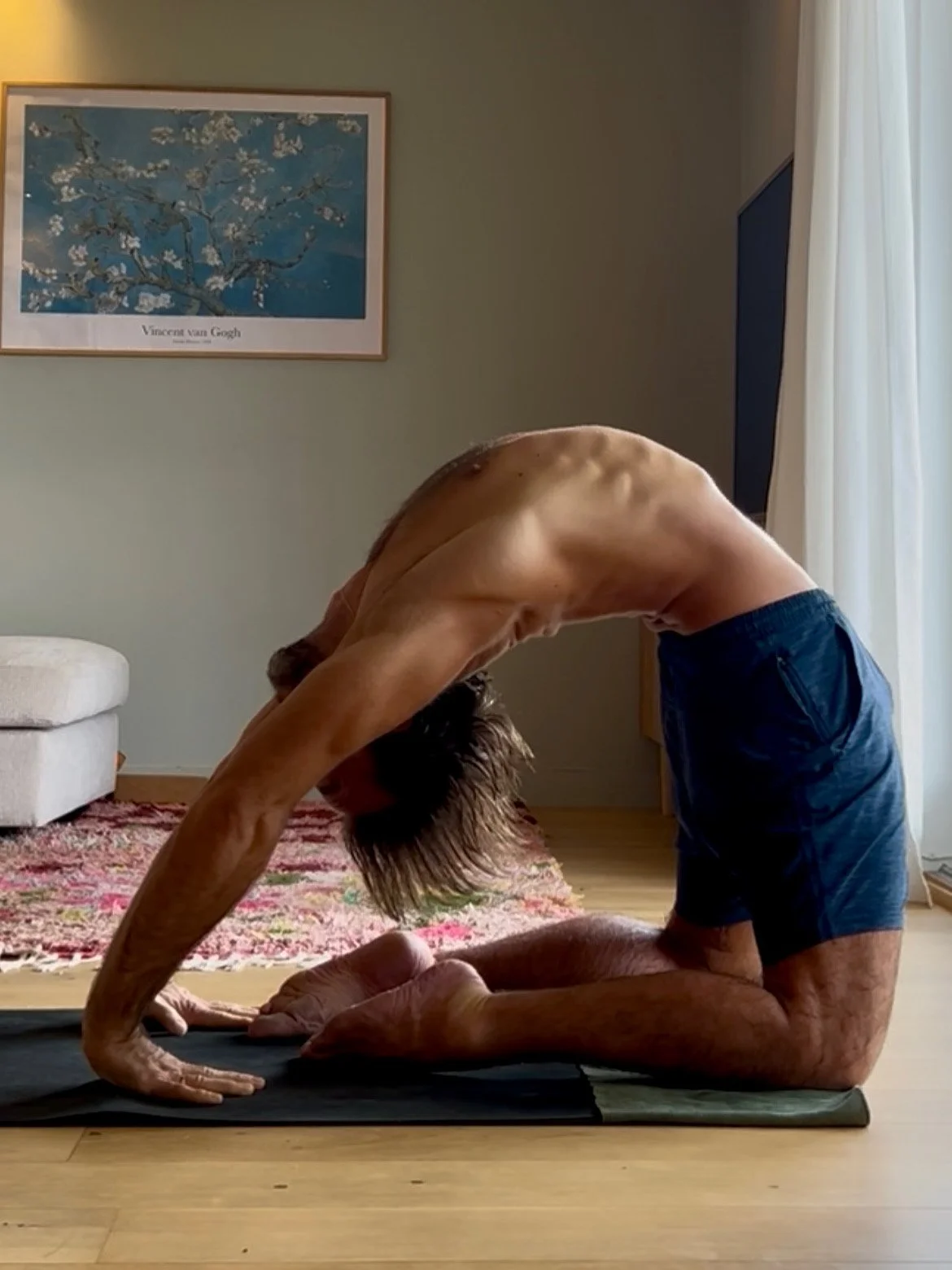
Kapotasana
And Bakasana being very Apanic in nature
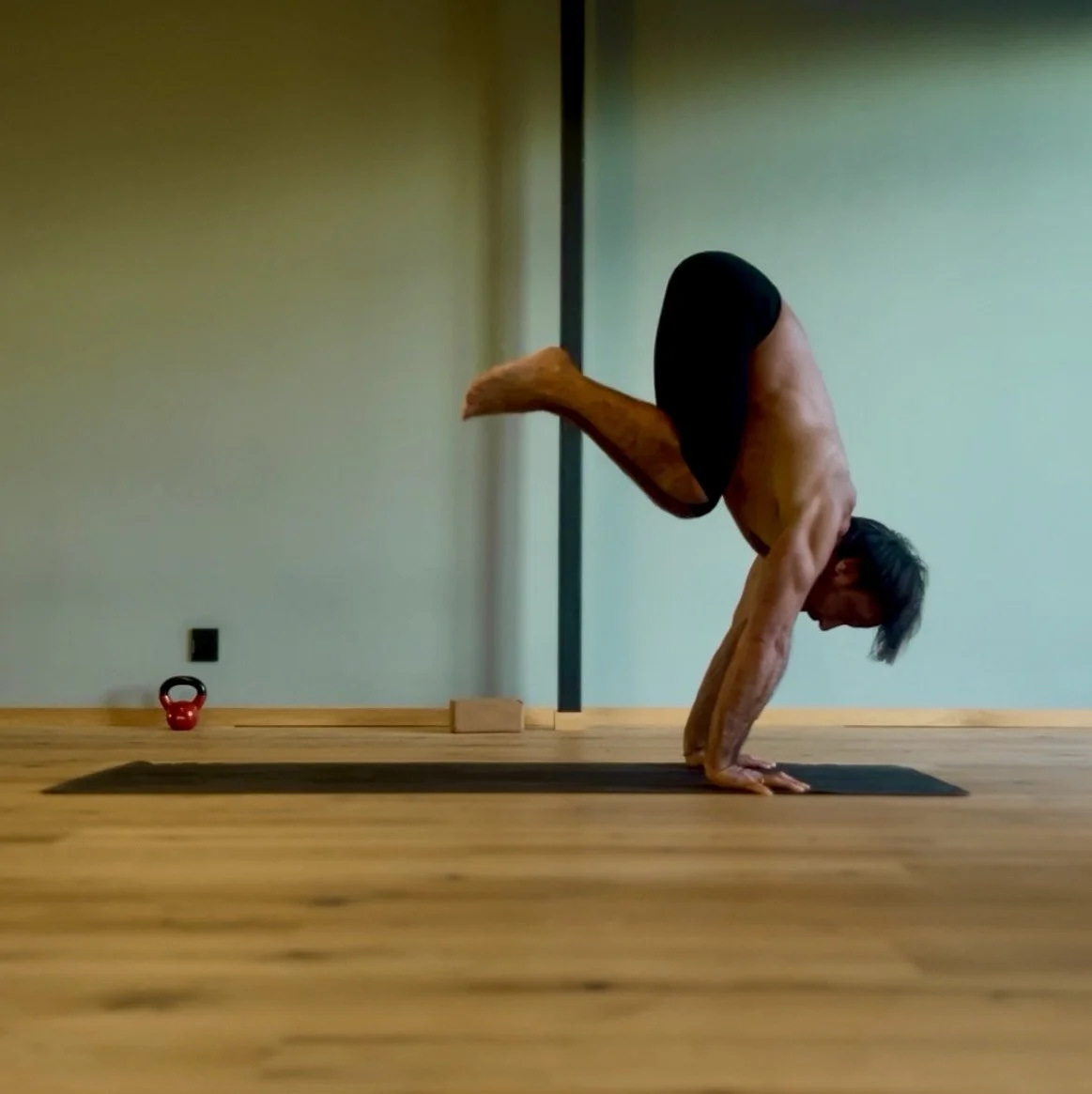
Coming down into Bakasana
These opposites are split with Supta Vajrasana which is a milder back bend from Kapotasana which eases you out of such a deep movement and ‘resets’ you somewhat for the rounding and pressing of Bakasana.
These opposites in Intermediate Series so close to one another stimulate the nervous system in a strong way as Intermediate Series is designed to do, moving from deep back bends into deep forward folds such as Eka Pada Sirsasana.
More on Eka Pada Sirsasana here:
Starting to jump
When we first start jumping we want to begin small. By this I mean with your feet very close to your hands to build confidence and strength.
You need to start to feel the control stemming from your hands and fingers so you learn how to brake to slow the movement down.
Also I would add for Ashtanga practitioners, your jump back and jump through should be fairly established at this point, or at least you have embodied the essence of lifting up and jumping with the correct variations in Primary Series so you are prepared at this point.
More on the jump back here:
Hopping close to the feet
In this first example we start with a small hop into Kakasana, with bent arms. This is more accessible for most practitioners and can be practiced initially to build confidence to shift the weight forward. Just a small amount of lift off to get a feel for it.
Taking the feet back
In the second phase we take the feet back a little to start to get a little air time. Build up to this and really focus on braking with your hands and fingers and feeling the control to slow the movement down. We’re still hopping to Kakasana with bent arms here.
Short down dog
In the third phase we are in a slightly shorter downward dog preparing to jump. This is where we really start to build the necessary control to land higher up on the arms which are still bent.
As the knees start to come up higher on the arms we need to learn how to squeeze our bandhas and core so we can control the movement. Remember your control and slowing down come from pressing down into the floor.
Check out my post on Bakasana for more details:
Students can work here for some time until the necessary control is found.
Jumping with straight arms
This you could say is the full traditional version of Bakasana B. Jumping from down dog, curling like a snake about to strike you jump high up onto the backs of your triceps with control landing as high as you can with the thighs squeezing into the rib cage.
To maintain the position the hamstrings contract very strongly so the whole midline or the body is compressed. Heels to the bum.
From a tuck handstand
There are two phases from a tuck handstand. In this example we are learning how to come down with control from the tuck. Initially this will feel very heavy and to build strength you will land in more of a Kakasana position with bent arms to control the landing. Work here for some time until this feels stable.
For a full breakdown of how to jump into Bakasana, head to the link below as part of the Online Studio.
The icing on the cake
Coming down with control from a tuck handstand into Bakasana isn’t necessarily important for practitioners in the Ashtanga Yoga system, but it is fun and adds another element of control to your practice that helps build strength and coordination for movement patterns later on.
It’s also a nice challenge after Kapotasana to test these opposites of Prana and Apana that I enjoy immensely.
Have fun and work progressively with each step until each one is stable before you move forward.
For more tutorials on jumping check out The Jump Back breakdown.