Preparing for Eka Pada Sirsasana
The leg behind the head postures such as Eka Pada Sirsasana pose a fair amount of difficulty for most students, and in this post I will break down the main restrictions in this movement and some additions to help you open the hips correctly.
From the framework of the Ashtanga system, the body should be fairly prepared for this movement by the time you reach Eka Pada Sirsasana in Intermediate Series. Most forward folds such as the ones in Primary Series should be pretty effortless as well as half lotus / Padmasana, should be fully integrated.
Alongside this, Baddha Konasana, Upavistha Konasana and Krounchasana are a must. The opening of the groin and hamstrings are essential so that the necessary hip flexion is there along side the deep external rotation needed to take the leg behind the head without compressing the low back.
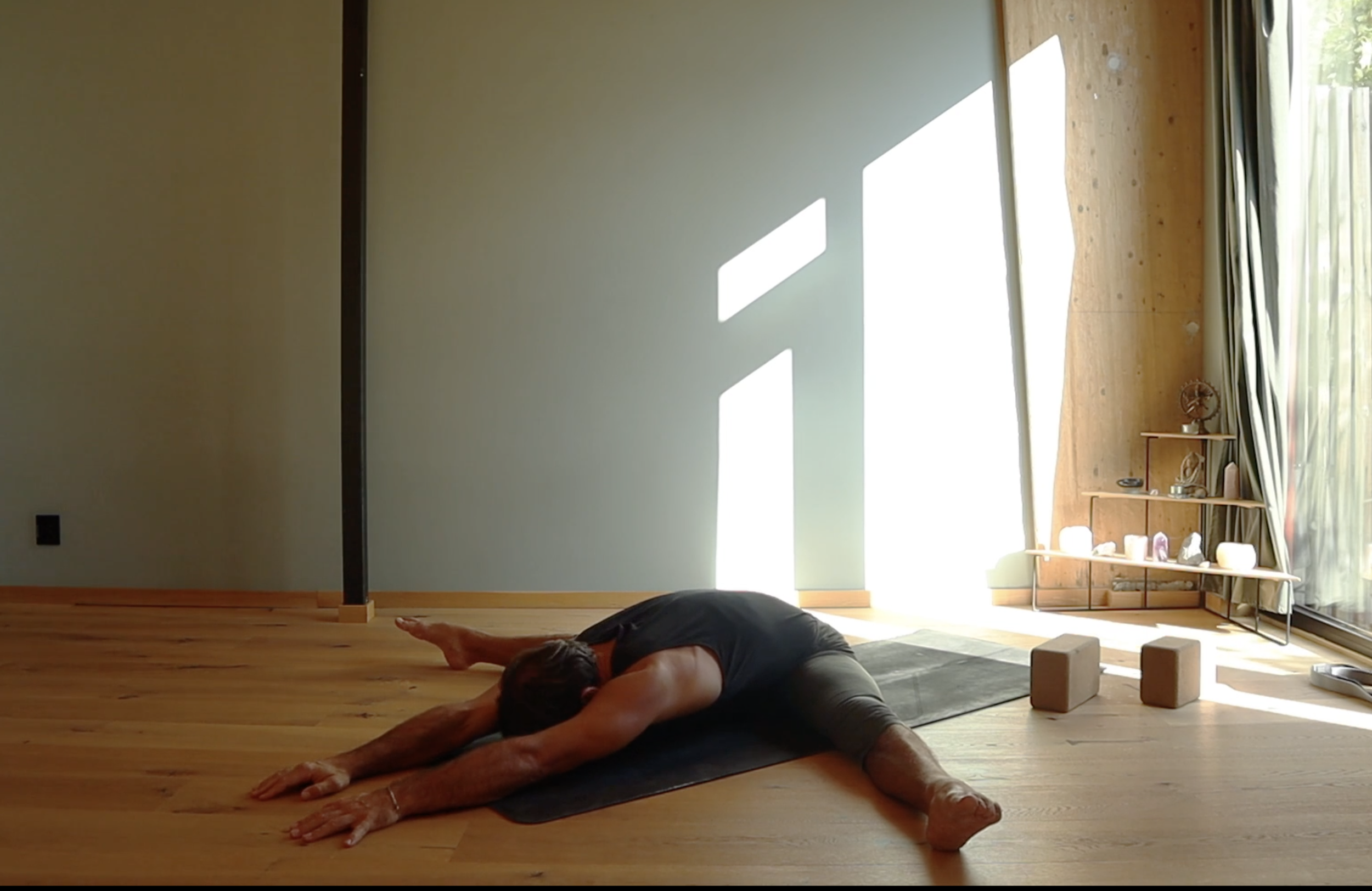
Open adductors and inner hamstring length are necessary for deep hip flexion
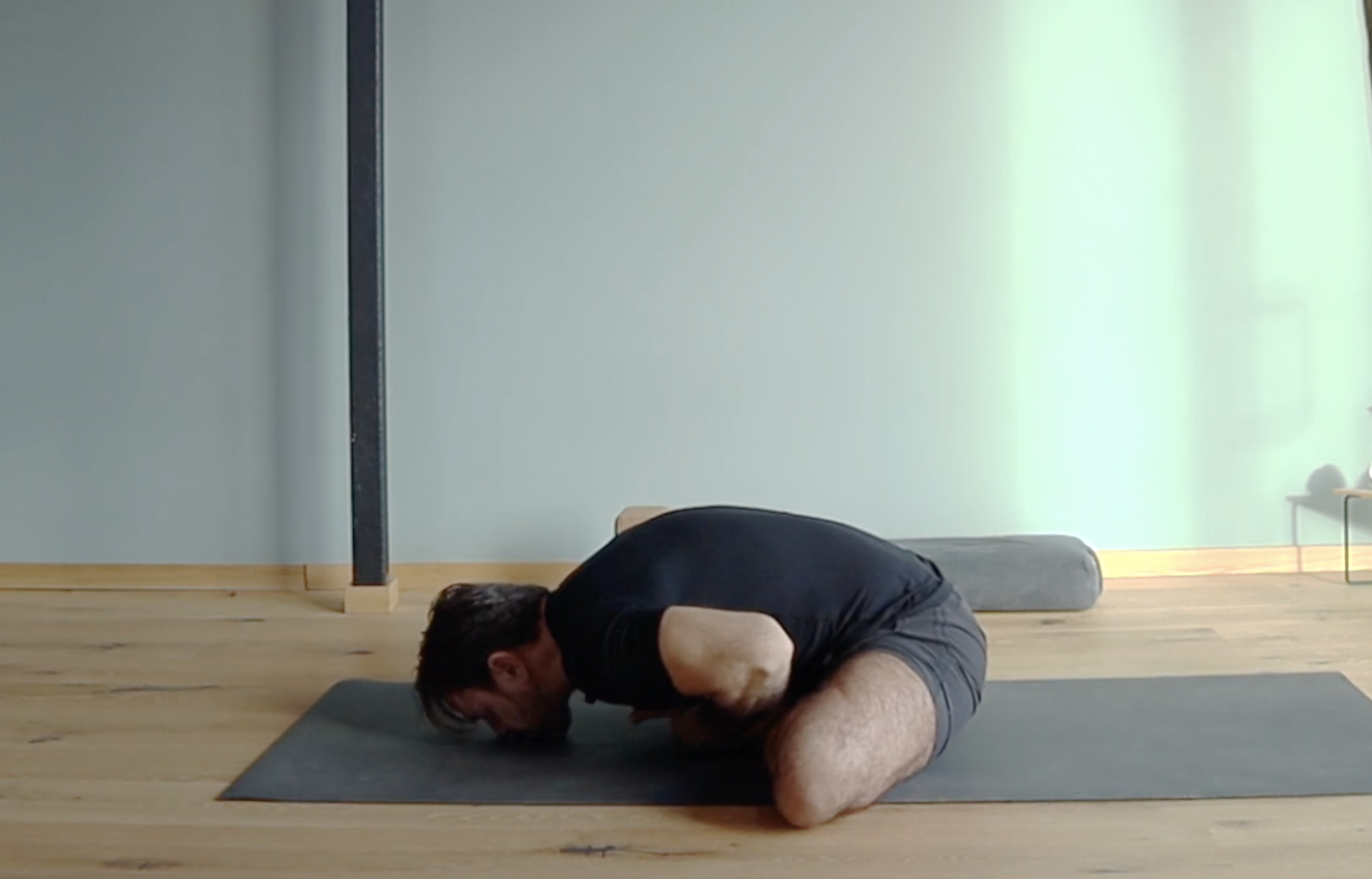
An open groin is necessary for deep hip flexion
Long hamstrings are necessary, but especially, in my opinion the outer hamstring ( biceps femoris ) as it inserts primarily on the lateral side of the head of the fibula, with some fibers attaching to the lateral condyle of the tibia attaches to the outside of the knee and is important when we externally rotate the femur to take the leg behind the head.
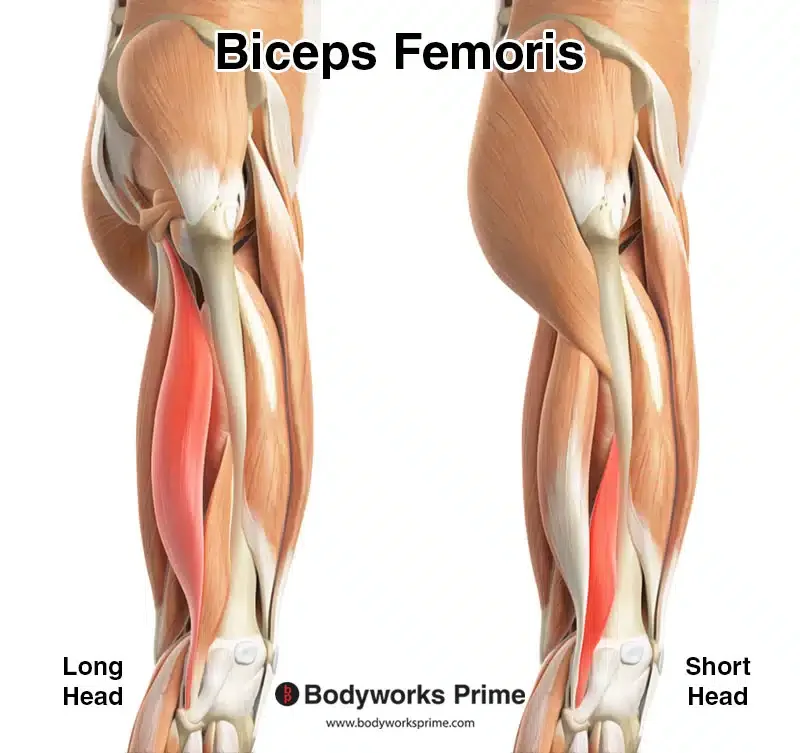
The Biceps Femoris hamstring.
Krounchasana is excellent for stretching the outer hamstring
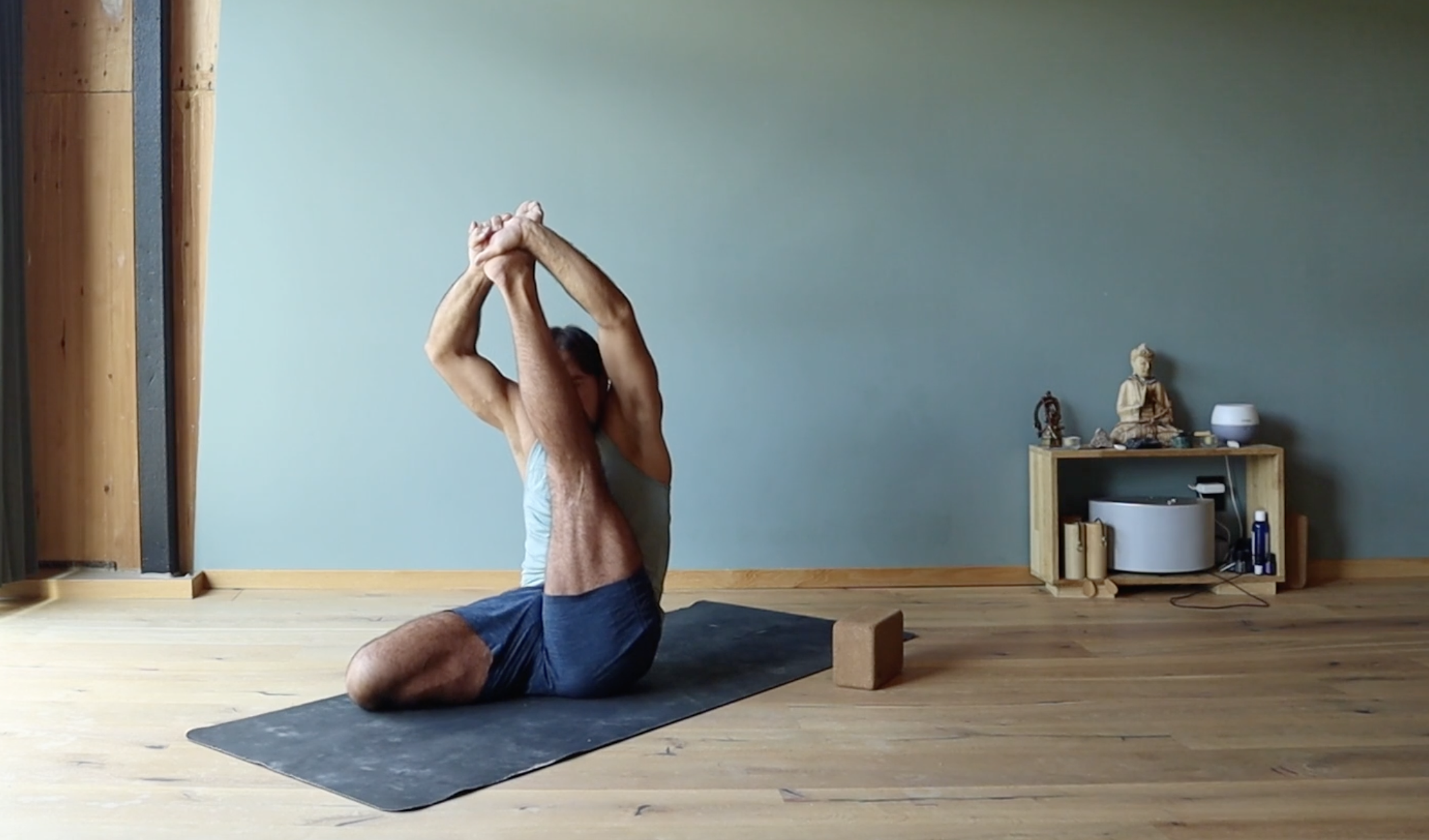
Krounchasana
So when the hamstrings are long enough, and we have enough openness in the groin and adductors, we can begin to take the leg back far enough behind us for the deep hip flexion which is necessary. Often teachers focus a lot on external rotation of the hip ( more on this later ), but without the opennenss in the inner thighs, you wont be able to take the leg back far enough which will compress your low back.
Another great posture to work on the necessary hip flexion is Utthan Pristhasana, which is part of The Element Series for this reason to prepare the hip for deeper movements.
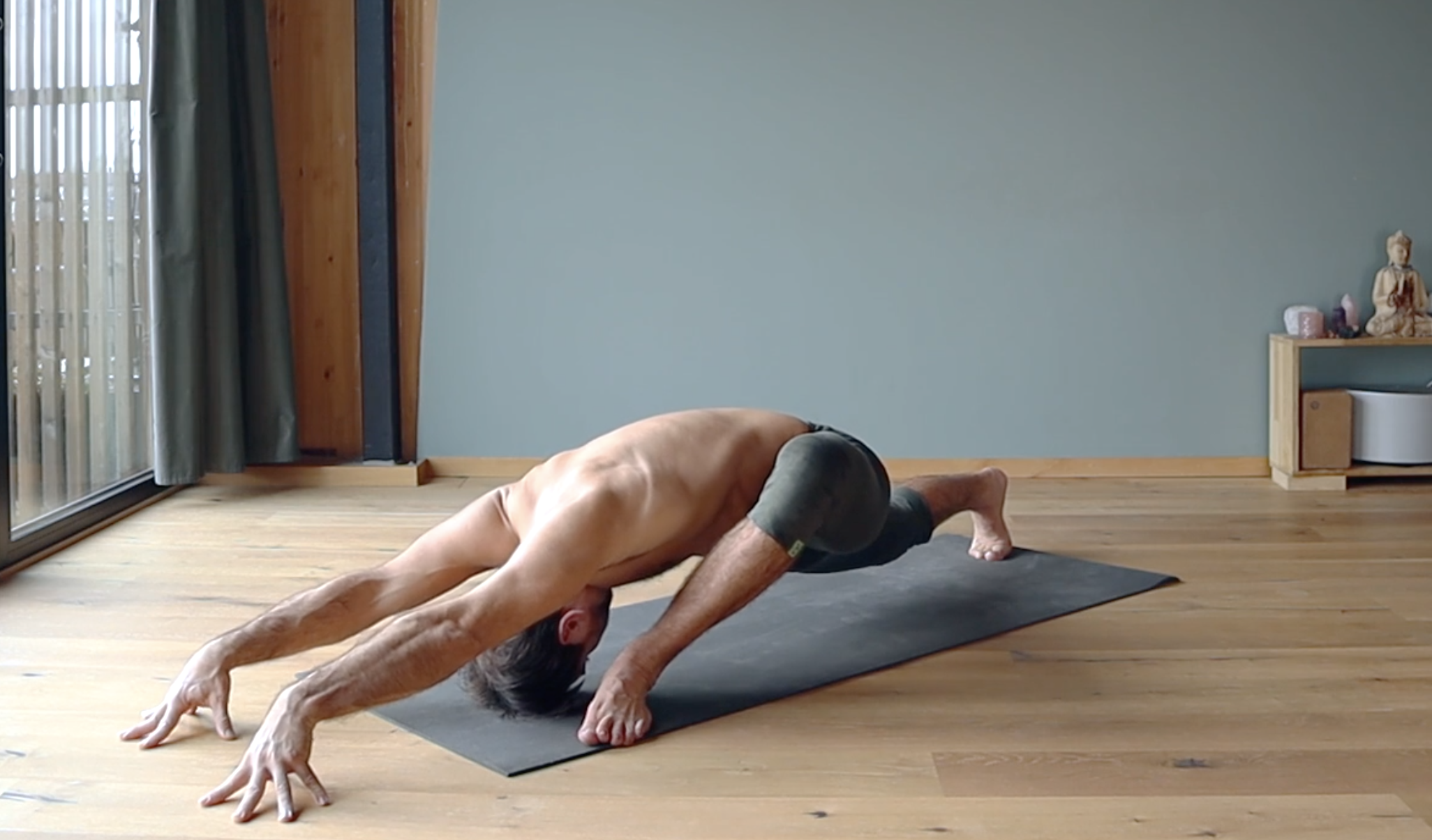
Preparing the hip for leg behind the head. Utthan Pristhasana.
How do we open the external rotators?
Deep external rotation of the femur in the socket of the hip is essential to take the leg behind the head.
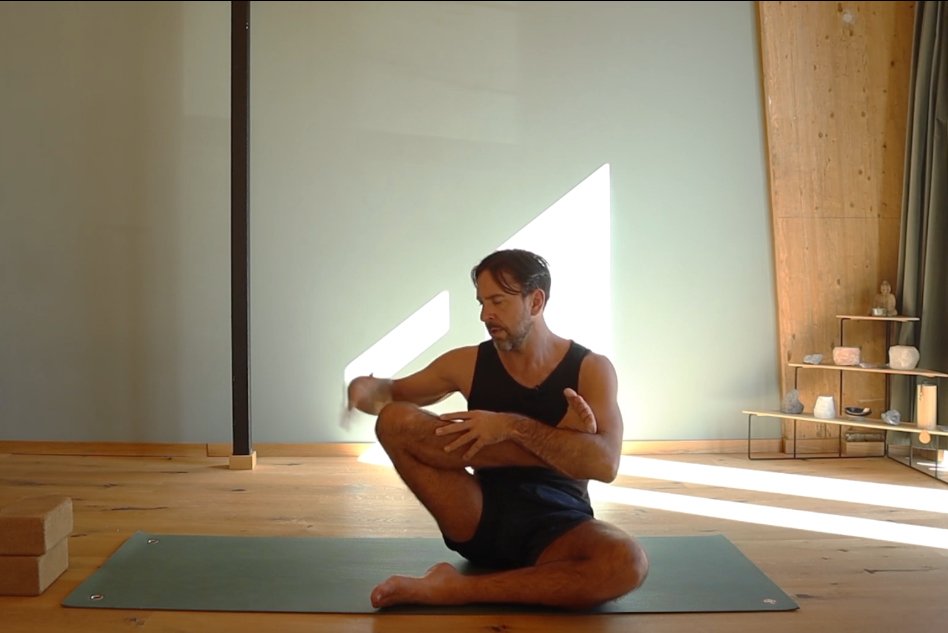
Preparing the hip for external rotation
Agnistambhasana should feel pretty effortless so the glutes and piriformis muscles are nice and open.
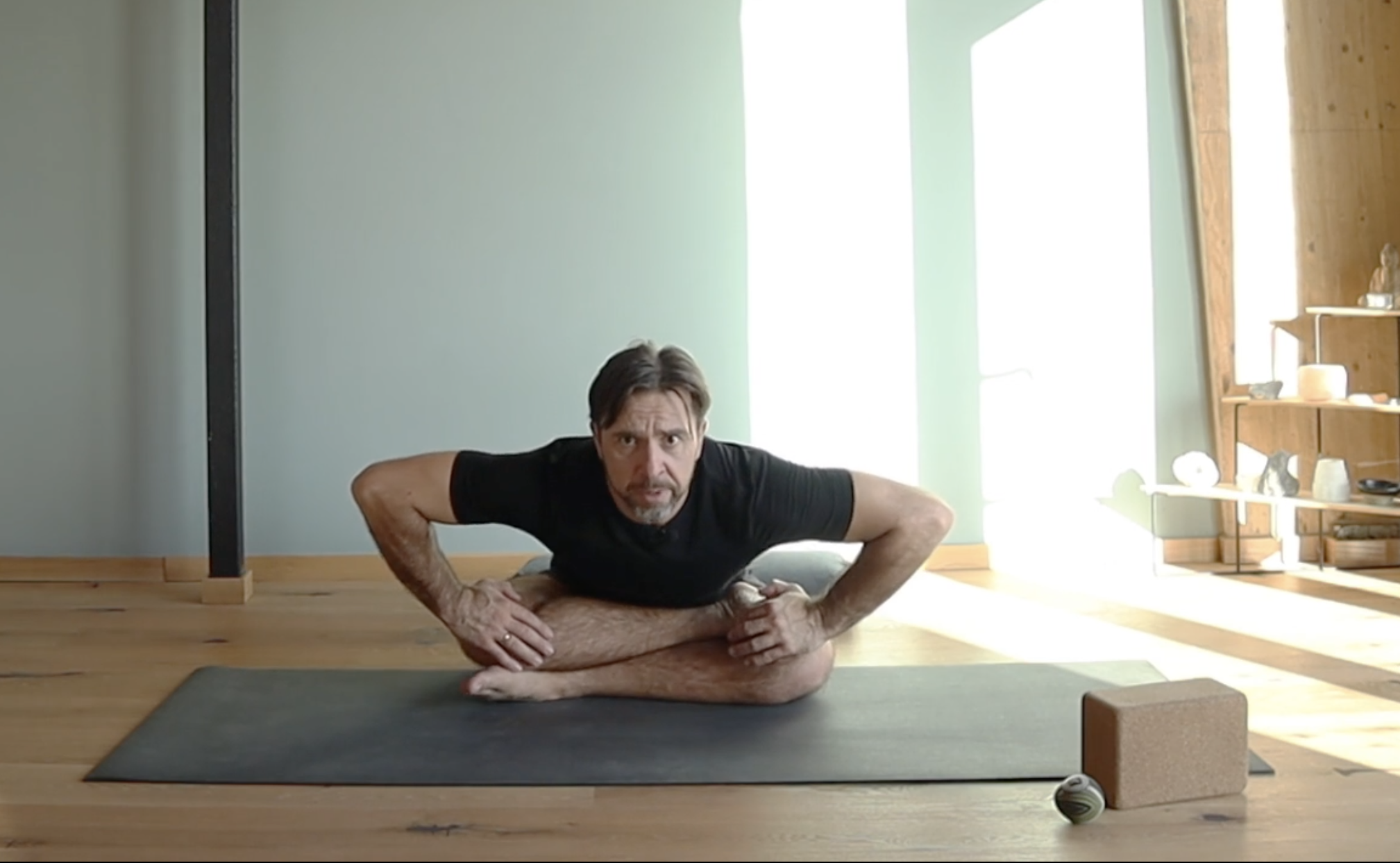
Agnistambhasana
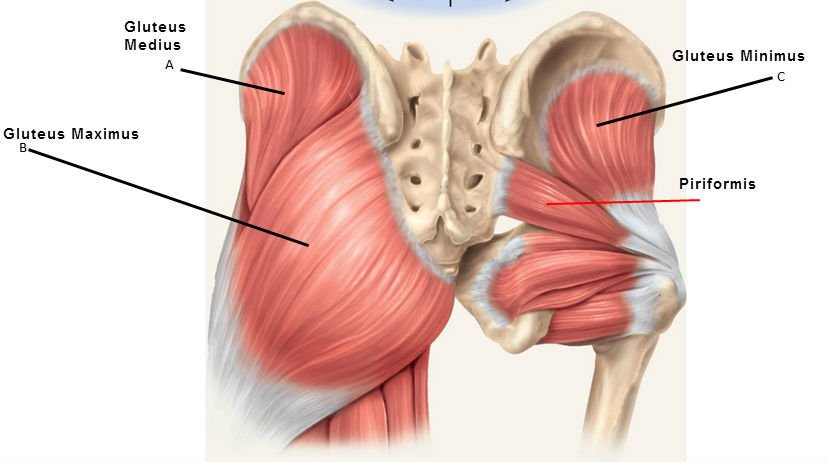
External rotators that need to open.
Another great preparatory posture to help open the hip is a variation of Eka Pada Raja Kapotasana which is also in my Element Series.
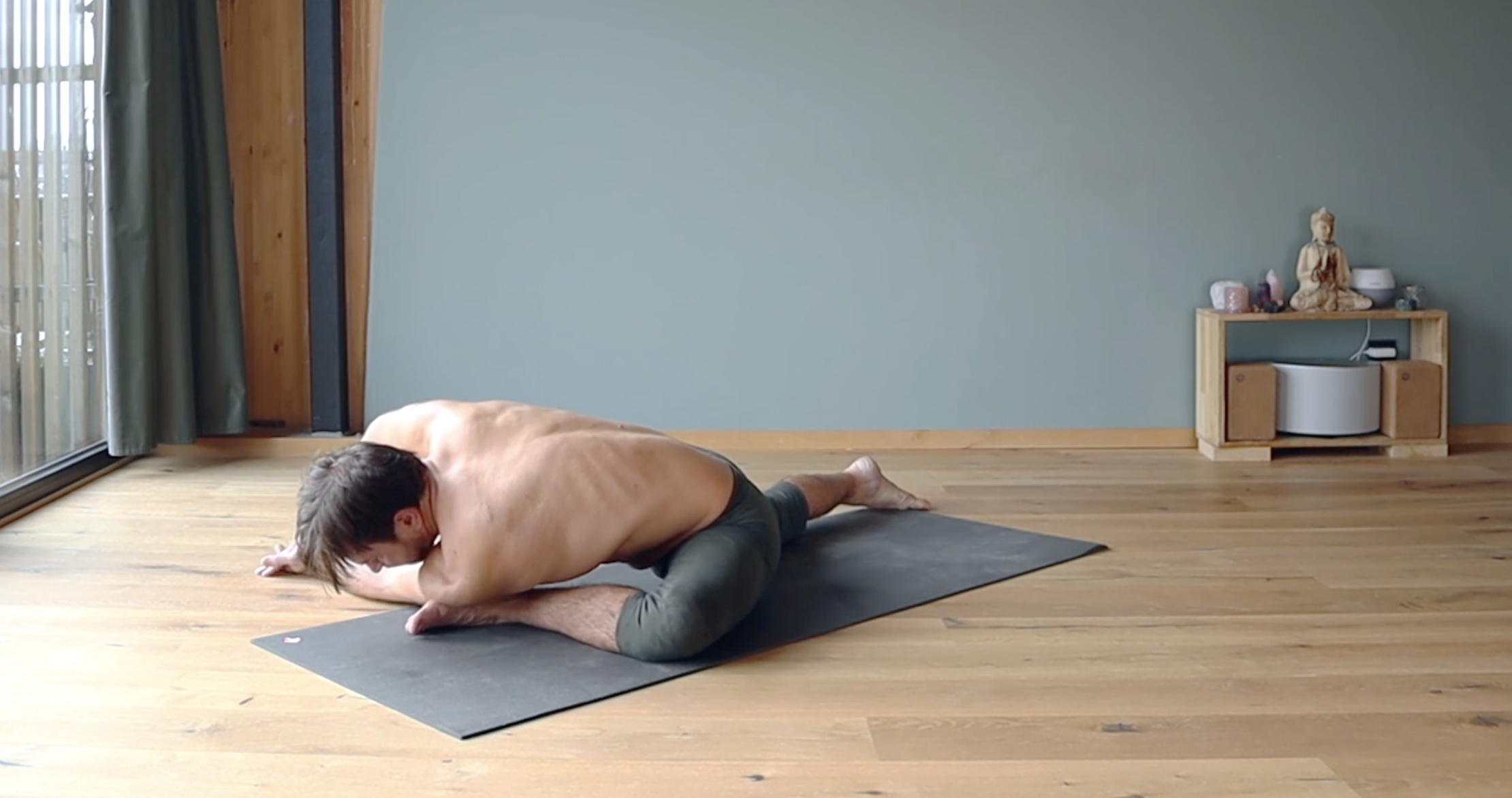
Opening the external rotators
These prerequisites should enable you to practice Eka Pada Sirsasana more safely and bring more awareness to what needs to be open and in place to enter the posture.
So how to do take our leg behind the head?
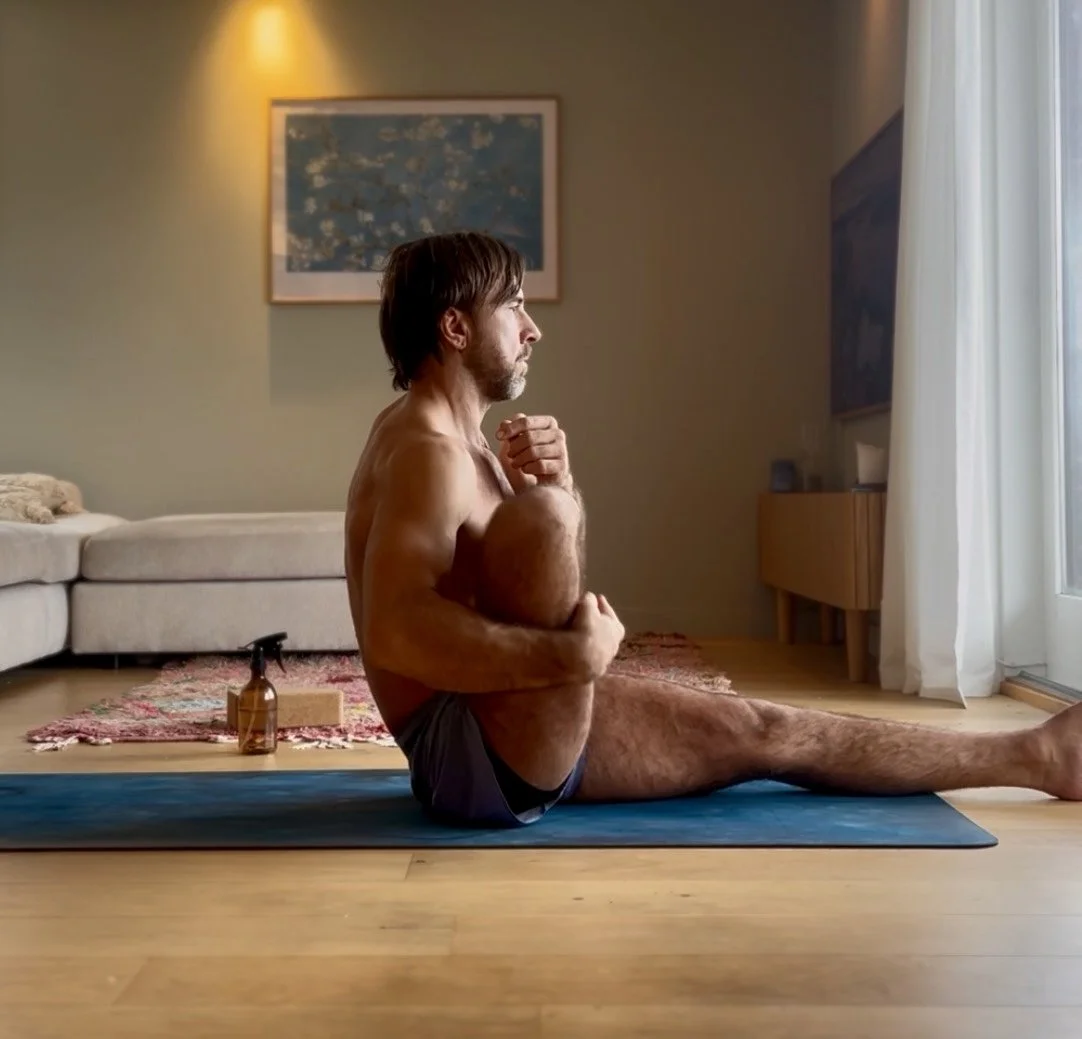
Phase 1
Initially we want to bring the leg parallel to our chest and externally rotate the femur so we have the initial phase embodied. The foot is flexed.
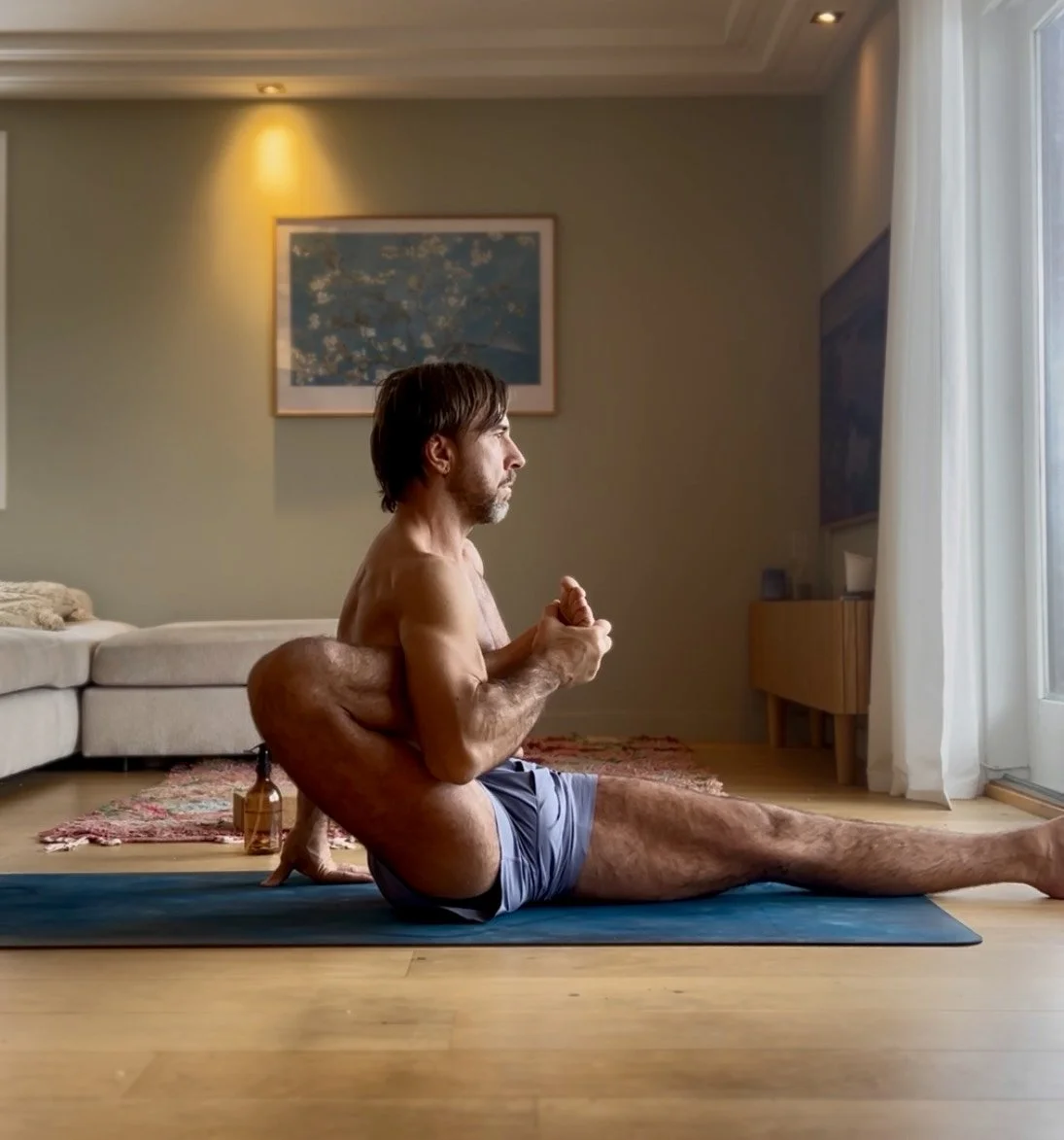
Phase 2.
Next we bring the knee back behind us as far we can to check in on our mobility here. This is the other requirement we need to perform this asana safely. Deep hip flexion. The opposite leg is always engaged strongly.
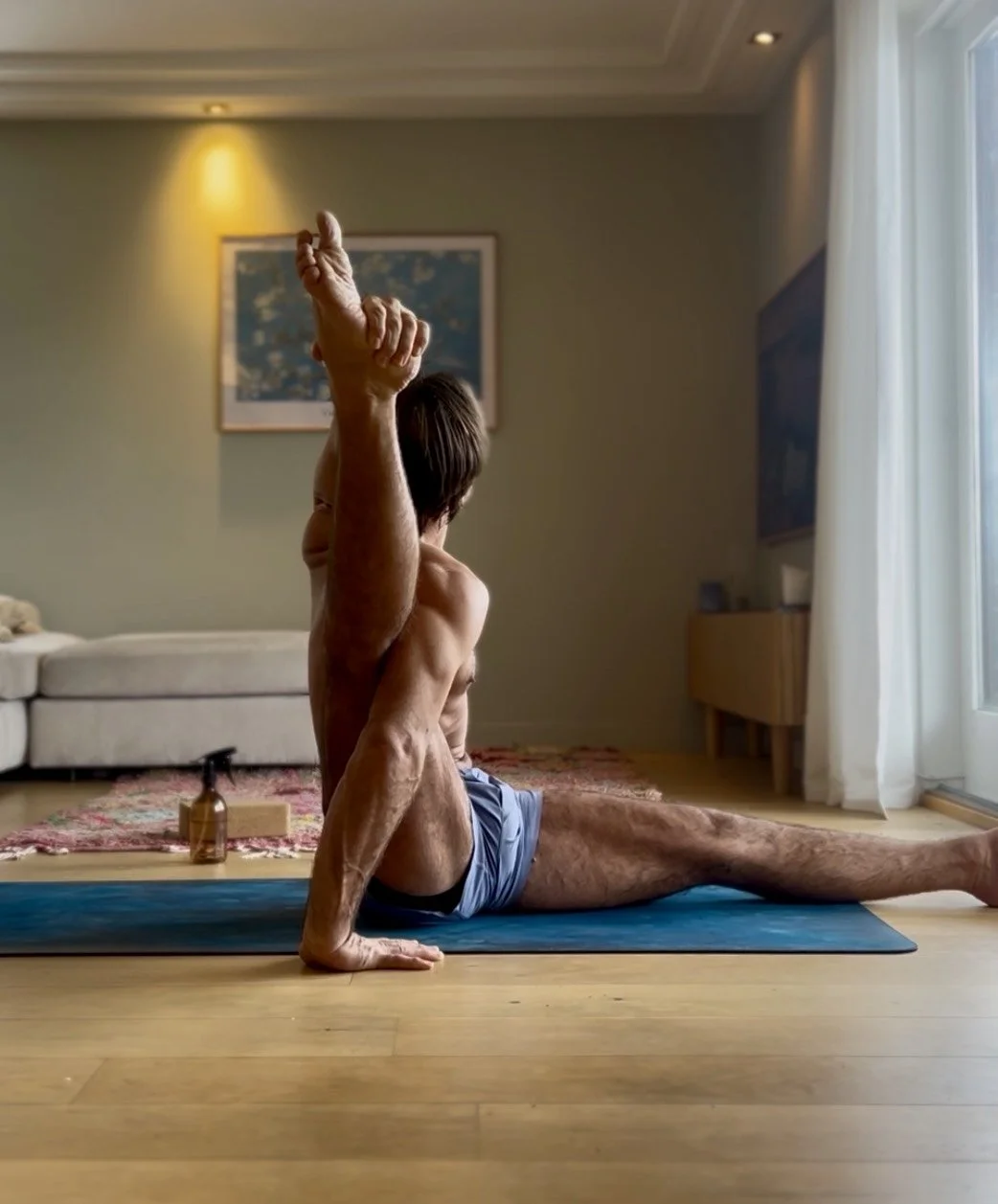
Phase 3.
Here as a test you can now bring the leg up and behind your shoulder. Coming into a variation of Parivrtta Surya Yantrasana we check in on the necessary length of the hamstrings to bring the leg behind our head safely. This has a slight internal rotation of the leg and pointing of the foot.
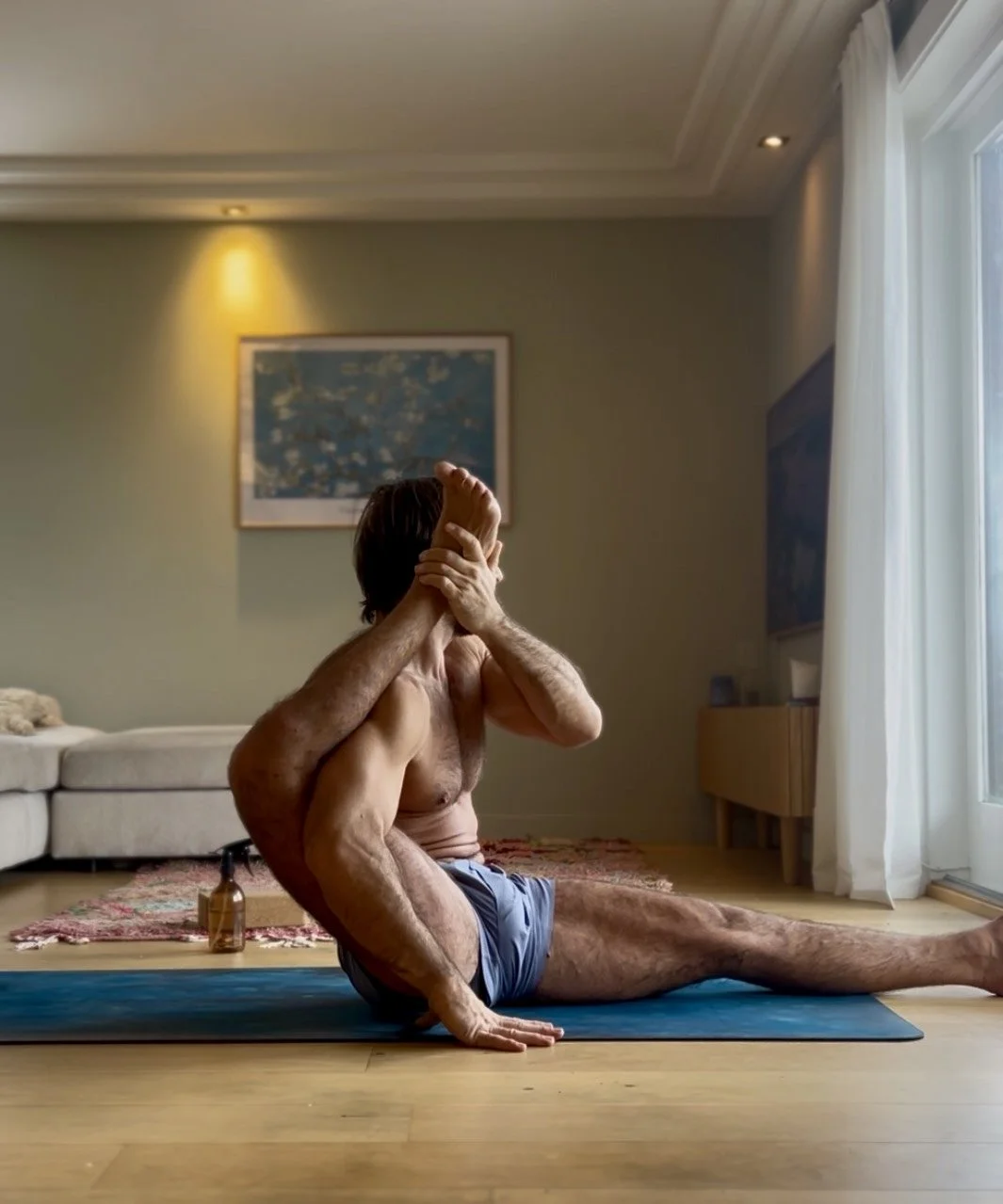
Phase 4.
Externally rotating the hip, with the leg and calf muscle swung behind our shoulder we can start to bring the foot towards our ear. This is a good test to see if you can go any further. This should feel comfortable with the hip in external rotation. If you are at your limit, stay and work here for some time.
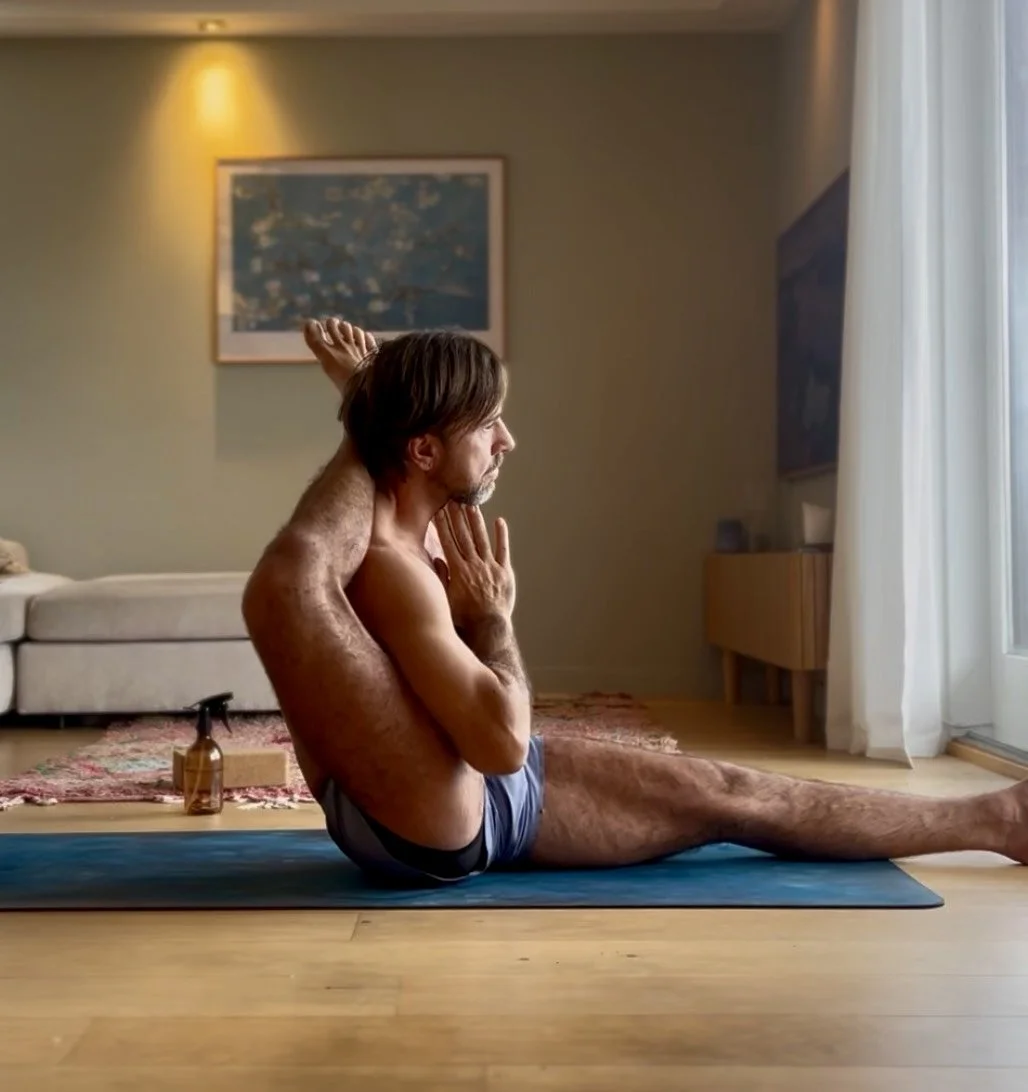
Phase 5.
Keeping the external rotation in the hip we twist slightly with our core engaged and duck our head under our foot and place it behind our head. Try your best to keep the chest lifted and the tailbone tucked. The tucking of the tailbone is the same as you perform in Krounchasana.
If you feel any pressure on the low back or on the outside of the knee, come out and work on the preparatory postures as shown above. Definitely take your time when working on this posture and avoid forcing anything. Because of the mechanics of this posture it can place too much stress on the spine, in particular the low back and the last thing we want here is to compress a disc.
One of the reasons I am writng this blog post is because I have seen far too may students forcing this posture, and too many teachers incorrectly adjusting people into this without the correct requirements in place.
Take your time, go slowly, and be patient with the body. You won’t be any happier or more spiritual becaue you have your leg behind your head. That said, it is fun to try and when done correctly, the deep openeing you get from working on this has a positive effect on the general structure of the body.
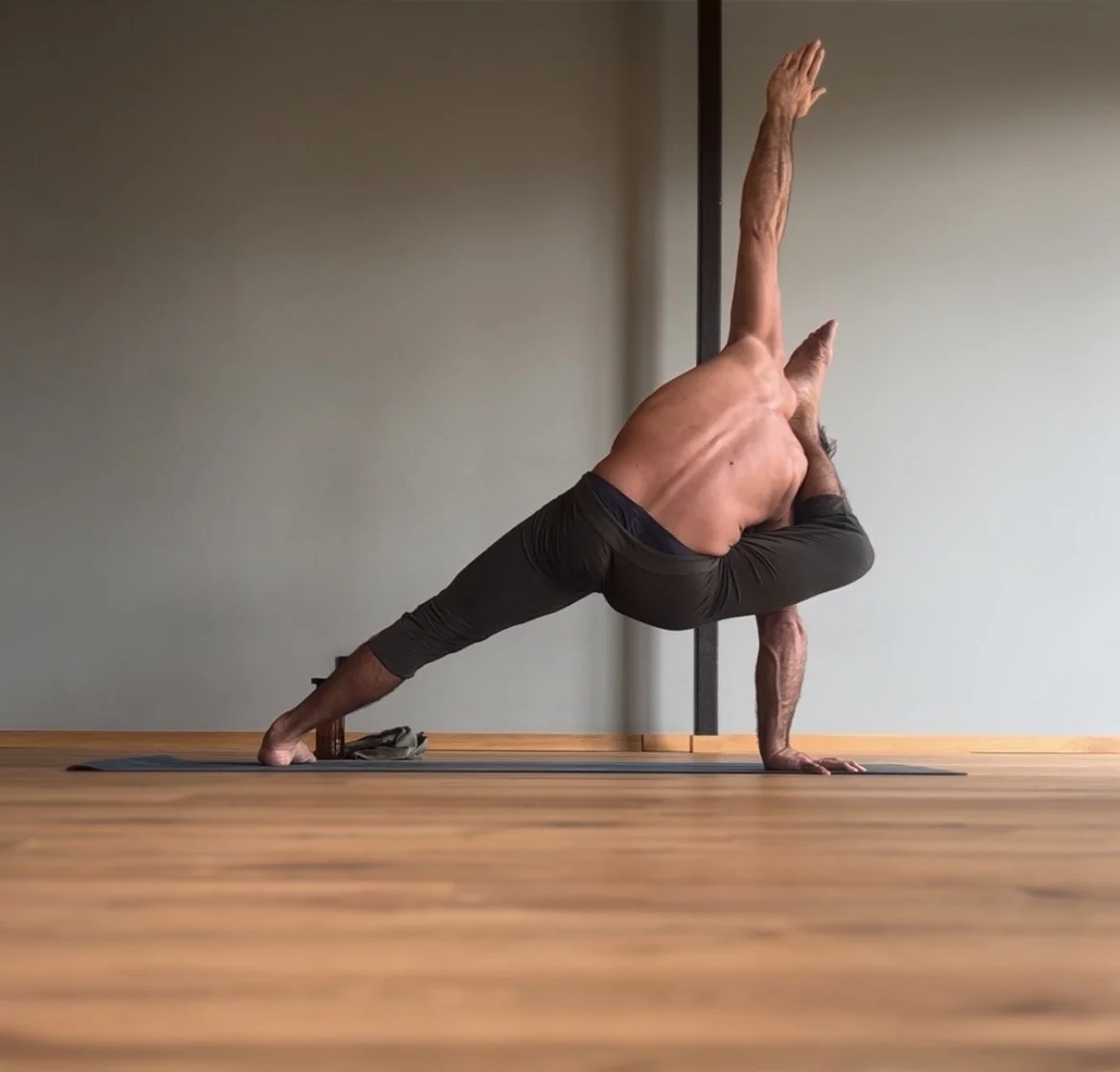
Bhairavāsana
If you feel you are struggling to find the correct openness in your practice to prepare your body for postures such as Eka Pada Sirsasana, check out my Element Series Vinyasa sequence. One of the reasons I created it was to help practitioners bring awareness to body movements that they aren’t necessarily finding within Primary or Intermediate Series.
The Element Series is an excellent companion to your existing Ashtanga practice.
For a full breakdown of Eka Pada Sirsasana head check out my tutorial below as part of my Online Studio