How to Setu Bandhasana
One of my favorite postures in Primary Series, and one that is often overlooked by practitioners and skipped in many rooms is Setu Bandhasana. In this post I’ll give some tips and key focuses on this powerful asana.
A common complaint I come across in the yoga world is people who have a lot of neck tension and pain stemming from that region. While there are a myriad of reasons for this to occur, a great way to help with this is to have a very strong neck.
Strengthening the neck muscles is left out of most yoga traditions and sequences, but it is incorporated in Primary Series in the form of Setu Bandhasana.
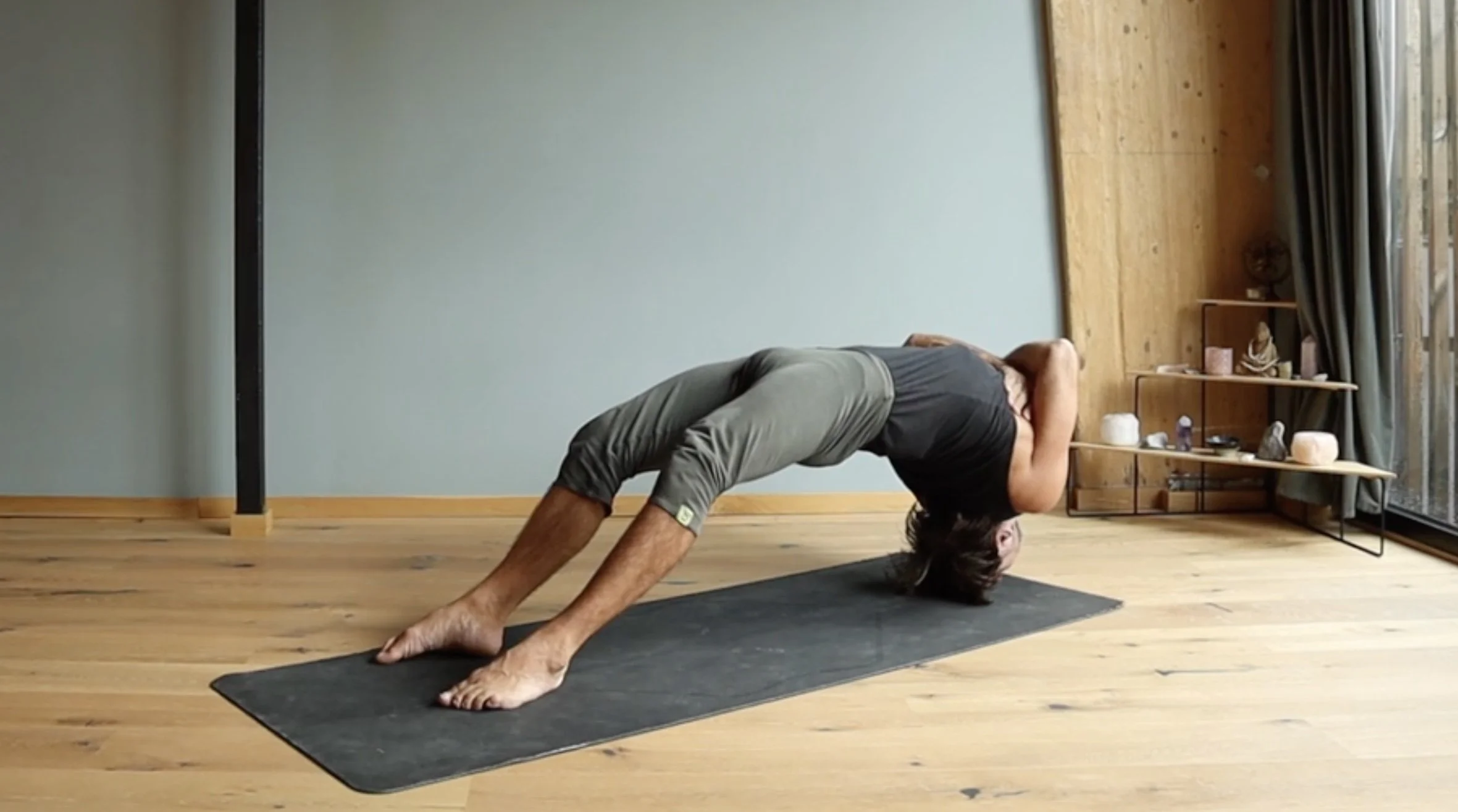
Setu Bandhasana
With my background in grappling martial arts such as Brazilian Jui Jitsu, Judo and Wrestling, strengthening the neck muscles was common practice. This is also very common in boxing as a way to strengthen and protect the head.
I believe this was ‘taken’, you could say from Indian wrestling into yoga as bridging onto the neck is an excellent way to condition and strengthen those muscles.
The head is fairly heavy, so having a strong neck supports that weight
Bridging and rolling onto the head in wrestling is a very good technique to avoid being pinned by your opponent, and to escape.
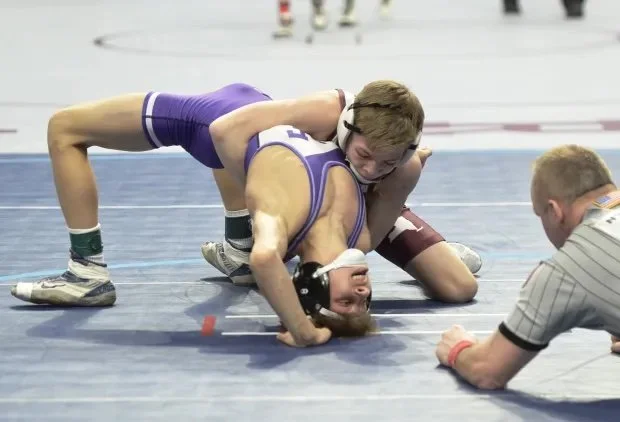
Wrestling Bridge
Now, we don’t need to excessively train these muscle for the strenuous work that is competitive wrestling. We don’t need a neck like Aleksandr Karelin for example.
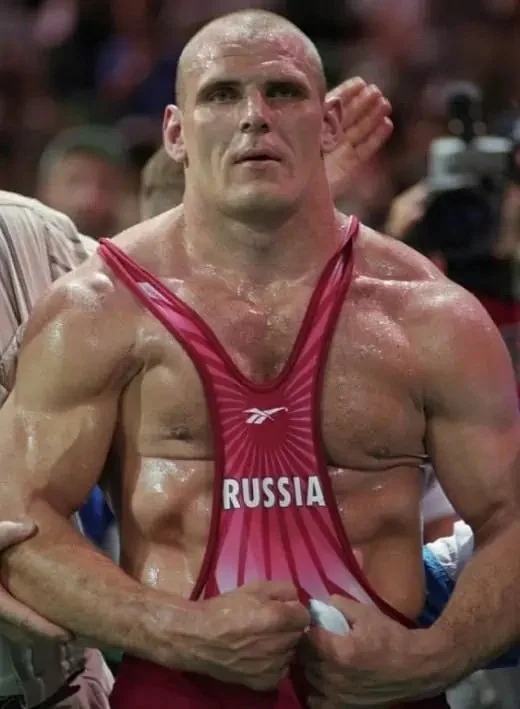
Big neck
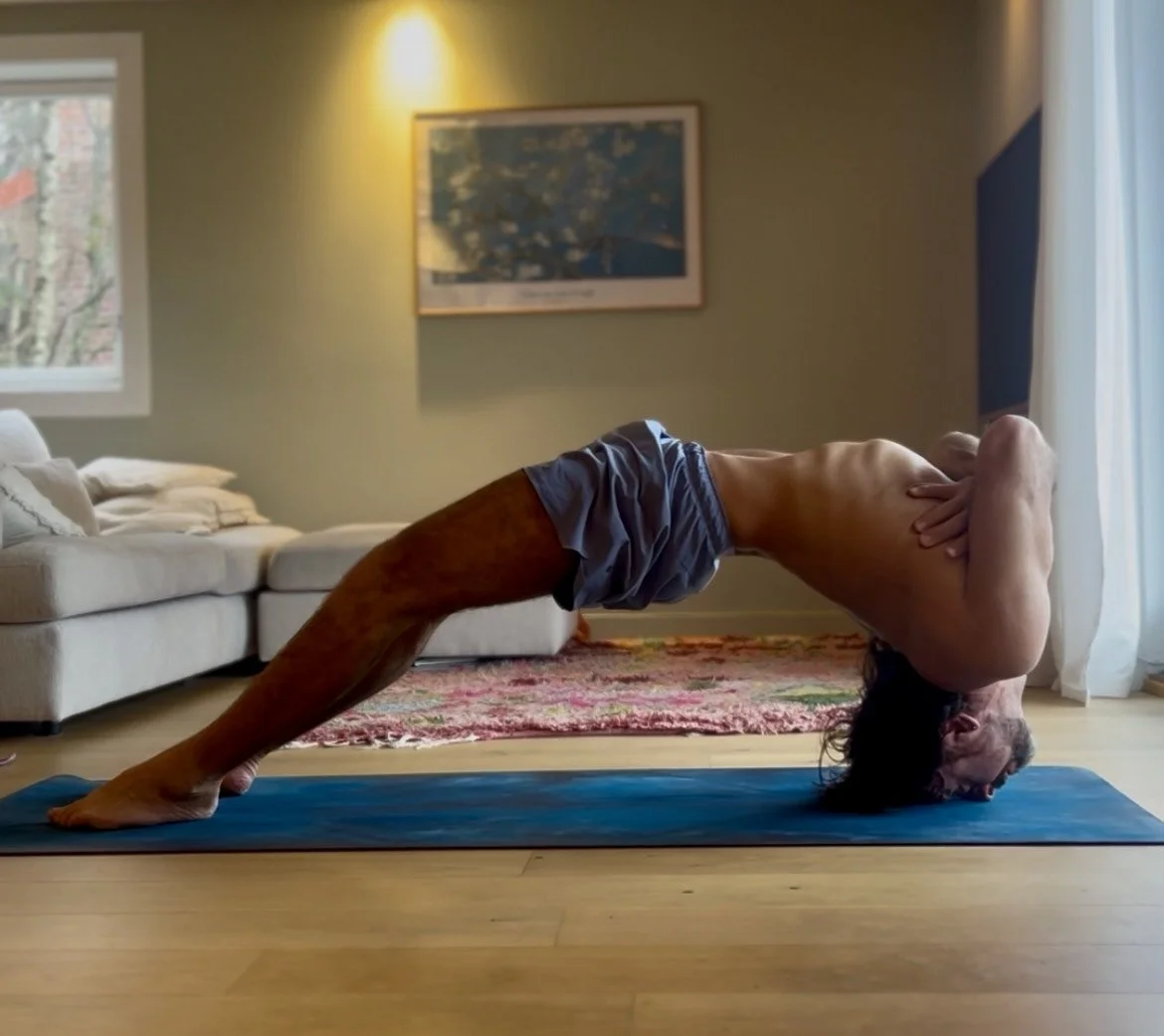
But what I want to highlight most in this post is how to fully bridge onto the forehead so the posture is fully expressed.
What I often see in students is an inability to fully straighten the legs in Setu Bandhasana and roll onto the forehead so the nose is touching the floor.
Setu Bandhasana
As you can see in the image above I am fully bridged onto my forehead and my nose is touching the floor.
This takes time to build up to but actually feels the best
There can be a lot of fear about applying so much pressure onto the neck, but if you are able to progressively work towards the fullest form, you will experience much less strain on the neck muscles.
It sounds counterintuitive, but to come up halfway where you are on the top of your head for example, applies more stress and pressure to the neck.
When you are fully extended like in the image above, the whole body and spine are in a much more stable position, and the head and neck feel more balanced.
Although there is so much energy going backward onto my neck, my arms being crossed like so by squeezing my armspits in and down, counters this energy and pressure creating a type of Bandha.
We are always looking for these opposite energies in yoga to create balance.
More on Bandha here:
The Asana Guide
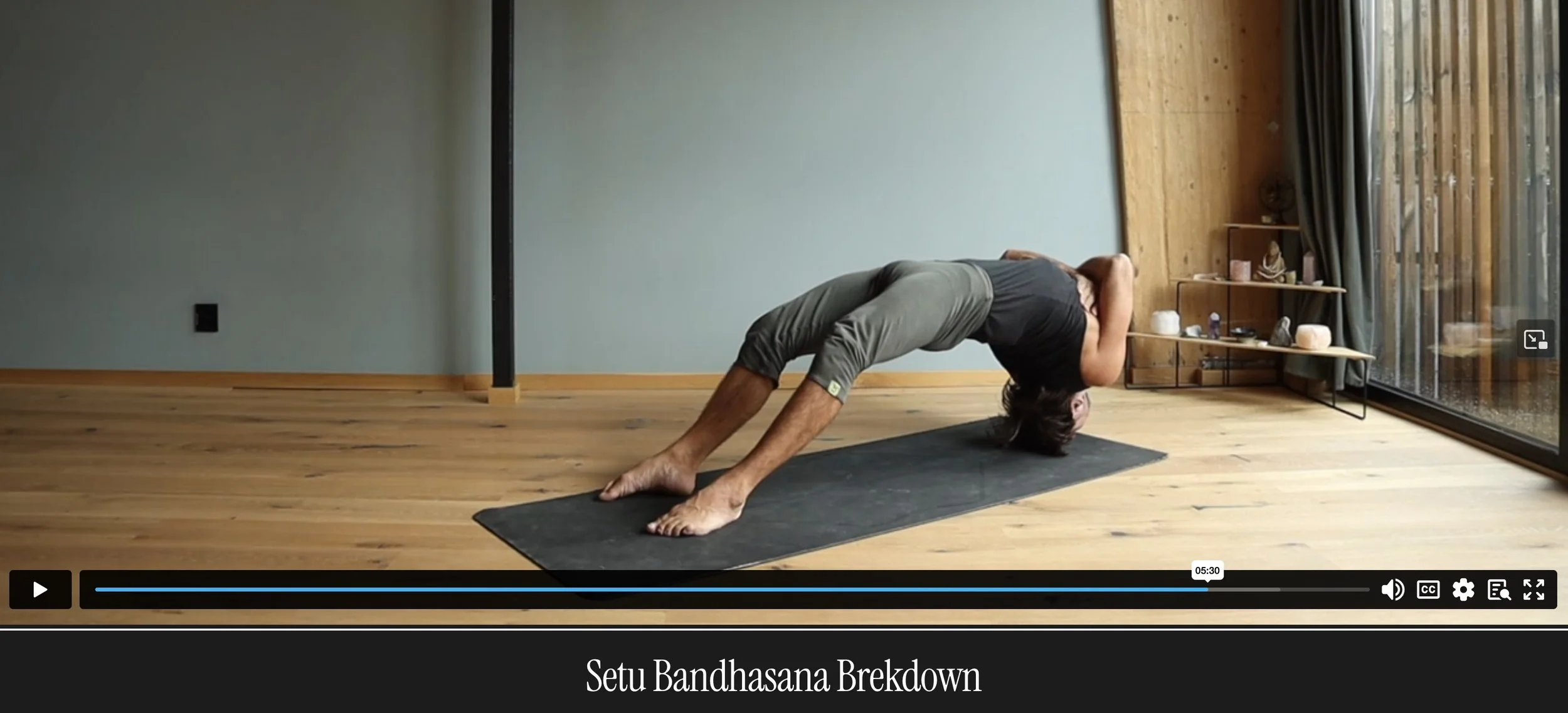
For a full break down of Setu Bandhasana and how to work towards this in a safe way head to The Online Studio tutorial here: