A better title for this post could be ‘The importance of the Serratus Anterior in pushing.’
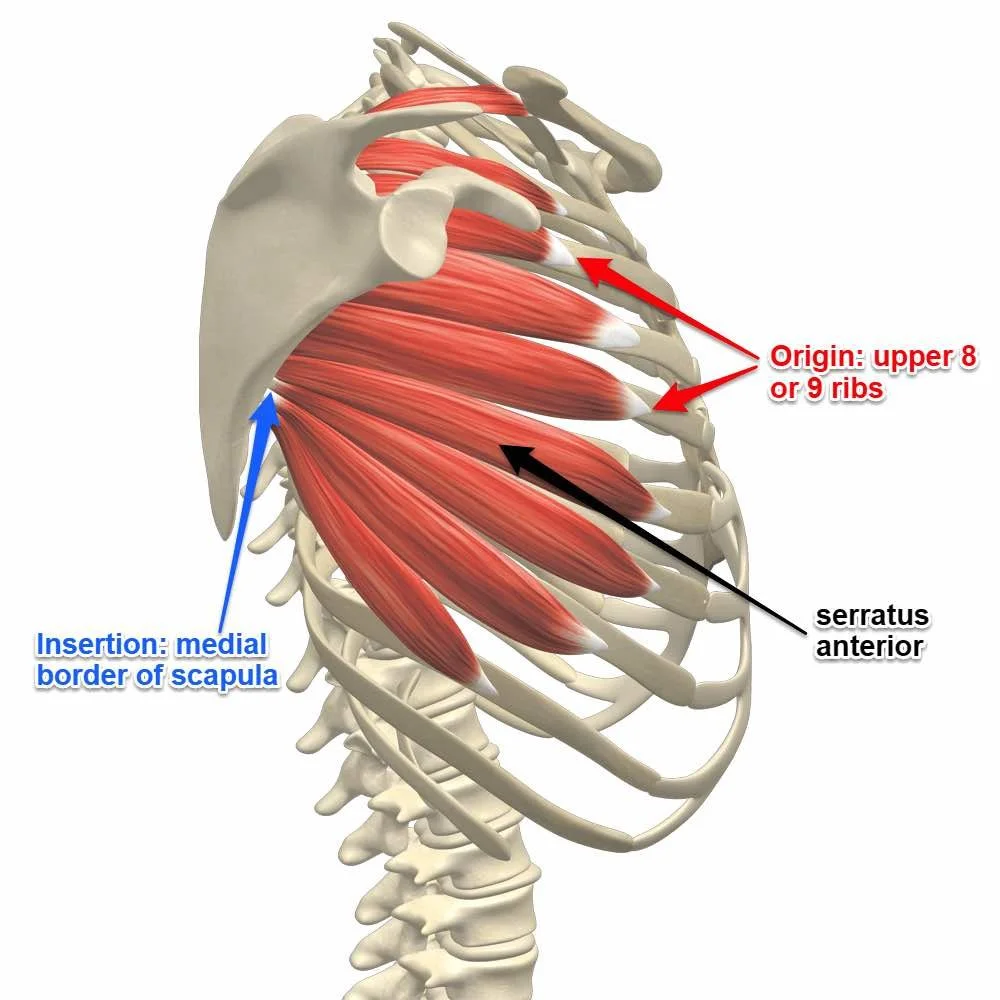
Serratus Anterior
As a teacher, it is a muscle I talk about often in class and workshops when it comes to any pressing type of work we are doing in our asana practice. Many students struggle connecting with this muscle as it isn’t something we think about when we push.
If I asked 100 students which muscles they think of when pushing down onto the floor with their hands, most would say their shoulders and chest. This isn’t wrong, but it’s helpful to understand the importance of the serratus anterior when pressing. Especially in the jump back and jump through as practiced in the Ashtanga Yoga system.
The serratus anterior is a fan-shaped muscle located on the side of the chest wall that connects the ribs to the shoulder blade (scapula). It is often called the "boxer's muscle" because it powers the motion of throwing a punch.

The serratus is working hard to come up and hold balance in Karandavasana.
You can see in the image above the serratus flaring out from the side of the rib cage.
Main Functions:
Scapular Protraction: Pulls the shoulder blade forward and around the rib cage (such as during a push-up or punch).
Scapular Upward Rotation: Helps rotate the shoulder blade upward so you can raise your arm above your head.
Stabilization: Holds the shoulder blade flat against the rib cage, preventing it from winging out.
The last point is an important one to understand, especially if anyone has suffered from a ‘Winged Scapula.’
A winged scapula where the serratus anterior is not working typically happens due to an injury to the long thoracic nerve, which controls that muscle, or from severe muscle inhibition and weakness. When the serratus anterior fails to anchor the shoulder blade (scapula) against the ribcage, the medial border of the scapula sticks out like a wing or a shark fin, especially during pushing or arm-flexion movements.
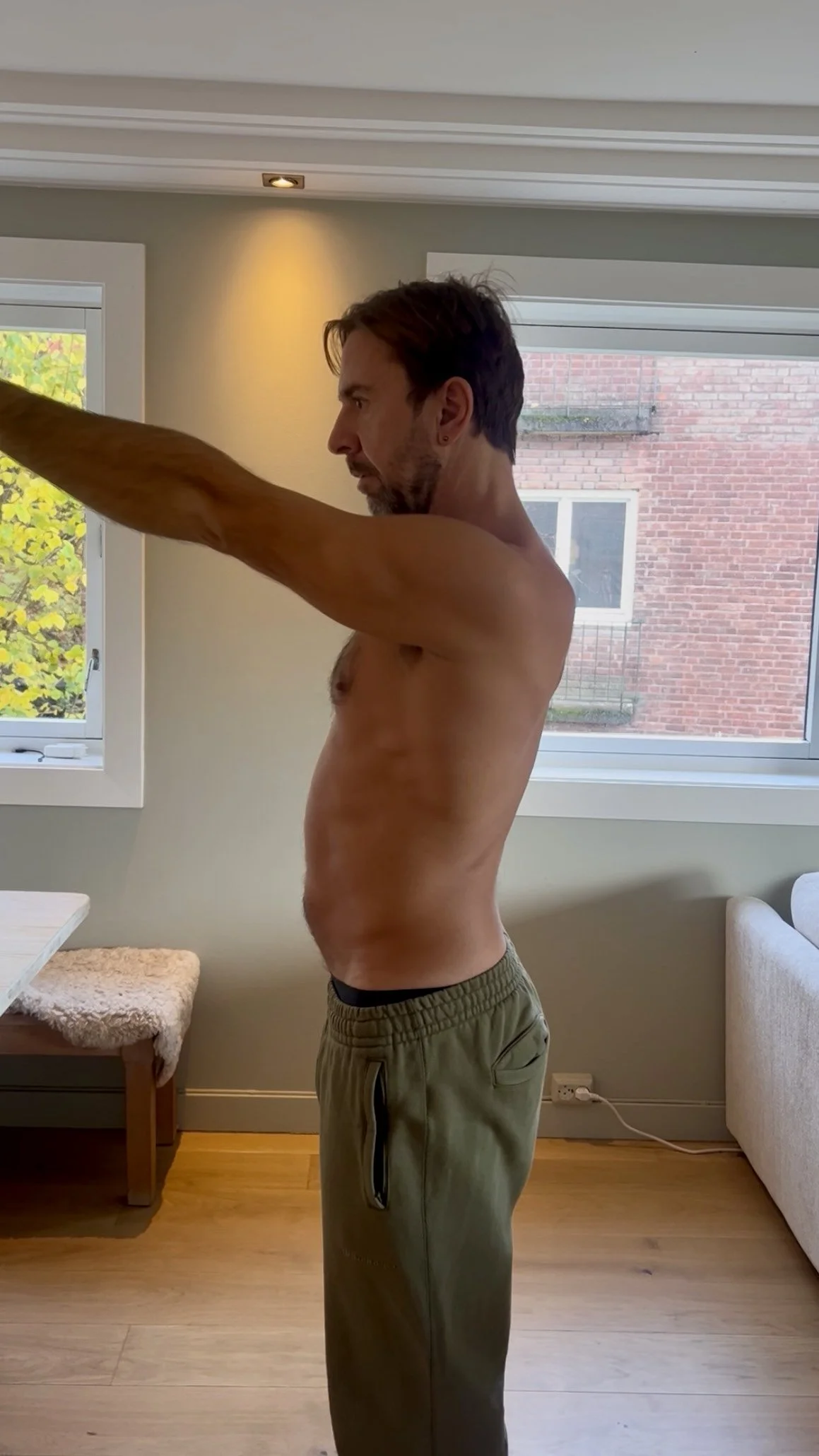
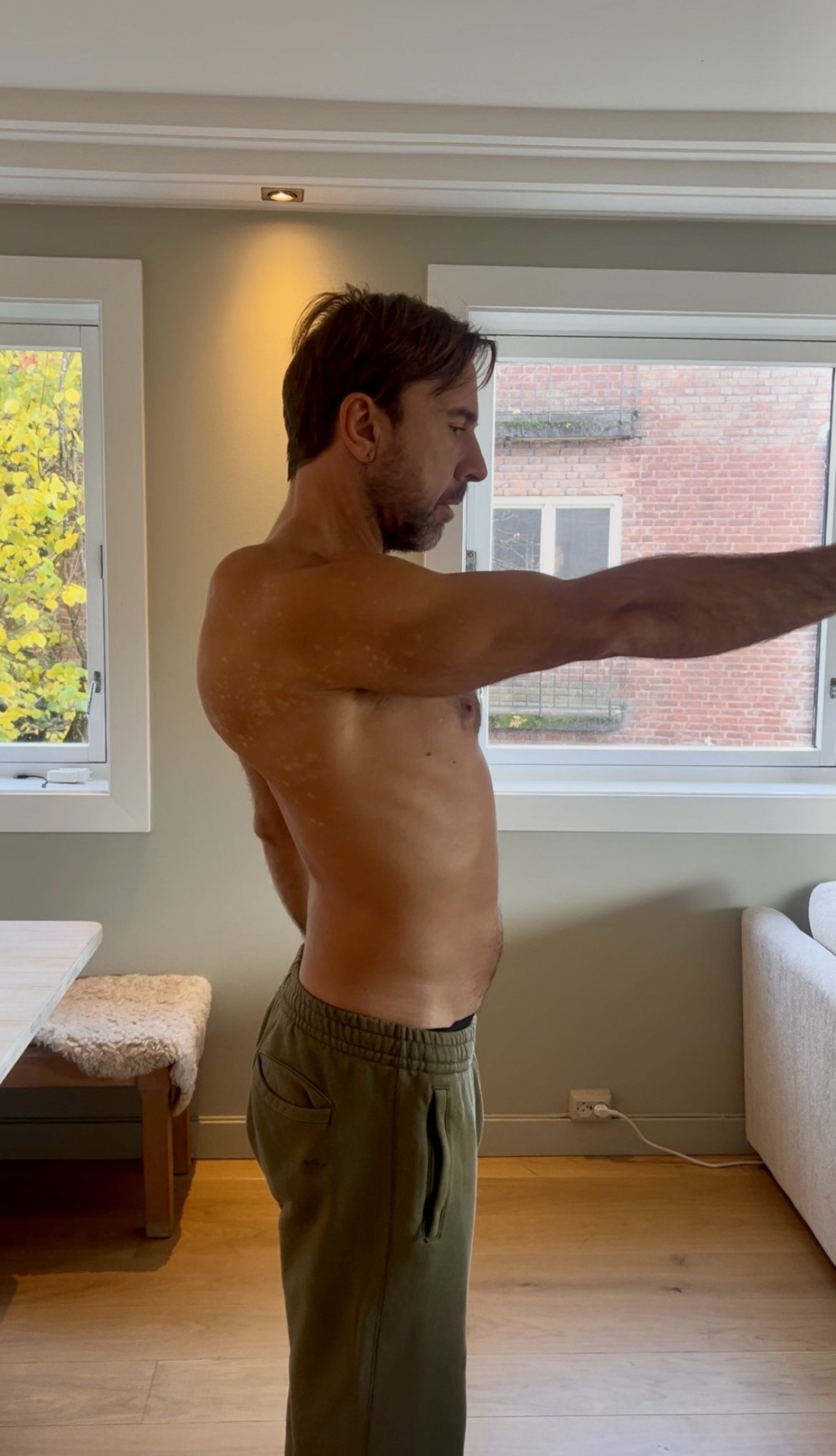
I bring this up because it is impossible to perform any type of lifting up and jumping when this occurs. It really highlights the importance of these muscle as it is largely responsible for generating the force and power needed to lift and jump back as well as stabilising the scapula to support the upper half of the body.
For example, after practicing Primary Series in Ashtanga Yoga, my serratus will be pretty pumped from all the vinyasa’s as this muscle is doing so much work. When asking students if they notice this, it is often the case they do not, which means they aren’t using one of the primary muscles responsible for doing the work load, thus, working inefficiently in their practice and not getting stronger.
So, going back to the main point of this article which is, are you using the correct muscles when trying to lift and jump back?
If this muscle is not firing correctly and being worked fully, the movement will feel heavy and lack any real control. It takes time to develop this connection for a lot of students, but it must be practiced in a way where that activation is being focused on and engaged.
I wrote an article some time ago on the general mechanics of the jump back which you can read about here:
Just repeating the movement of jumping forward and back to your ability will help to an extent, but what is really important is to feel you are developing strength with the right muscles in the correct way.
This requires specific drills to target those muscles, so you start to understand how it feels in your body and connect with the right activation.

Lolasana
In Lolasana as shown above (one of the main asanas you need to learn to be able to jump back cleanly), there are many things going on, but what I am focused on largely here is pushing down as strongly as I can through my hands into the floor from my serratus, back down underneath the armpits. This is a type of Bandha which is generating force from this area.
More on Bandha here:
This is a tricky and complex movement to learn for most practitioners so don’t be disheartened. It does take time, but with the correct activation and technique it is definitely not impossible for almost all students who are willing to try.