‘What is Vinyasa Yoga?’
Let’s start with the basics. What is an Asana?
In Yoga we have a fixed static posture ( Asana ).
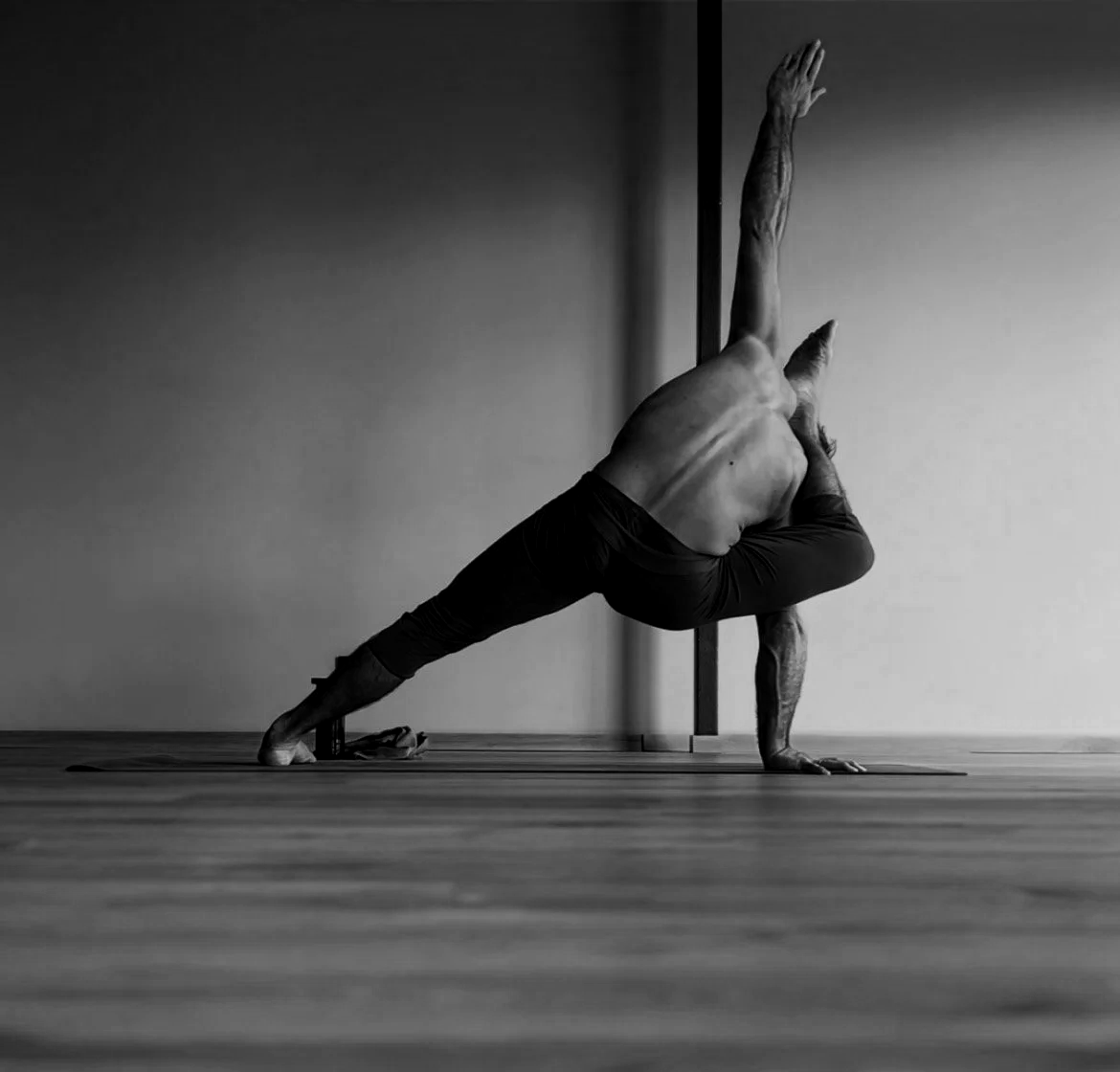
Bhairavāsana. Fixed and static Asana.
In the state of an Asana, the posture is held generally without any movements other than the breath. The gaze is fixed (Drishti) on a specific point and the body is held together using isometric strength.
‘Isometric strength is the capacity of a muscle or group of muscles to generate force or torque against a static resistance without any visible change in muscle length or joint angle.’ In short, not moving.
Traditionally, in Hatha Yoga, the state of an Asana is held.
Then we have a Vinyasa.
We can think of a Vinyasa as the movement in between each Asana state, where one is synchronizing physical movement with the breath. These movements are generally not held and are seen as free flowing and transitional in nature.
A variation of Surya Namaskar B in Ashtanga Yoga below is a good example where Virabhadrasana is moved through each side before the state of an Asana is reached.
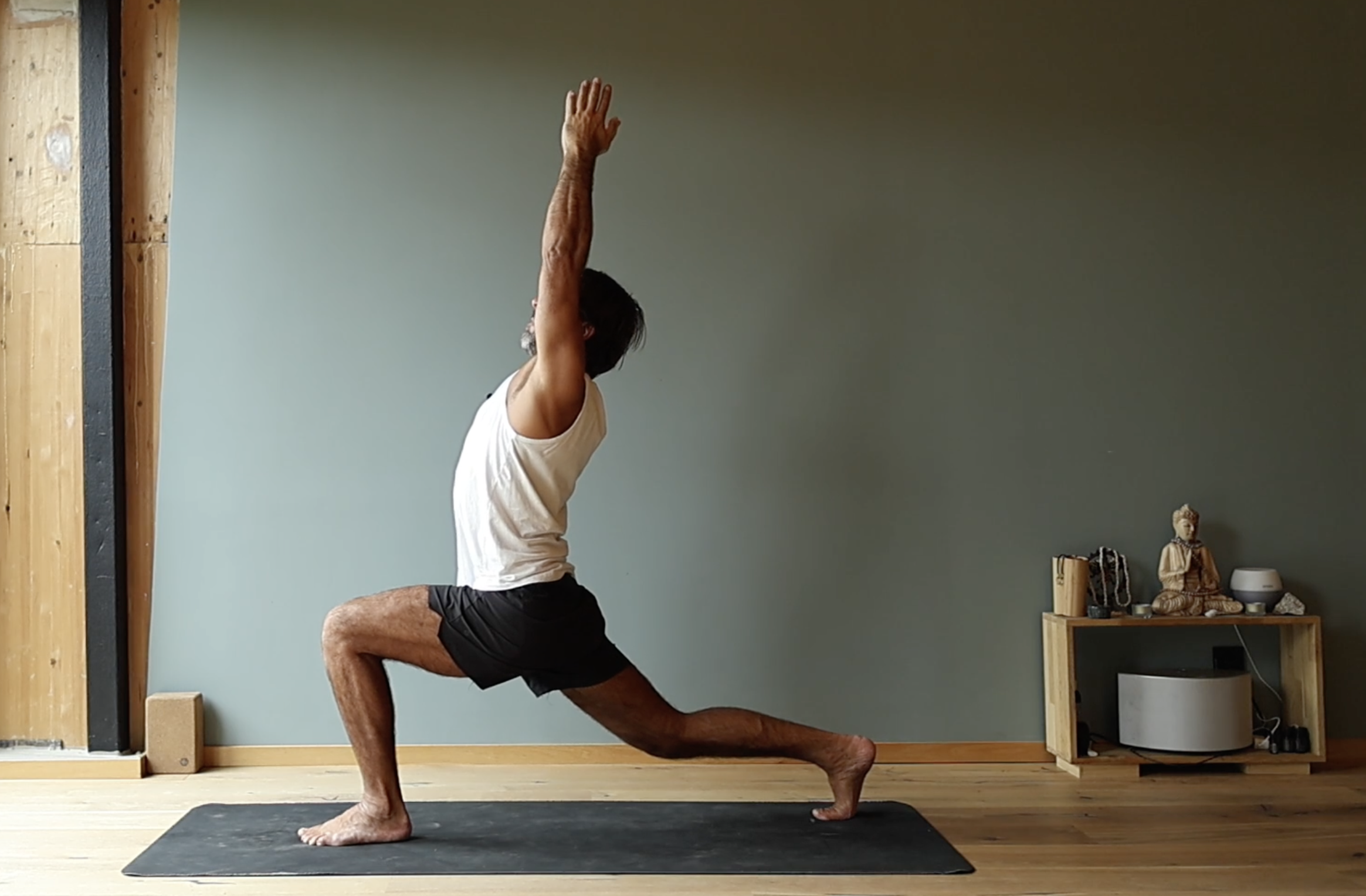
A Vinyasa
It’s fair to say that the concept and birth of Vinyasa Yoga originated with Tirumalai Krishnamacharya, who then passed this on to K. Pattabhi Jois, who was famous for bringing this form of Hatha Yoga to the west.
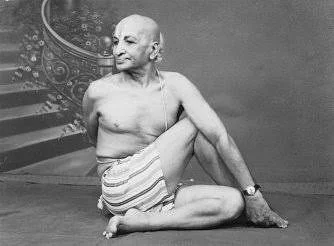
Tirumalai Krishnamacharya
Interesting enough, B. K. S. Iyengar, who was also a student of Krishnamacharya, focused much more on the state of the Asana as opposed to the Vinyasa, which Mr Jois strongly taught in his system.
I have practiced both styles and they each have their own benefits and focus, but from a personal perspective, the embodiment of holding a posture statically and combining this with Vinyasa is what I fell in love with in yoga, which drew me to Ashtanga Yoga. The combination of these two is what stimulates Tapas and Prana, in my opinion, as well as the natural healing nature of movement in sync with breathing deeply.
How do we define a Vinyasa?
A very good example is with the jump back and jump through as practiced in Ashtanga Yoga. This is seen as a way to help the student generate heat in the body, sweat, as well as squeezing and contracting the front side of the body to build strength. When practiced between each side, the transition (Vinyasa) between upward-facing dog (Urdhva Mukha Savanna) and downward-facing dog (Ado Mukha Śvānāsana) is what we commonly think of as a Vinyasa.
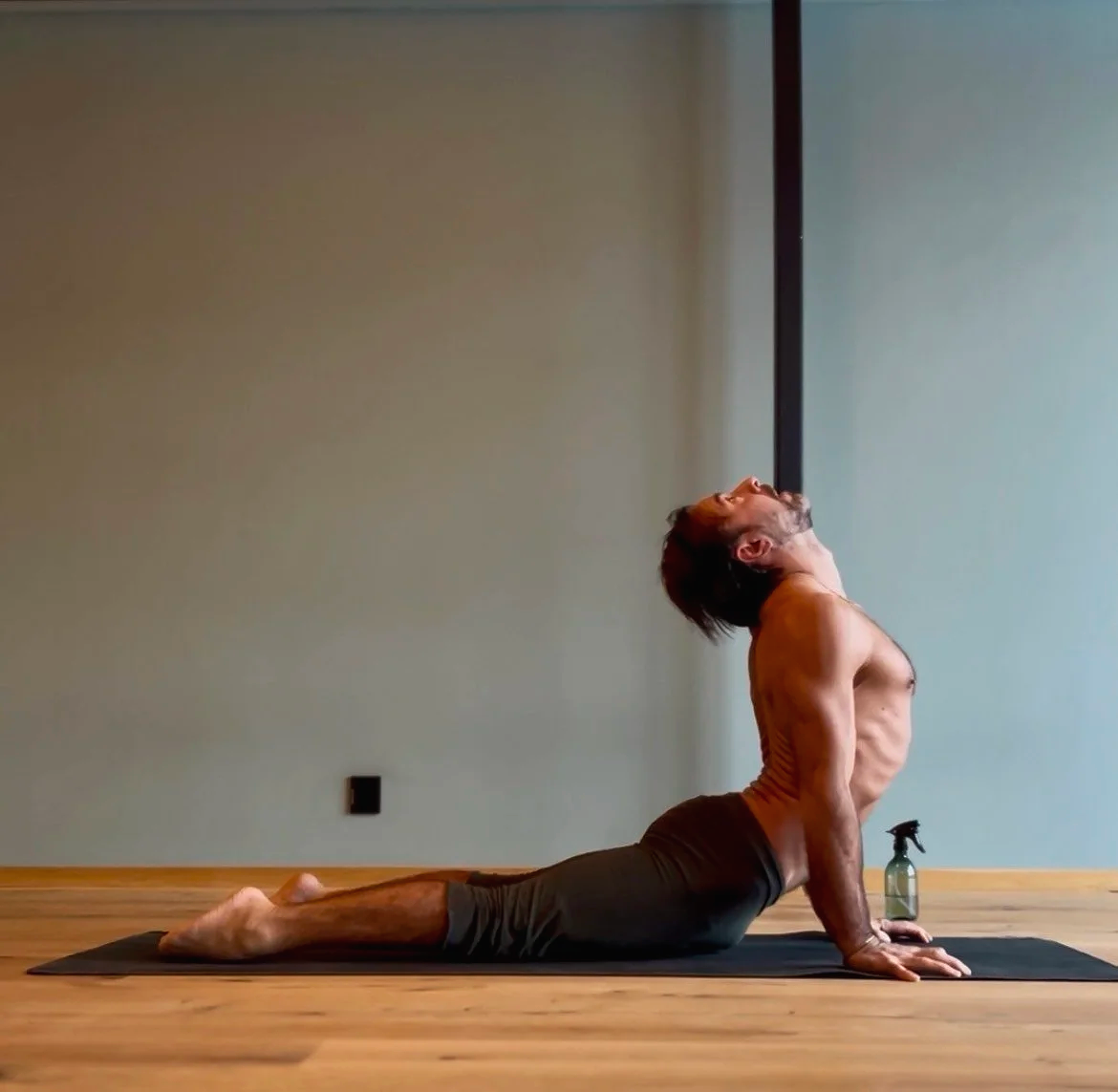
Urdhva Mukha Svanasana
This in essence ‘resets’ the state of the static Asana and takes the spine between flexion and extension, which has many benefits, especially if one has performed a deeper movement and is transitioning into an opposite movement. A backbend to a forward fold, for example.
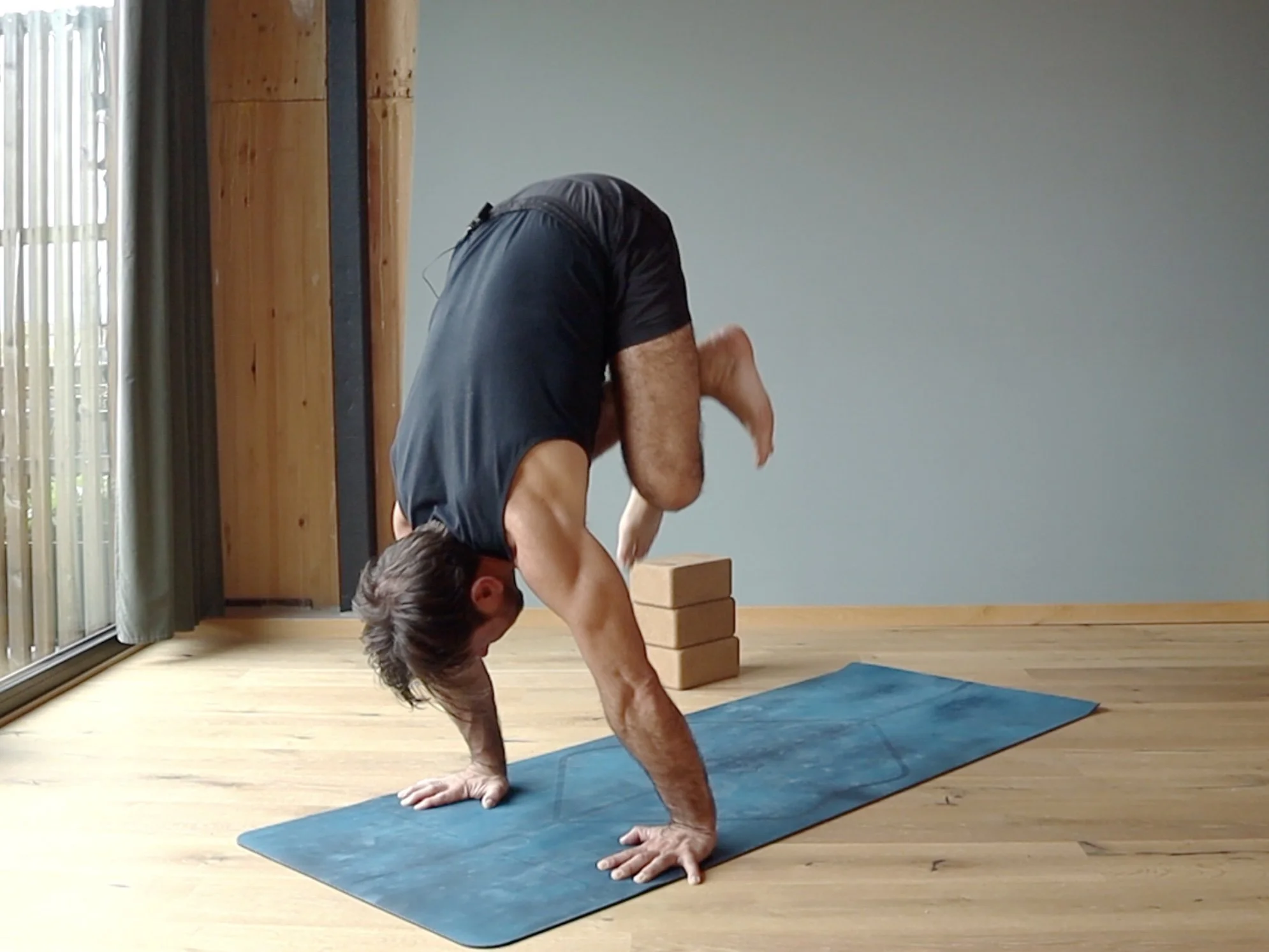
Jump through between each side in Ashtanga Yoga
So let’s look at the counted method of Ashtanga Yoga and this will give us a clearer view of what we can think of as a Vinyasa. In Ashtanga Yoga, each Vinyasa is counted as well as the breaths in the state of the Asana.
Janusirsisana A for example has 22 Vinyasa’s.
Ekam Inhale - 1 Breathe In, we enter Urdhva Hastasana but this is not held.
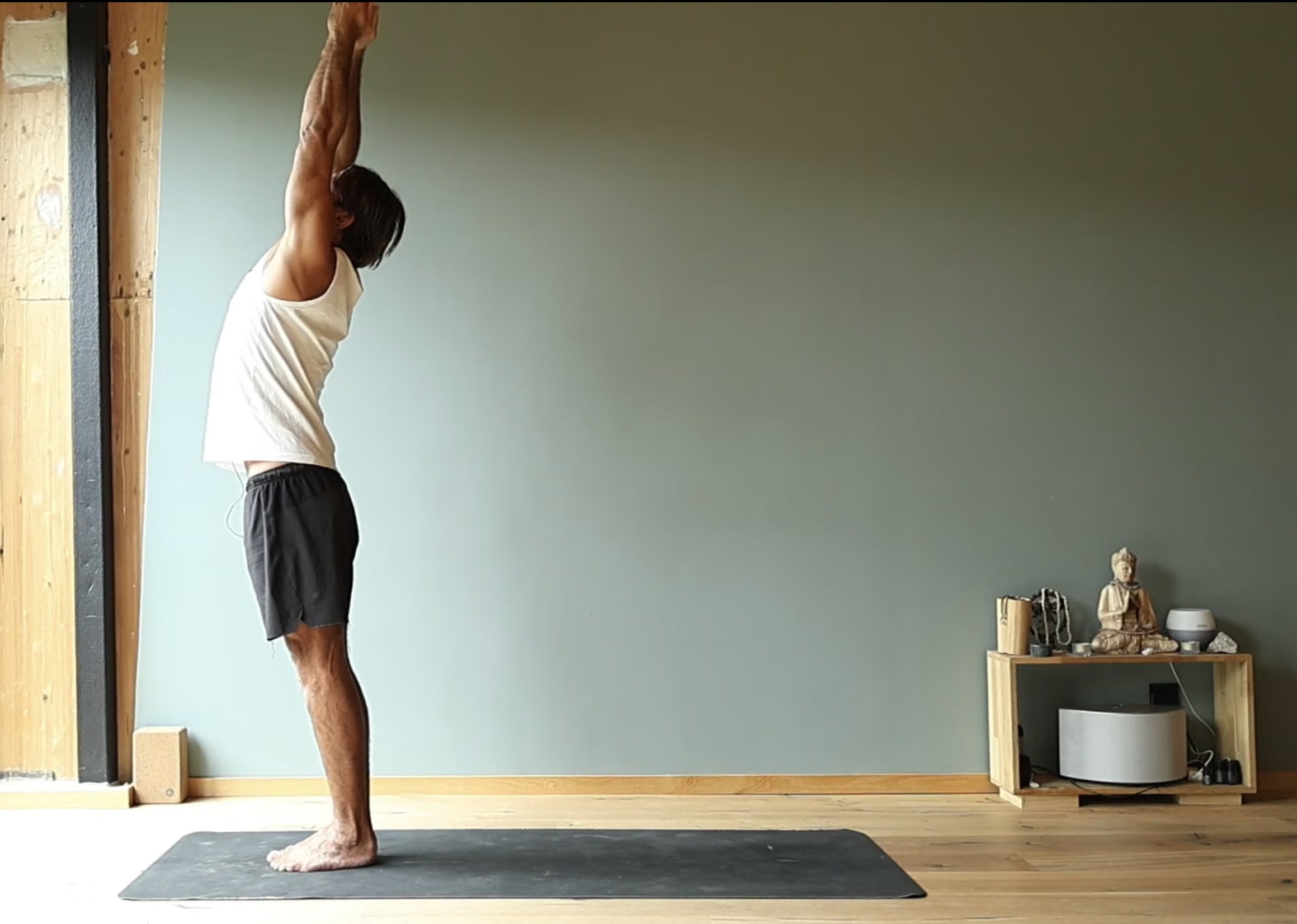
Urdhva Hastasana - Ekam Inhale - 1 Breathe in.
We continue counting through Surya Namaskara A ( which has 9 Vinyasa’s ).
1: Ekam - Inhale arms reach up Urdhva Hastasana / Tadasana.
2: Dve - Exhale fold forward Uttanasana.
3: Trini - Inhale look up and lengthen / half lift Ardha Uttanasana.
4: Catvari - Exhale jump or step back into Chaturanga Dandasana.
5: Panca - Inhale Upward-Facing Dog ( Urdhva Mukha Svanasana ).
6: Sat - Exhale Downward-Facing Dog ( Adho Mukha Svanasana ) — held for 5 breaths in Surya Namaskara A.
7: Sapta - Inhale jump or step forward, look up and lengthen Ardha Uttanasana.
8: Astau - Exhale fold forward Uttanasana.
9: Nava - Inhale arms reach up Tadasana - Exhale Return to neutral standing position.
Samasthitih.
We find ourselves in Adho Mukha Śvānāsana on count number 6. Sat.
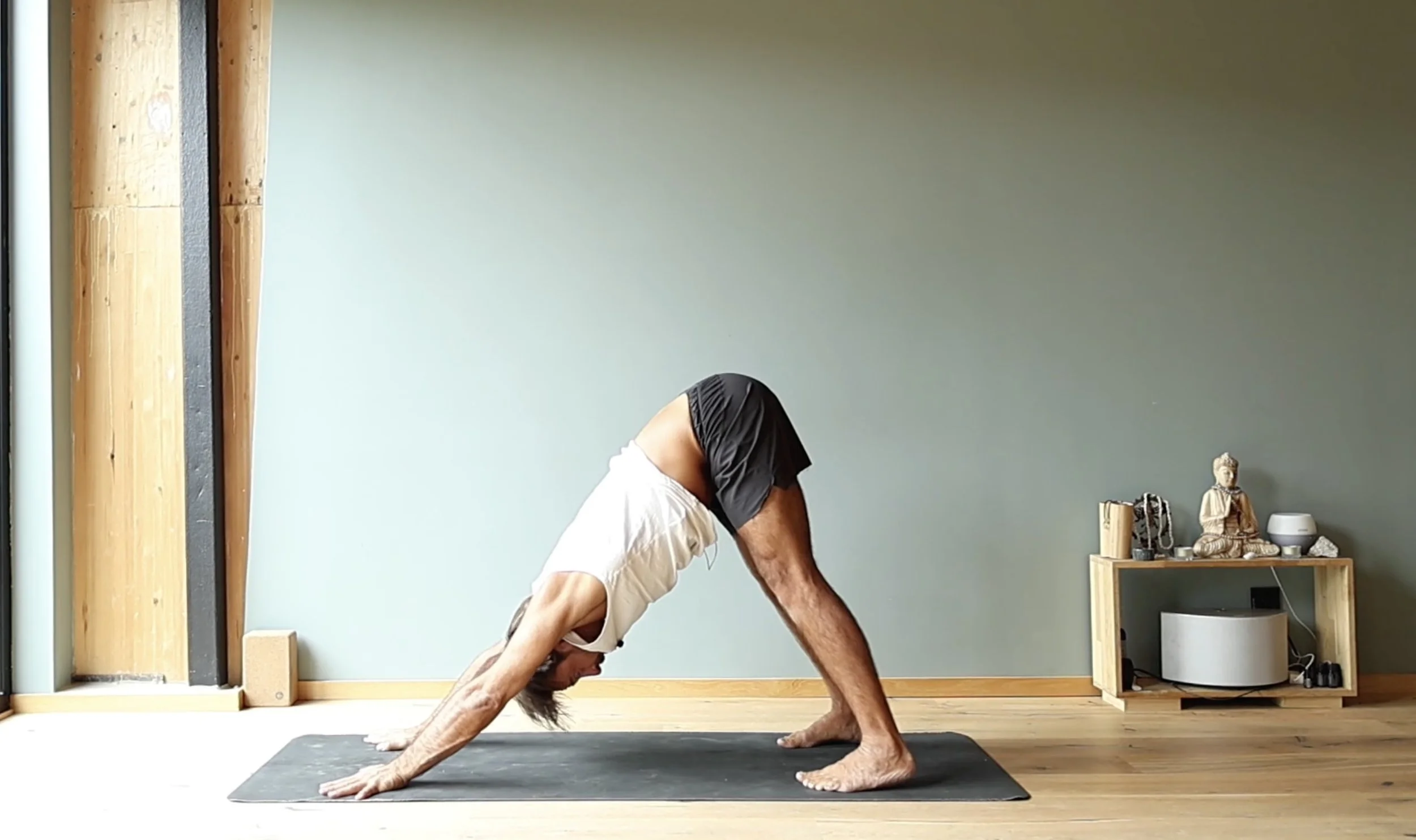
Adho Mukha Śvānāsana - Vinyasa 6 - Sat
Right Side (Vinyasas 7 – 9)
7: Sapta - Inhale jump through from Downward Dog, place the right foot against the inner left thigh, reach forward, and grab the left foot or wrist while lengthening the spine and looking up.
8: Astau — Exhale fold forward, placing the chin or forehead to the shin. Hold for 5 breaths while gazing at the big toe (Padagre drishti). Asana State.
9: Nava - Inhale lift the head and chest, lengthening the spine. Exhale while keeping the bind.
10: Daśa - Inhale lift up. ( Lolasana ).
11: Ekādaśa - Exhale jump or step back into Chaturanga Dandasana.
12: Dvādaśa - Inhale Upward-Facing Dog ( Urdhva Mukha Svanasana ).
13: Trayodasha - Exhale Downward-Facing Dog ( Adho Mukha Svanasana ).
14: Caturdasa - Inhale jump through.
Jumping through to seated.
15: Pancadasa - Exhale fold forward over the right leg. Hold for 5 breaths. Asana State.
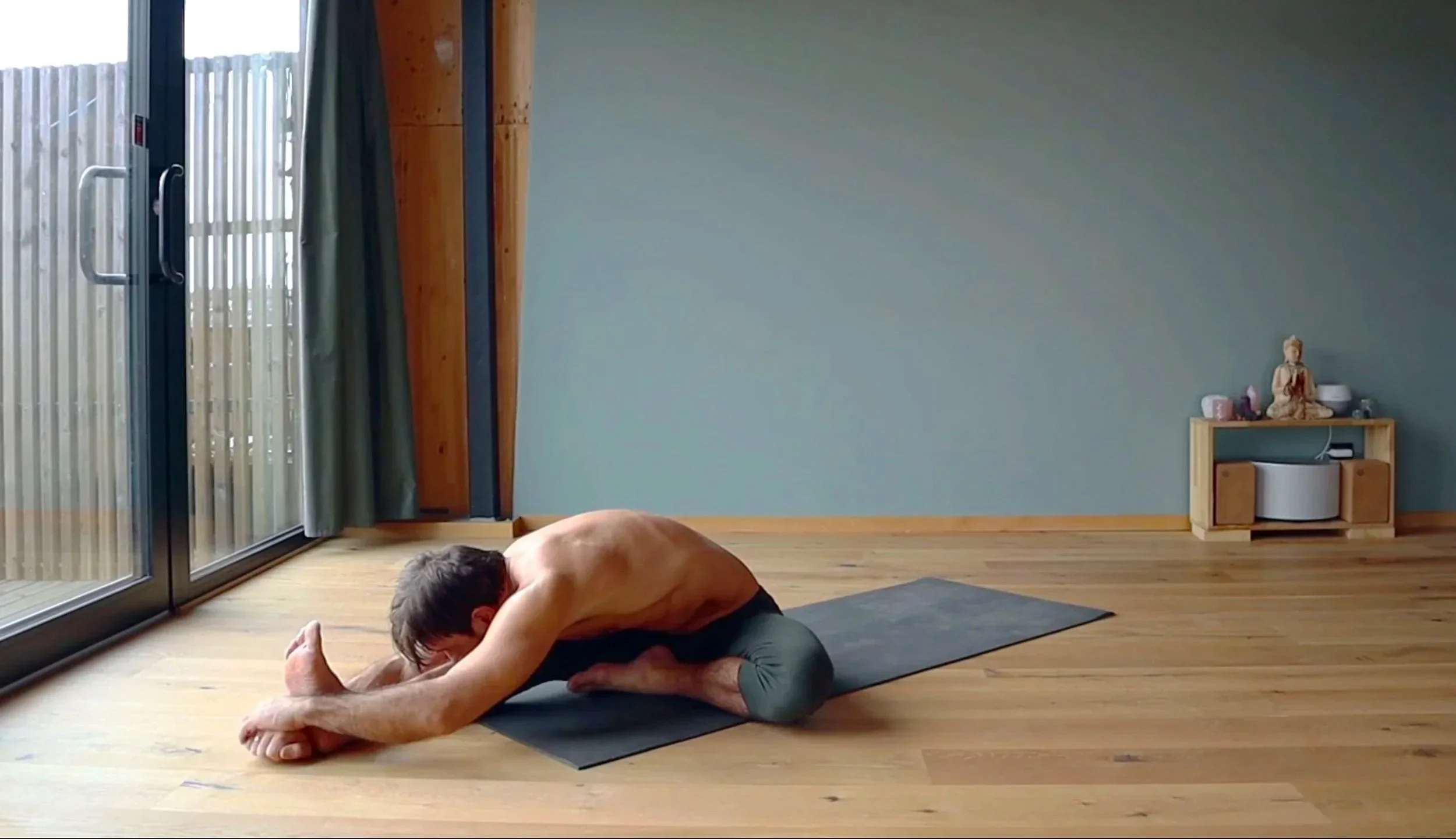
Janusirsisana A. Left side. Vinyasa 15 (Pancadasa): Exhale – Fold forward over the right leg and hold for 5 deep breaths.
16: Sodasa - Inhale lift the head and chest, lengthening the spine. Exhale in place.
17: Saptadasha - Inhale lift up. ( Lolasana ).
18: Aṣṭādaśa - Exhale Jump or step back into Chaturanga Dandasana.
19: Ekonaviṃśatiḥ - Inhale Upward-Facing Dog ( Urdhva Mukha Svanasana ).
20: Viṃśatiḥ - Exhale Downward-Facing Dog ( Adho Mukha Svanasana ).
21: Ekaviṁśatiḥ - Inhale jump or step forward, look up and lengthen Ardha Uttanasana.
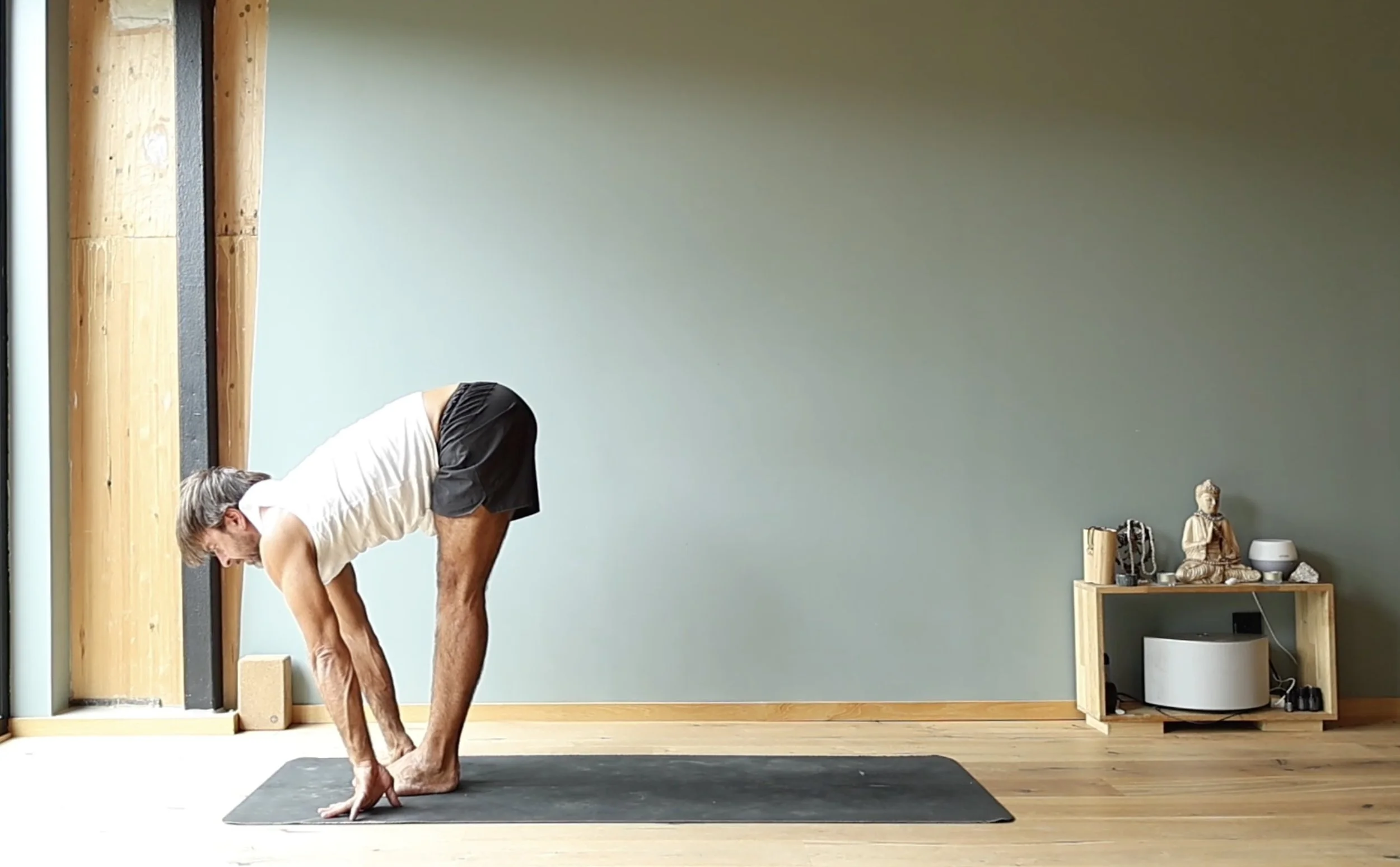
21: Ekaviṁśatiḥ - Ardha Uttanasana
22: Vvāviṁśatiḥ - Exhale Fold forward Uttanasana.
Samasthitih.
In this way, we understand where the concept of Vinyasa came from and how it was counted and systematized through the Ashtanga Yoga method.
The counting is an integral part of Ashtanga and, as a teacher, it is part of the practice in itself. Many teachers (myself included) will count each individual student's practice as they teach and adjust as a form of mantra and meditation.
Moving Forward.
All modern forms of Vinyasa Yoga are derived from Ashtanga Yoga in essence, and now come in a variety of different styles and variations which have a similar structure.
Most classes will often begin with a form of Sun Salutation, standing postures, balance postures, seated, twists, back bends and finishing postures.
What we now know as Vinyasa Flow, for example, are variations of this as well as movements added to the Asana’s themselves, where holding a posture isn’t as important and additions are made to the asana itself. This isn’t how I personally teach, but I believe this is being incorporated from other movement styles such as dance.
What is important to understand is that forms and sequences are designed for many reasons and intention is everything. Ashtanga Vinyasa Yoga has a very specific structure for specific purposes to take a student's body and nervous system through structural changes over time. When practiced consistently over time, these changes have a profound effect on the student's body and psychology.
Other sequences have other intentions and can be felt throughout the student's body and nervous system.
My own series, The Element Series, for example, has a similar energy to Ashtanga Yoga but is more balanced in nature than Primary Series, and it’s depth is ‘less intrusive’ one could say in terms of its effects.
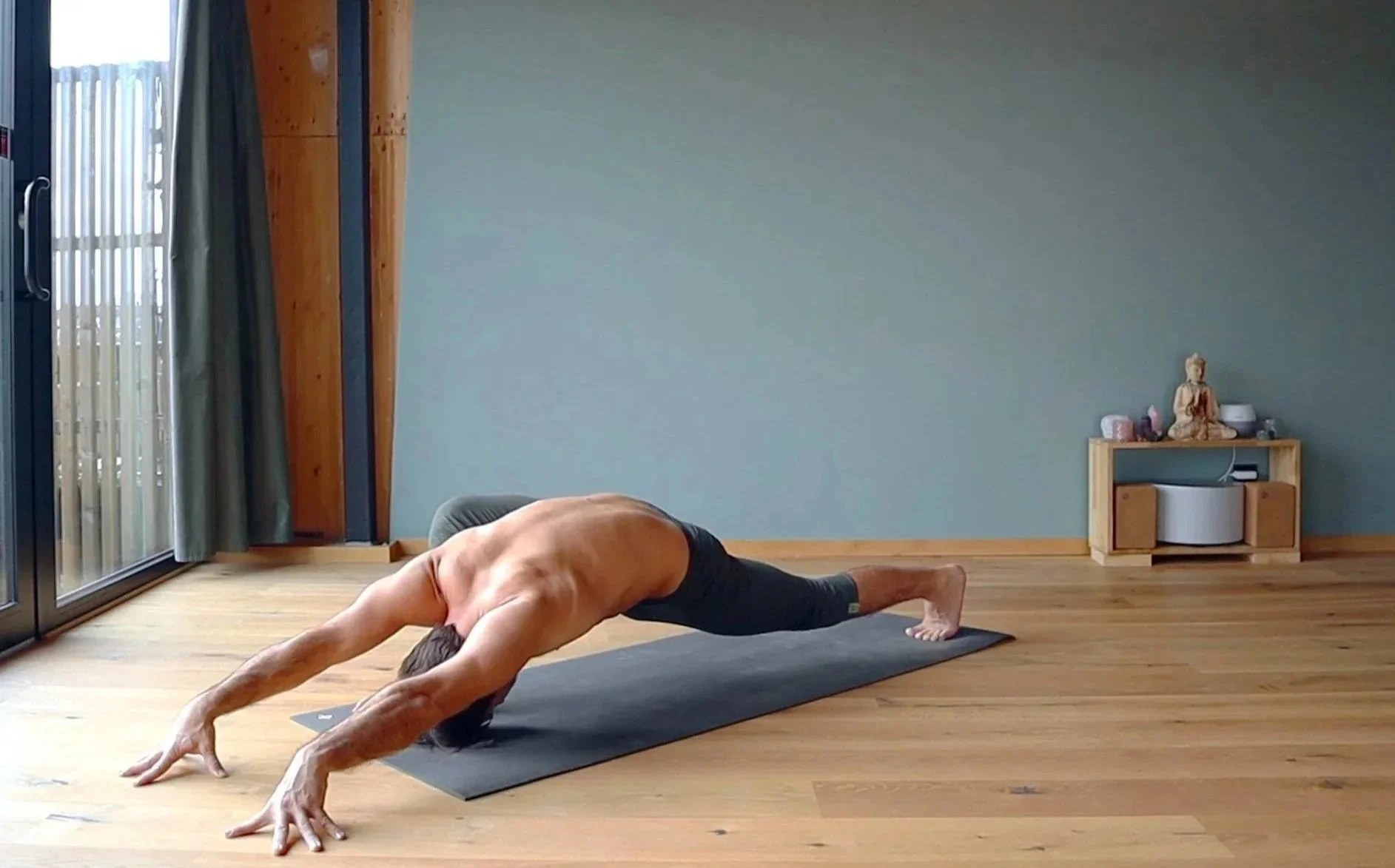
The Element Series Vinyasa Yoga
For new students and in general these days, yoga is seen merely as a form of exercise and stretching, which is misleading. Some sequences will only reach students at a superficial level and will stimulate the nervous system in a certain way.
Other sequences have very specific intention and are designed to reach people at a much deeper level. It’s something that you can only know when it is felt in the body.
I’ve practiced different movement modalities with different people over the years and I could count on one hand the ones that reached me on an intuitive level. I was very aware that these were designed with a specific intention.
An analogy that comes to mind is when we taste food prepared for you by someone that loves you deeply. It tastes and feels different. Intention is everything. Or maybe a poem or verse from a writer that is designed to slice deeply into your mind and heart. To provoke and stimulate, not to distract.
I would say authentic yoga practices are designed to stimulate and stir you, and not to dull the senses.
I personally love to see evolution and the continuation and development of different styles of practice. Vinyasa Flow is something that will continue to evolve the same way Ashtanga Yoga was born. Change is good, but only when the intention is pure does something evolve for the best.