
‘How does mobility effect strength work?’
When we talk about resistance training, we are talking about exerting a certain amount of force from our bodies against an object. In a traitional gym setting this would be lifting a weight off of the ground, of pushing a weight away from us for example. The resistance being an heavy object and gravity.
In this example we don’t need a lot of mobility as most traditional gym based weight training doesn’t require a large range of motion for our bones and joints.
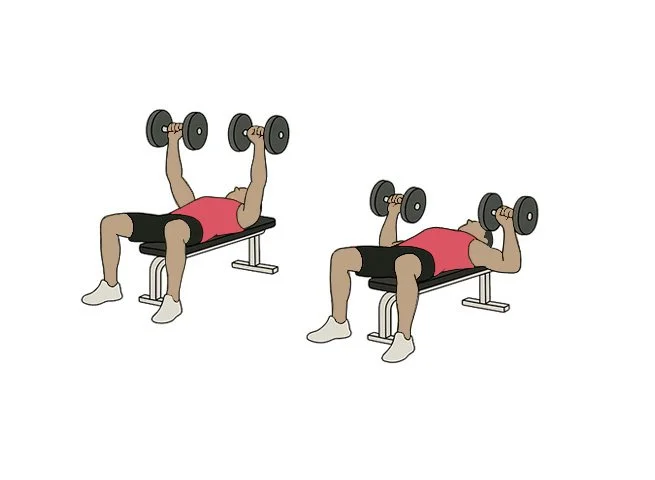
Lifting / Pressing an object away from us.
In yoga and calisthenics the resistance is the floor, our body weight and gravity. This adds a different dimension to strength training and our mobility can have a big effect on hard we need to work to move our body through the air and press into the ground. Especially in more complex asana’s.
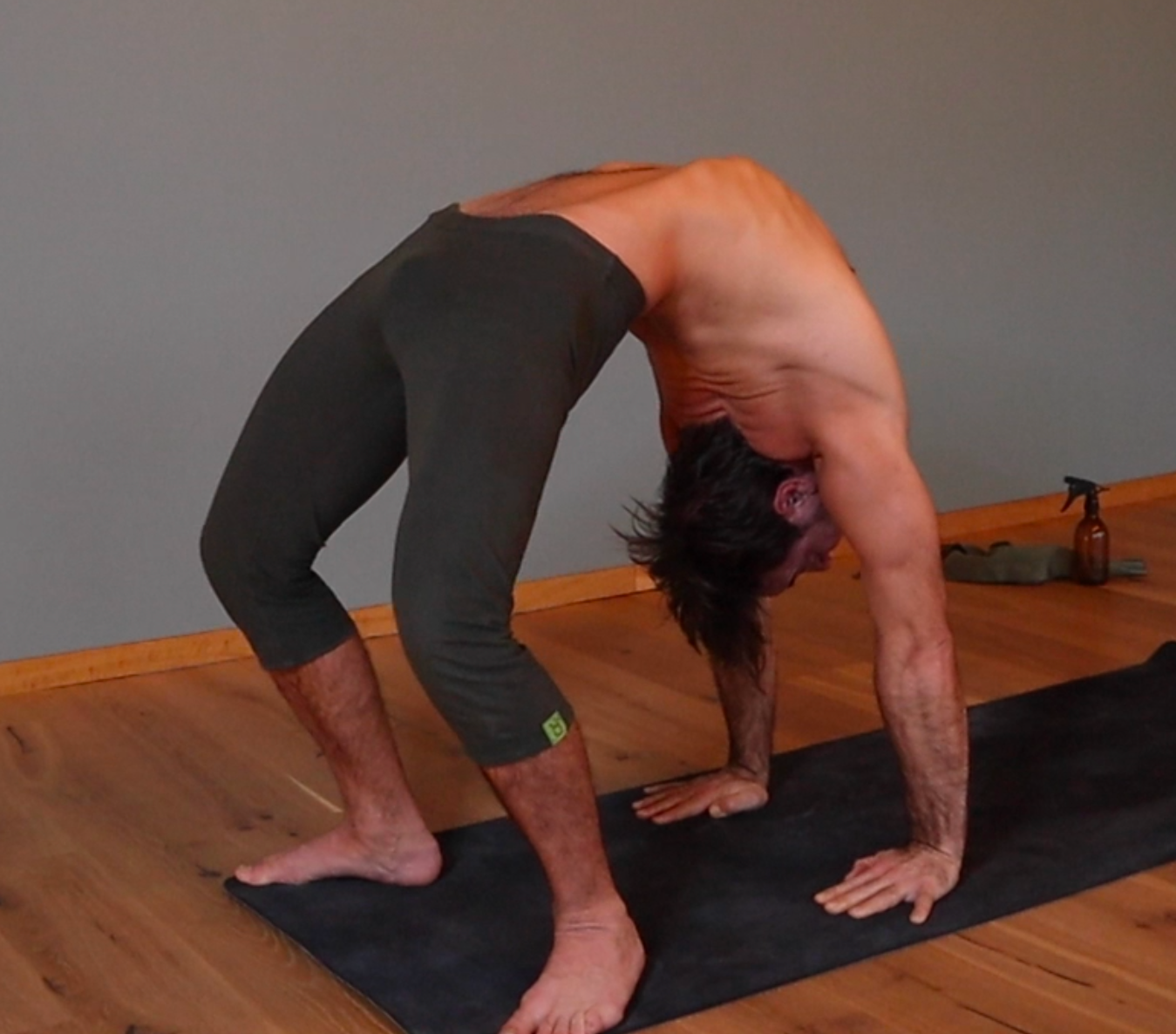
Pressing into the floor to open the back, hips and shoulders in bridge
The three examples I am going to use in this post is Urdhva Dhanurasna as shown in the image above, Kapotasana, and a straight line handstand. These are three excellent examples in yoga where our mobility plays a very big part. I’ll explain why.
In a straight line handstand, the amount of flexion and external rotation of the shoulder joint and movement of the scapula will determine how hard we need to push into the ground to maintain the position.
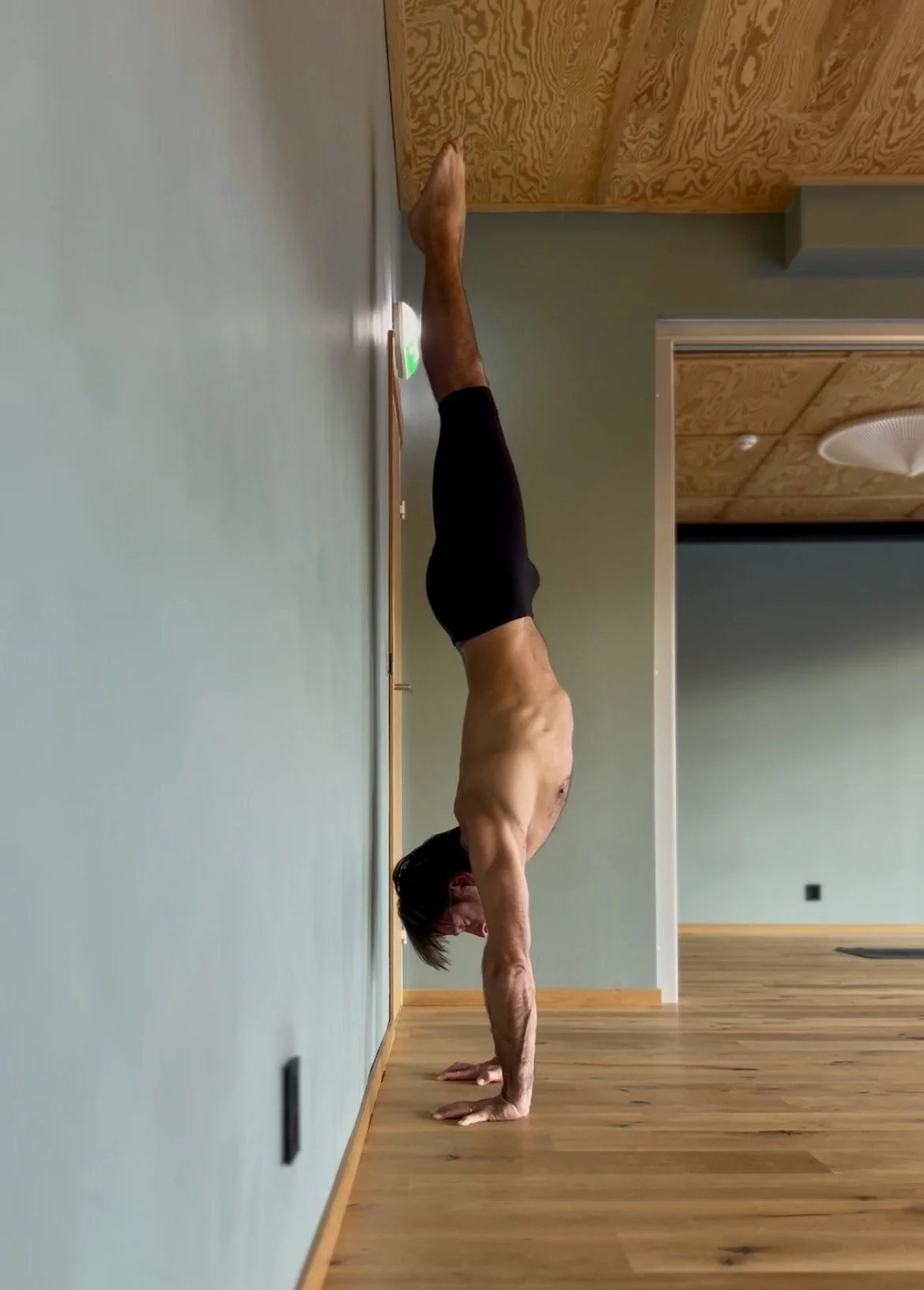
Straight Handstand
In the image above you can see the bones of my arms, hips and legs are relatively in a straight line. The more my bones are ‘stacked’ like this the less effort I need to exert to practice a straight handstand. The same as when we are stood standing.
Now, if the shoulders are tight for example due to muscular tension and dense fascia ( more on this later ), then I will need to exert much more force to be able to move into the ‘easier’ position. Easier being with my arms in line with my ears. Bones stacked.
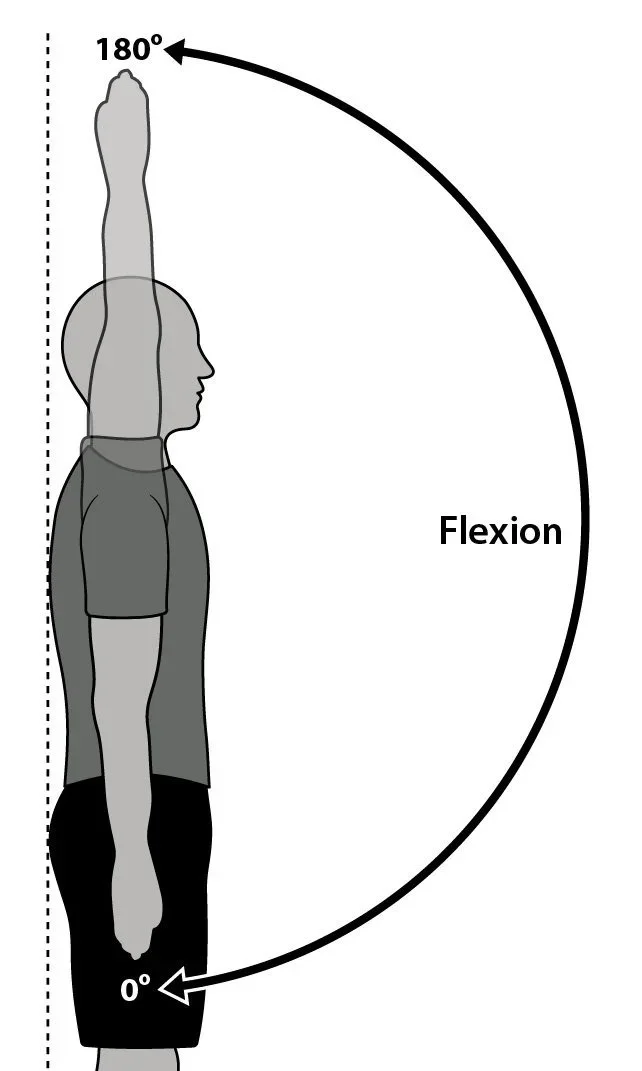
Shoulder flexion in a handstand
You can perform a straight arm handstand without the arms in line with the ears and the hips not inline with your arms, but this will require more strength.
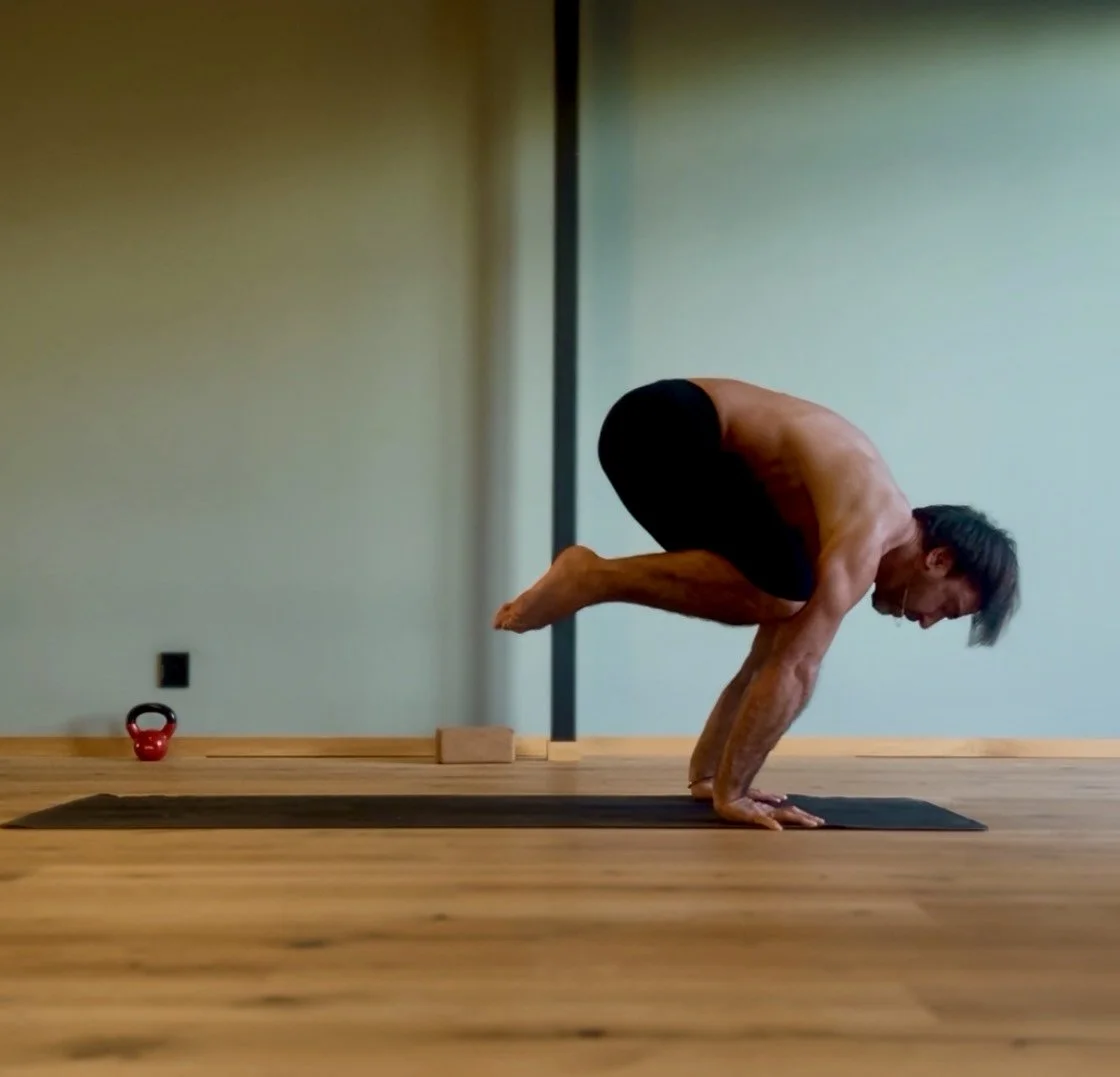
Bakasna
Bakasana shown above is much more work in terms of strength because my bones are not stacked. My shoulders are far forward of my hands and my hips are way back behind my shoulders requiring much more pressing and core strength engagement.
‘So why is that this the case in a straight handstand?’
It’s because your muscles are trying to push the bones into their most optimal position, and if those muscles are short, tight and dense in their texture and have a lot of dense fascia around them then this is the resistance you are pushing against. The tissue that is restricting the necessary movement.
Moving the scapula
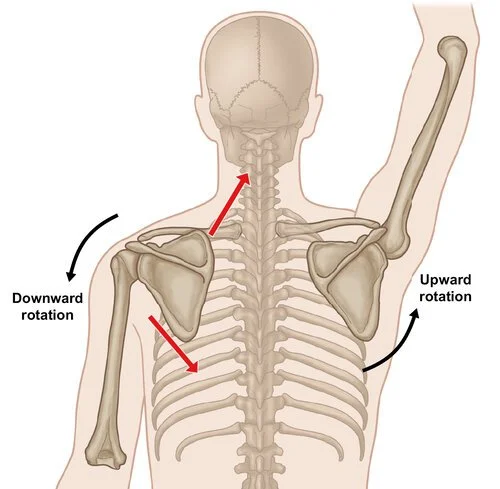
Moving the scapula
The resistance of fascia

Muscle fibres and fascia
Fascia is a membrane of more or less firm connective tissue that is found around muscles, groups of muscles, blood vessels and nerves, and that binds these structures together. It consists of several layers: a superficial fascia, a deep fascia and a visceral fascia, and extends uninterrupted from the head to the tips of the toes. In exceptional cases, the term is used for connective tissue that surrounds other organ structures in the body.
When we are inactive and use less mobility of our joints and bones this fascia becomes thicker and more dense, thus is much more difficult to move a muscle.
When you stretch, your muscles push against this connective tissue, breaking it down somewhat and reducing the resistance.
If you have ever seen a child gymnast, you will see how easy some movements are for them, because they are lighter and have much less resistance in thier bodies that most of us build up from a life time of inactivty or sitting at a desk for hours on end for example.
More on the problems with sitting too much here:
You rest you rust
When you practice yoga daily, or stretch routinely, this becomes less of an issue and maintains healthy joint and muscle activity because the connective tissue isn’t hardening around those fibres. The body is designed to move often.
Move it or lose it
More complex movements will show this lack of mobility more easily. Let’s look at a couple of back bends for example that highlight this.
Backbending is not a normal movement as we don’t do it in our day to day activities, and when these movements aren’t performed for a long time ,or never in most cases, we can see how so much resistance can build up in our bodies.
Bridge Pose
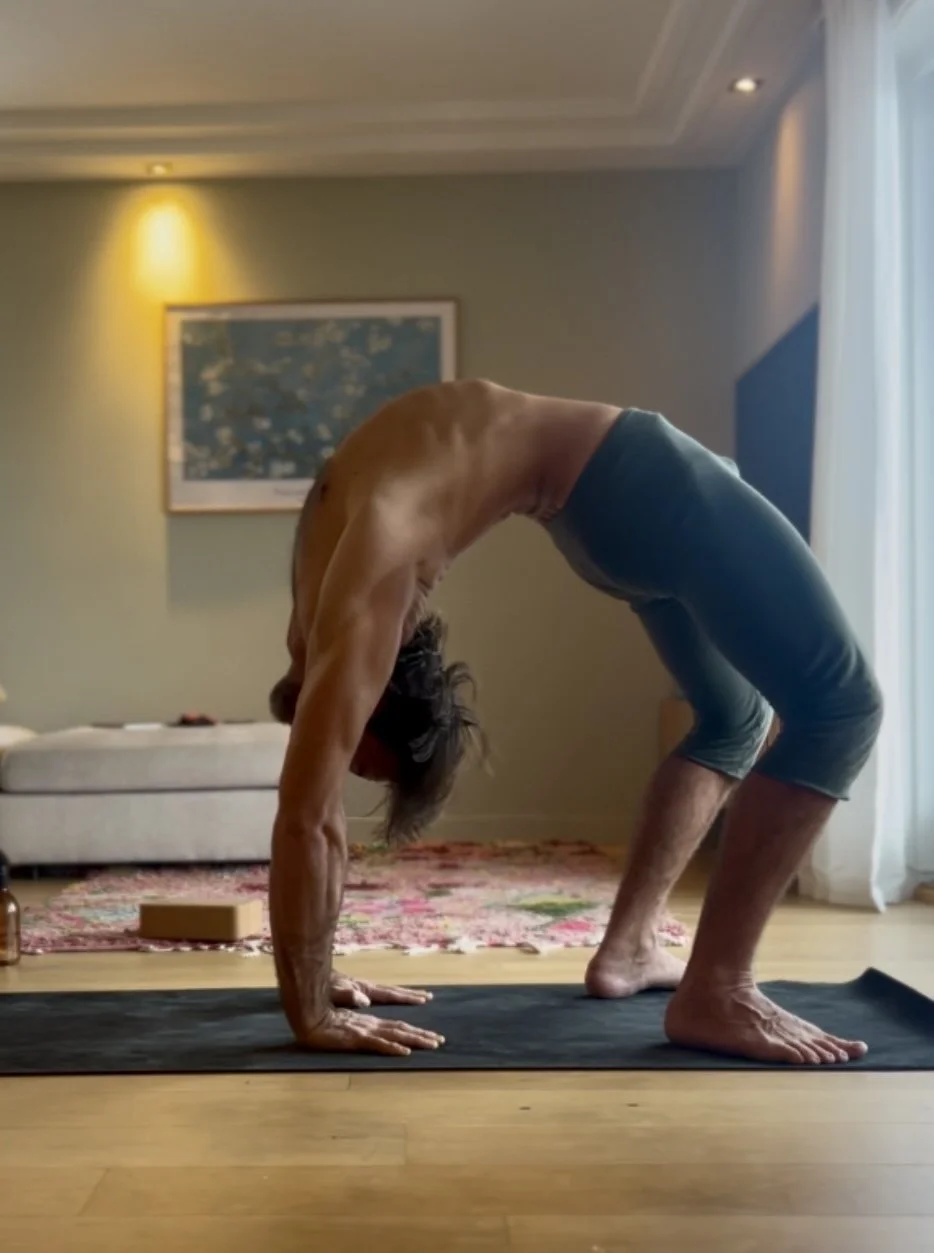
Open shoulders and hip flexors in Urdhva Dhanurasana
Bidge pose is an excellent posture to show case this as it requires a fair amount of mobility to push up into a nice healthy arch.
The shoulders need to be open enough as they would be in a straight handstand. You can see my shoulders are positioned directly over my hands. This would not be the case if my shoulders were stiff and unable to externally rotate like this.
The same goes for my hip flexors, and in particular my psoas which largely restricts back bending and extenson of the spine and hips along with the quadriceps.
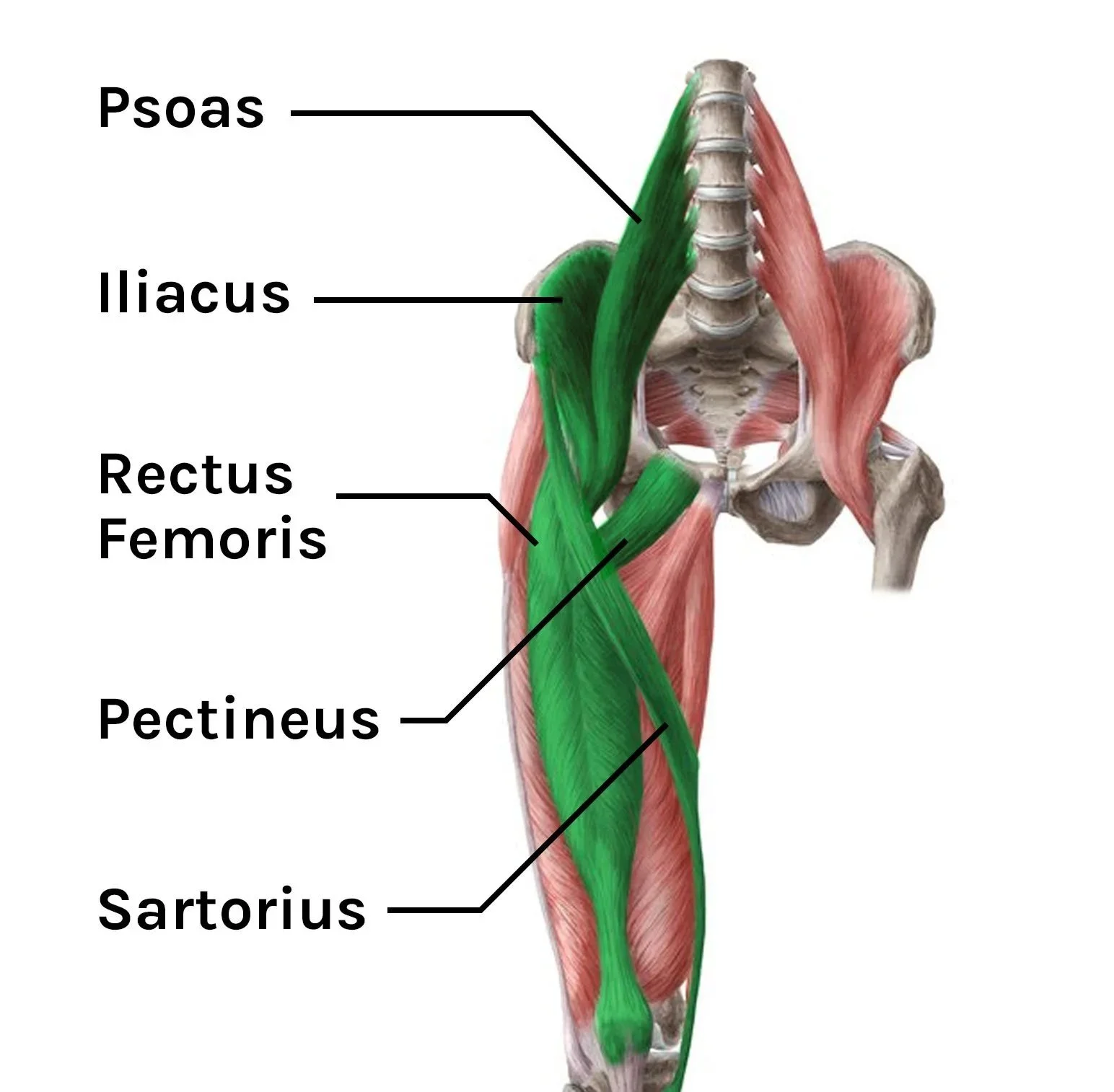
Hip flexors
If I lacked mobility in my spine, my shoulders were tight and stiff and I was unable to lengthen my hip flexors my brdige pose would look more like a table. This was my bridge pose when I initially began practicing yoga.
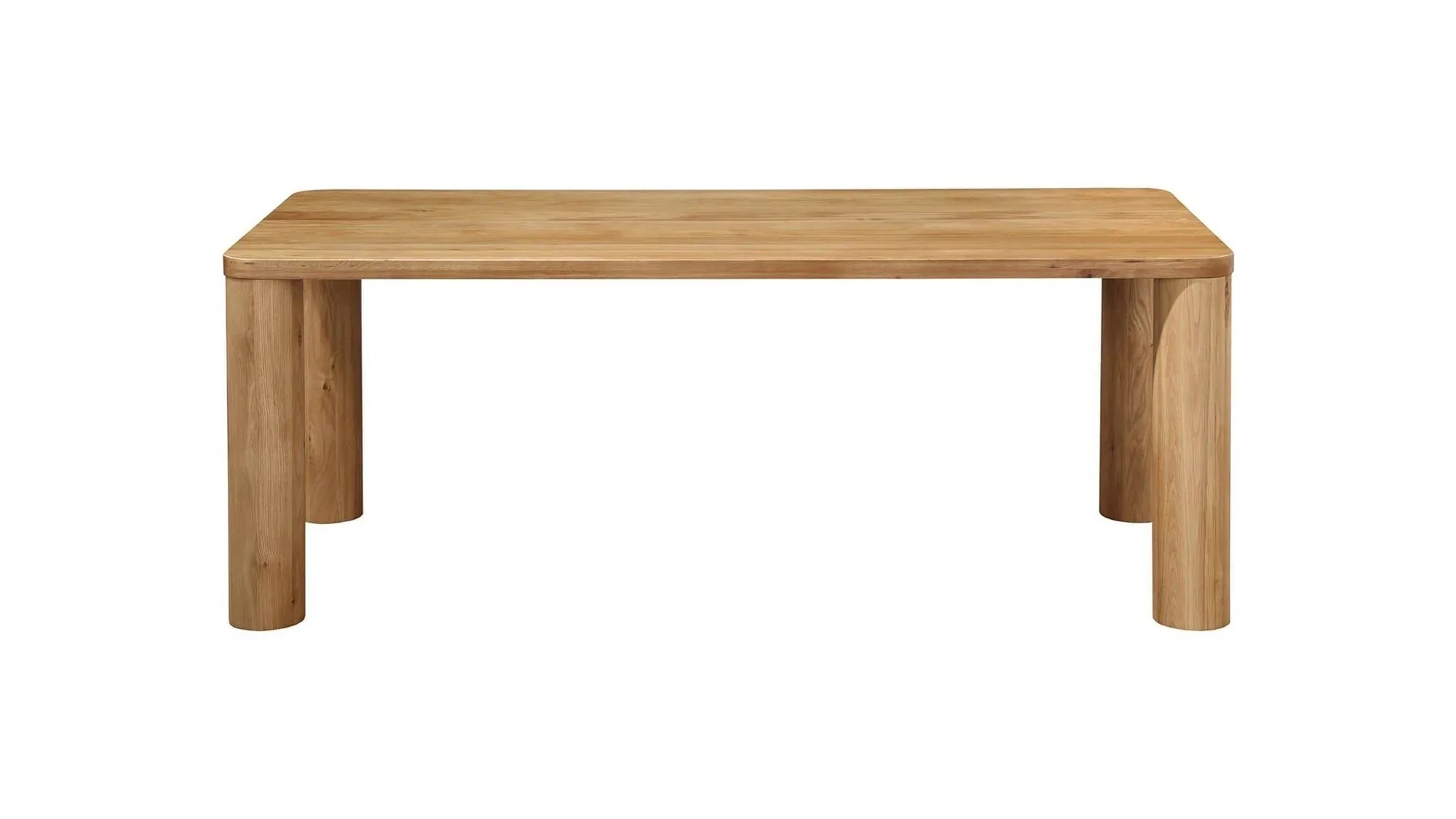
A stiff brdige pose
Now, to open the back, shoulders and hip flexors I had ot exert a lot of force to push up and into the air to lengthen these muscles and soften that fascia to be able to move my bones into thier optimal position. This is essentially an eccentric stretch which in my opinion is the safest way to stretch a muscle.
As movements become more complex, or ‘foriegn’ to us. As in that we haven’t done them for a long time, or potentially never, then there is much more work to do for this type of movement pattern to become normal and open that it doesn’t require so much effort.
One posture that comes to mind as we are on the theme of back bending is Kapotasana in the Intermediate Series of Ashtanga Yoga. This was a very challenging asana for me to learn because of my background in competetive sports. It was the opposite type of movement than what I had spent most of my life doing. There was a lot of resistance.
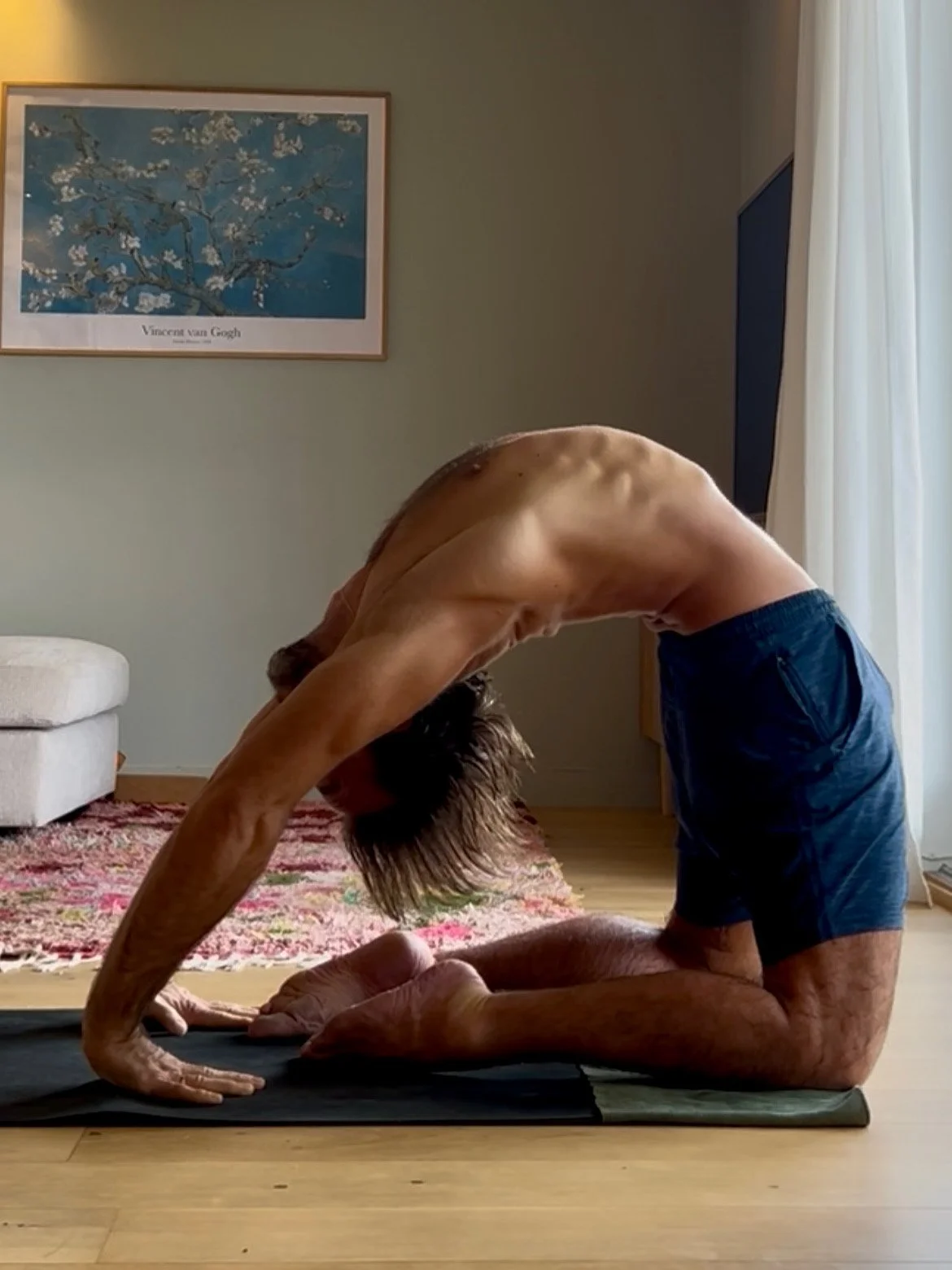
Kapotasana B
Kapotasana took me many years of consistent and very focused practice to open my body to. It is a complex movement that doesn’t come naturally to most students and for some time has a lot of resistance.
Aside from the hip flexors the shoulders and upper back has to change a lot and that dense tissue in the upper back takes time to soften and shift. Most adults haven’t moved thier upper back since they were children. The rib cage becomes a cage.
This takes a huge effort of pushing, pressing, and a vast amount of leg strength to maintain. It zaps your energy practiticing and requires a lot of strength because of the muscular / fascial resistance.
As we become more open this changes and isn’t so heavy.
In my opinion, a well rounded yoga pratice should incorporate a balanced strength practice to created a sense of Bandha in a students body with the lengthening of muscles. These oppoisites of strength and flexibility compliment each other and create a body that is in harmony.
This eccentric stretching of the muscles and fascia also chsanges how it feels to touch. My muscles were much more hard to touch back in my competetive sports days. Now they are softer to touch but also stronger. The fibres are different and move more freely.
So to summarise, having more mobility definitely aids in the ease of movments but as we beome more mobile we will essentially use less strength to maintain the same position.
What we need learn in our yoga practices is the sense of Bandha and activation that engages the necesssary muscles and relaxes their oppsites. This engagmentt is essential for a healthy yoga practice. When this activation / strength work isn’t there, students can run into problems with incorrect technique in stretching and especially for hypermobile people.
If you are interested in learning a balanced yoga practice check out The Asana Guide and The Element Series.
