How to practice yoga with a meniscus injury
A type of injury that can be problematic for students is dealing with a meniscus injury. In this post I’ll give some pointers on how you can practice yoga in a way that promotes healing.
Depending on the type of injury you have had will depend on the healing process. Damage to the medial side meniscus can take longer than the lateral side as it recieves less blood flow, but that is not to say this will not heal. I have had many students who have fully recovered from a torn meniscus with patient and regular yoga practice.
Movement heals
Meniscus tears are classified by their shape and location, ranging from acute injuries to degenerative wear. Key types include radial, horizontal, longitudinal, bucket-handle, flap, and complex tears. Radial tears are the most common, while bucket-handle tears are severe, often causing knee locking.
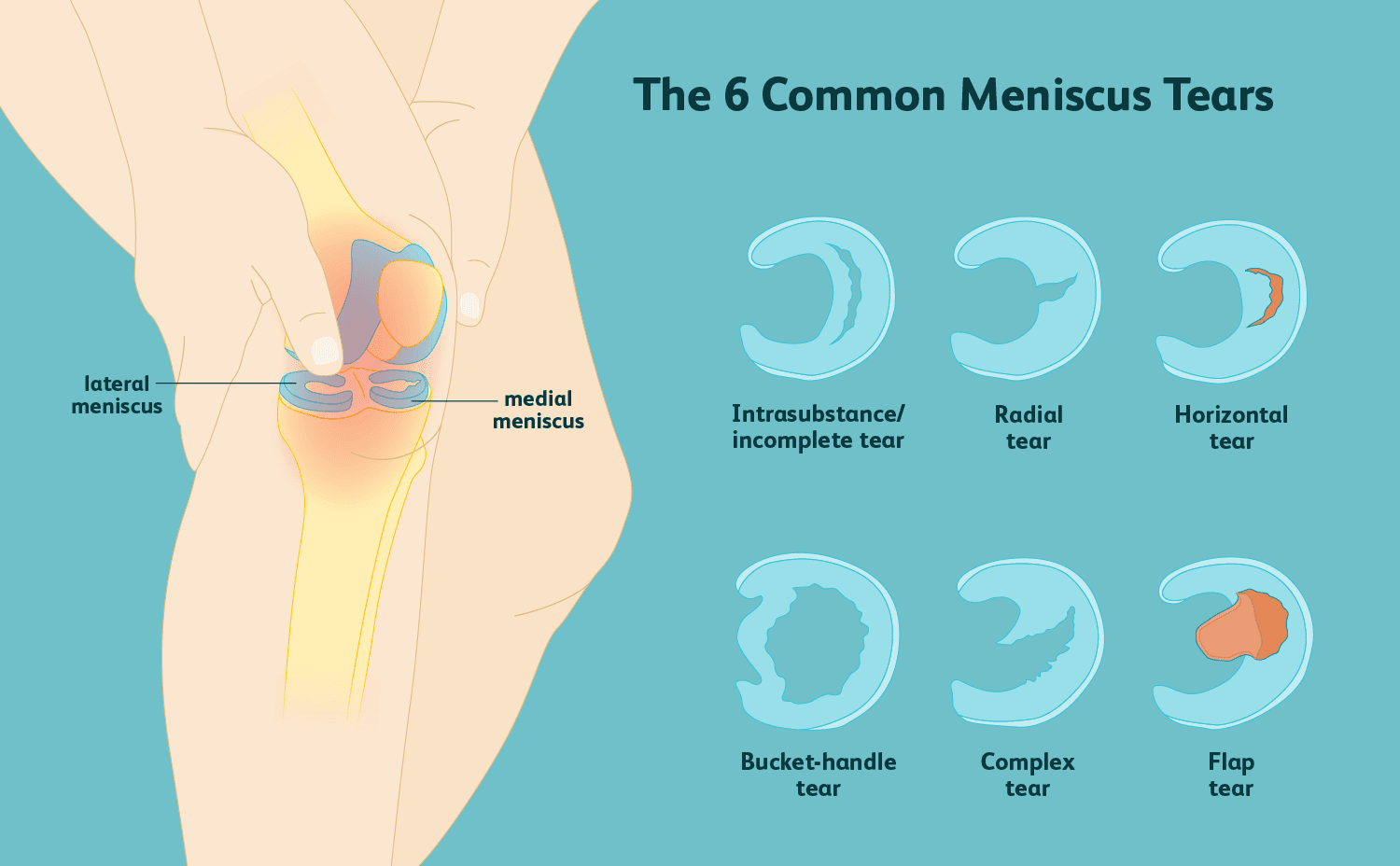
Meniscus Injury
In my experience almost all types of meniscus injuries will heal on thier own with correct practice, but in very rare cases students may require surgery. This is with a bucket handle type tear where the knee is locking and catching. I will always suggest surgery as a very last resort but in some cases it may be the best alternative.
Healing the knee
What we are looking for is blood and oxygen to heal any type of injury and this comes largely from strength work and body movement. We need to provide enough movement to the area so that we allow the body to do it’s naturally occuring system of regeneration, but without making the injury worse. Some stress is good, but too much can reinjure the joint. Below in the following article I dicuss ways in which we can begin the healing process:

knee rehab with Supta Vajrasana
Now as a caveat, meniscus injuries can often be mistaken for muscular imbalances from the hip where the hip is potentially twisted and rotated, as well as inflamation of the lateral or medial tendons of the knee causing pain. Goose’s foot. Pes Anserinus Bursa for example.

Pes Anserinus Bursa
Head to the following article for information on medial knee pain in general:
Following the suggestions in those other articles and you are able to perform basic movements such as walking, and there is less inflammation at the joint level ( assuming the actue phase is over from the injury ) I recommend students begin yoga in a very slow, focused and mindful manner. What we are looking for in the practice is stability and strength around the knee in general and very good alignment with the lower half of the body.
If you are struggling with performing very basic asana’s I recommend my Supine Sequence as this is designed for students recovering from an injury.
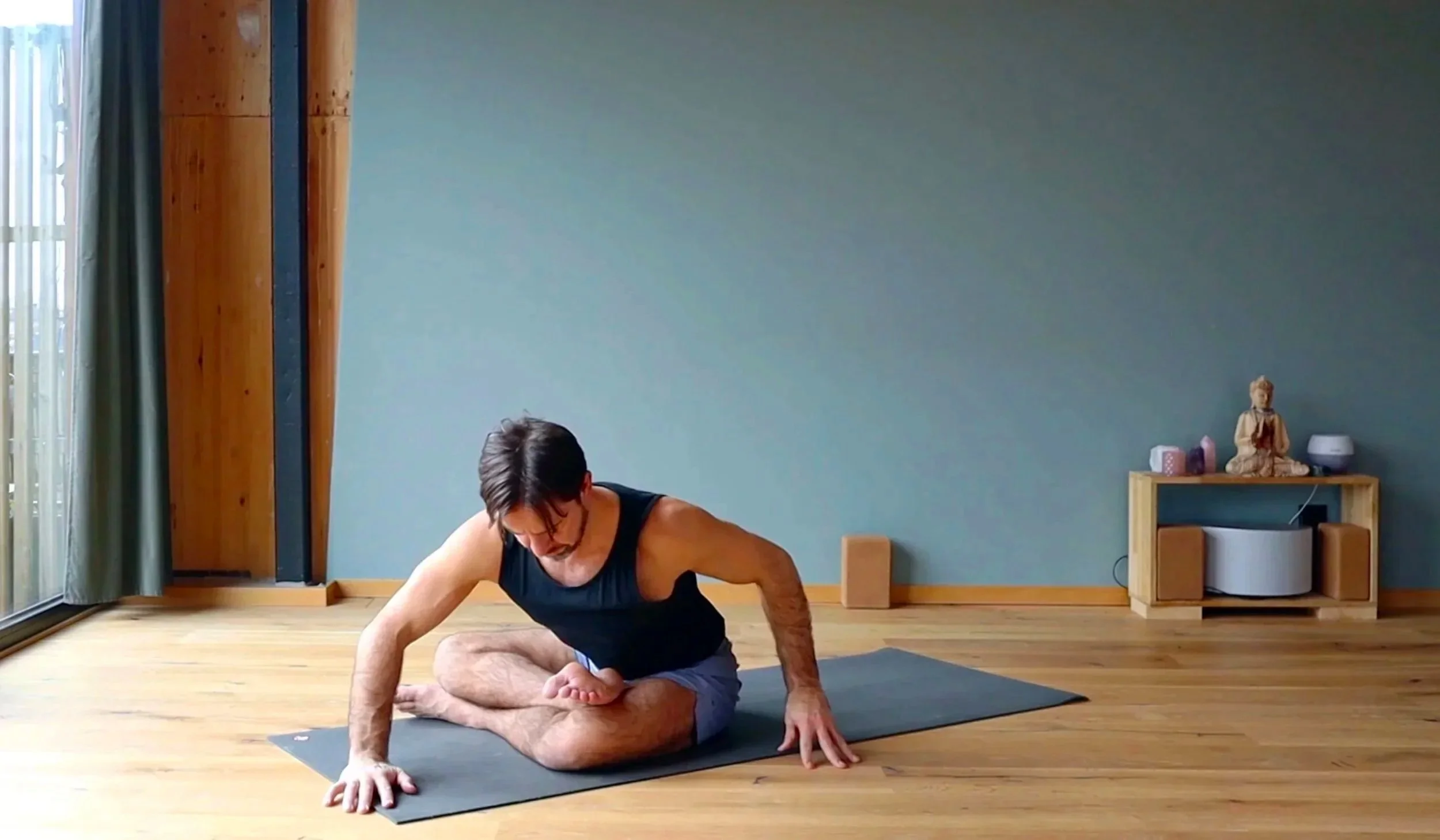
The Supine Sequence
The standing postures in yoga in general are excellent for knee injuries as they require balance and stability through the legs and will activate all of the right muscles around the hip and thighs to send blood and oxygen to the knee.
Virabhadrasana B is a great example where we are focusing on keeping excellent alignment with the knee tracking directly over the standing foot.
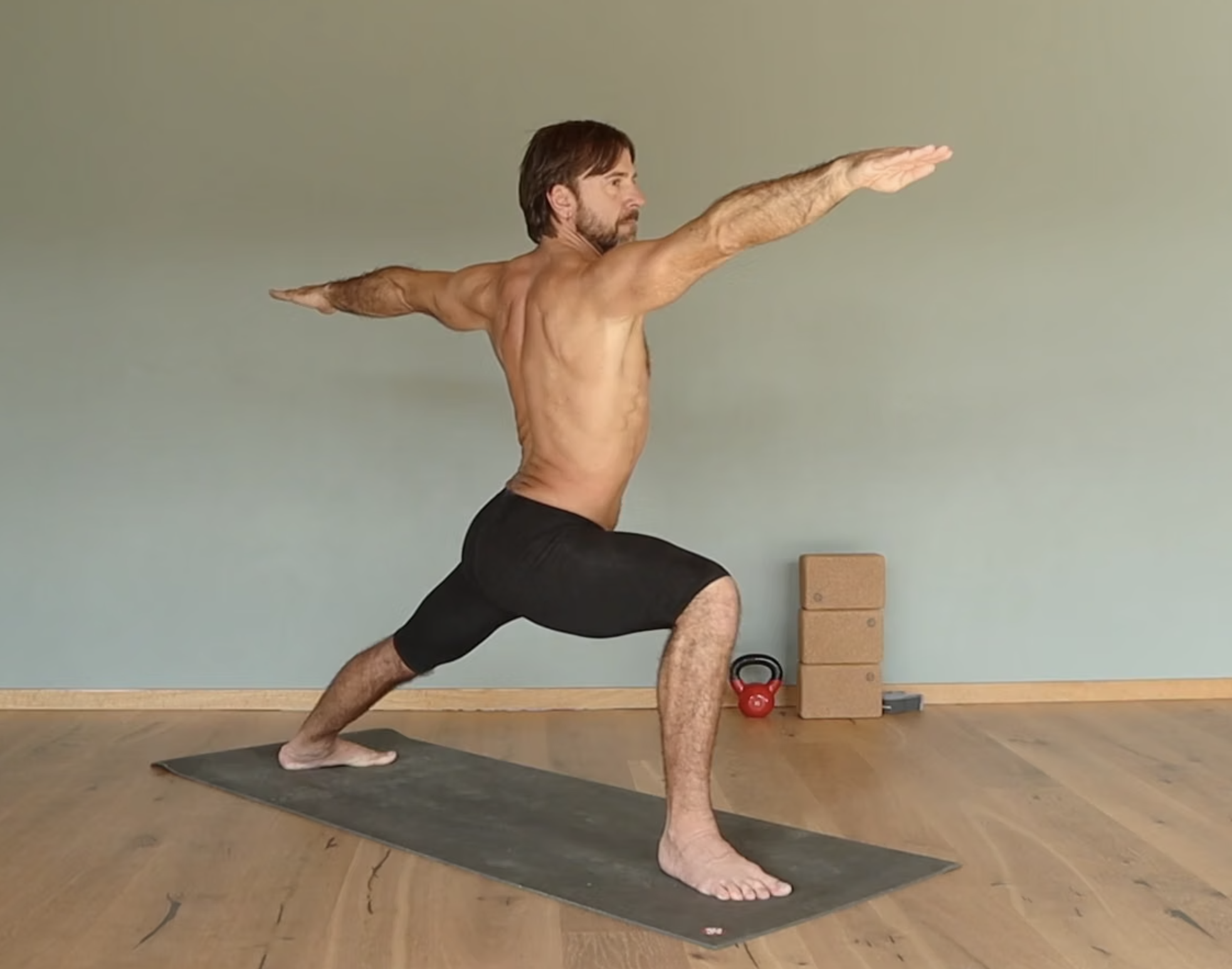
Virabhadrasana B
Utthita Hasta Padangusthasana trains the outer hip and gluteal muscles to stabilise the hip.
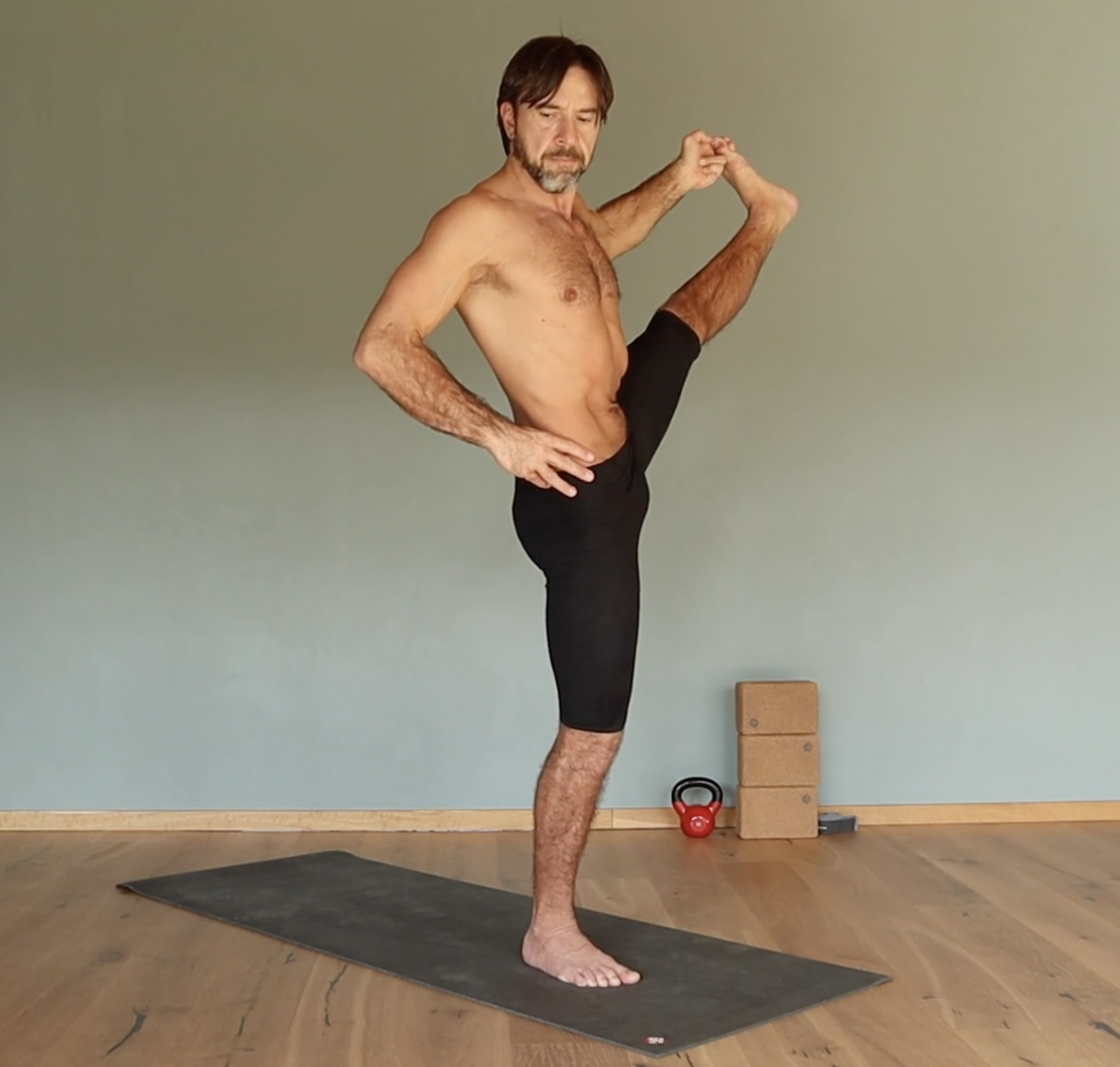
Utthita Hasta Padangusthasana
As we begin to build more strength and stability around the knee we can start the slow process of gaining more mobility with postures such as Malasana and seated forward folds such as Janusirsasana. What we are looking for is to avoid sharp pain at the joint level. If this is the case then back out and go back to the standing postures in yoga and modify your seated postures where you don’t fully bend the knee.
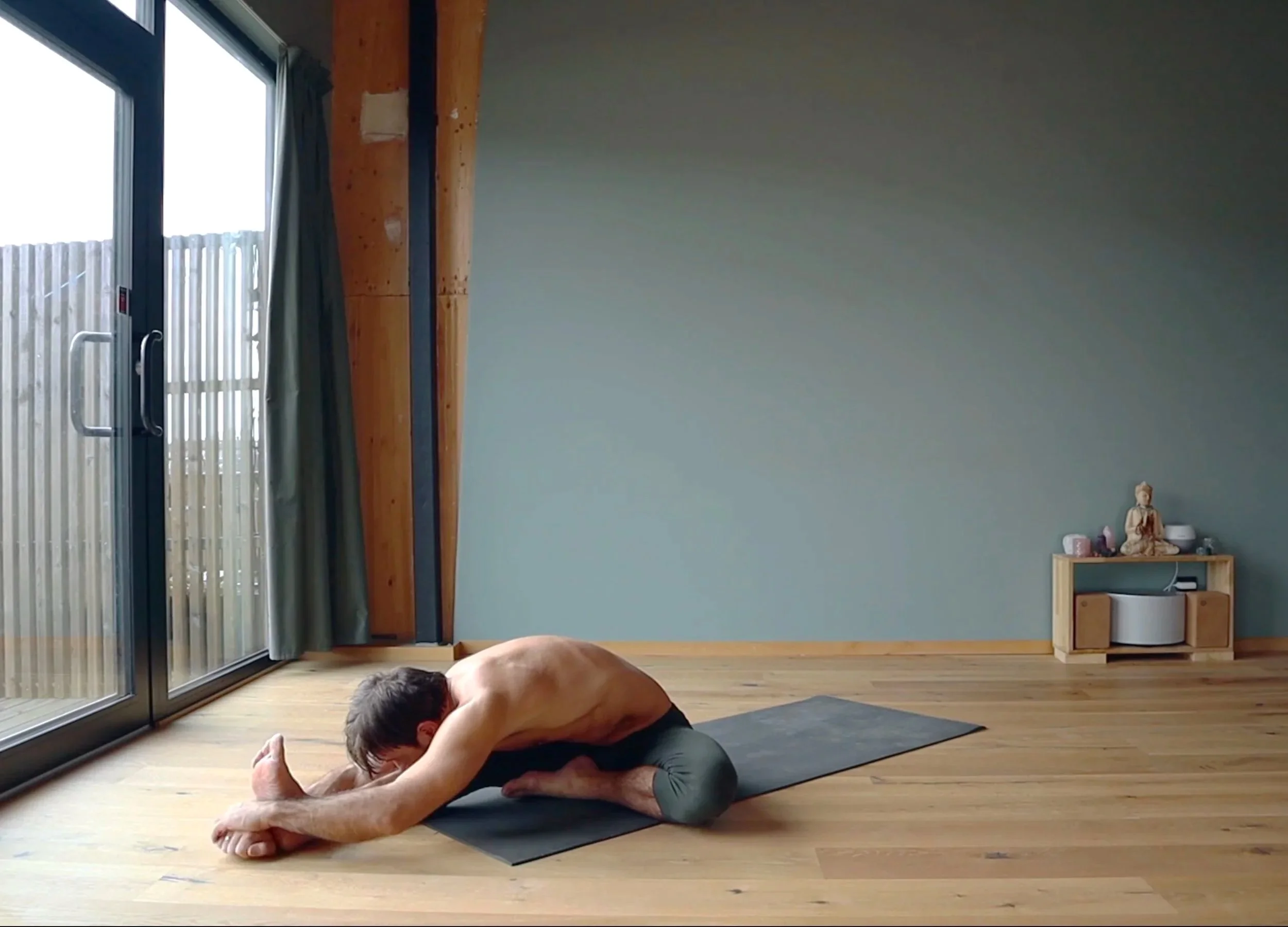
Janusirsasana A with the knee fully bent
Modifying Janusirsasana A by not fully bending the knee. You can also place a block under the knee if the pain is felt laterally.
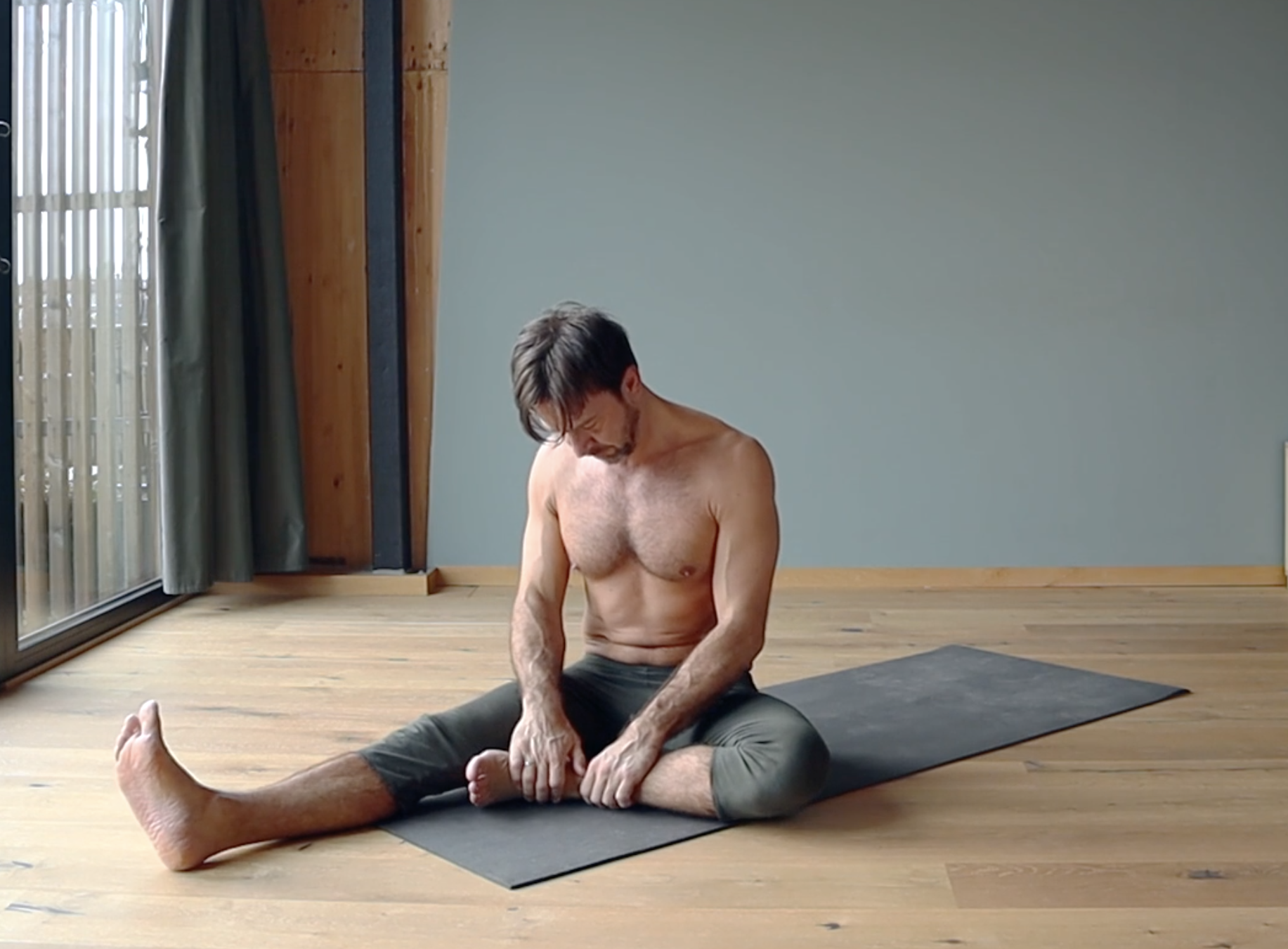
Janusirsasana A modified.
As the knee begins to heal we can stress the area little more by squatting. This is a good indication that the knee is healing nicely.
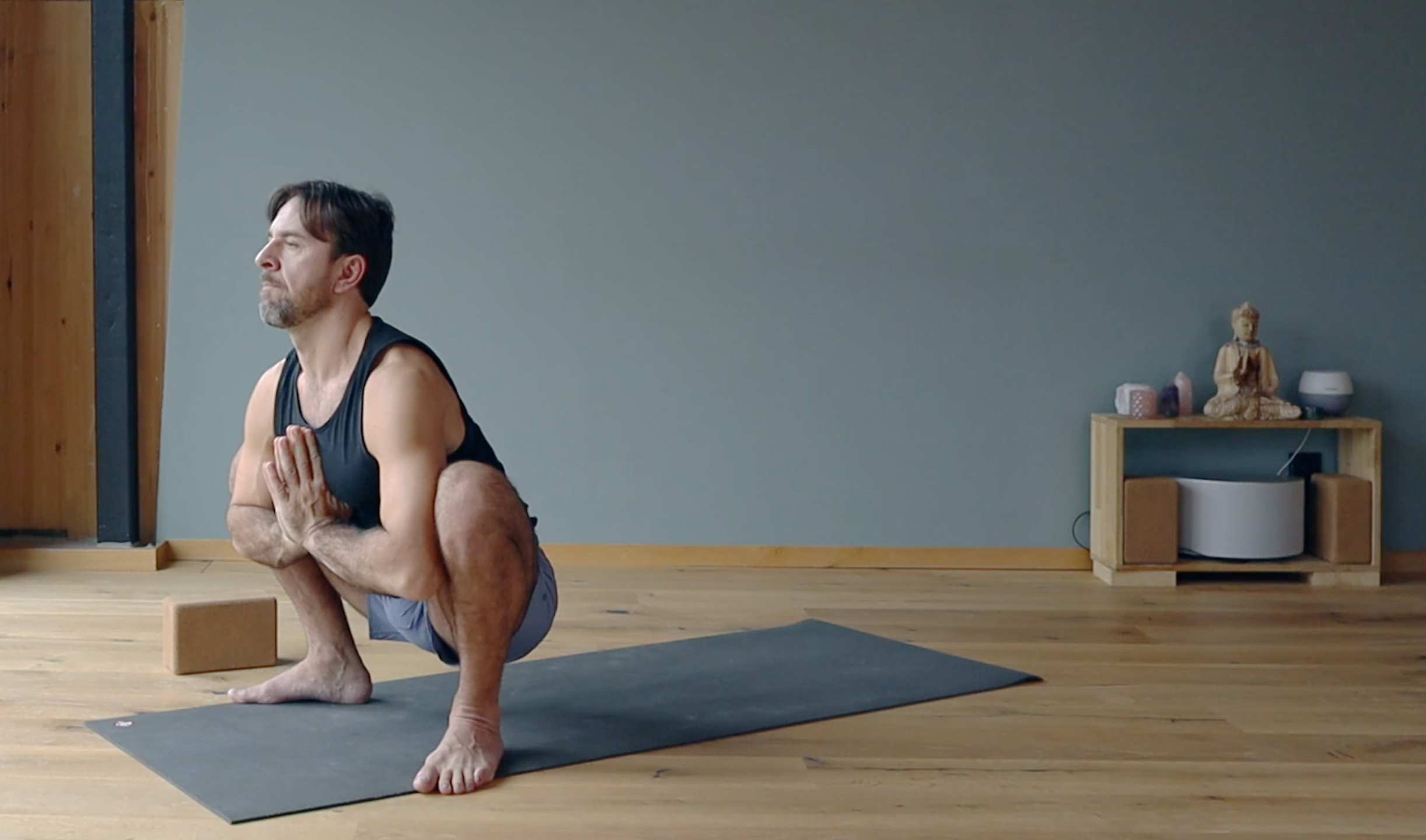
Malasana
More complex Asana’s
Coming back to more complex postures such as Padmasana and Half Lotus can take some time, so do not rush this process. The last thing you want to do is to reinjure the knee and start all over again. Go slowly and be patient.
Often Ashtanga practitioners can be a little overzealous with practicing the half lotus postures where this type of injury can occur and can force the knee to achieve a posture. Be kind to yourself and practice yoga by not forcing postures.
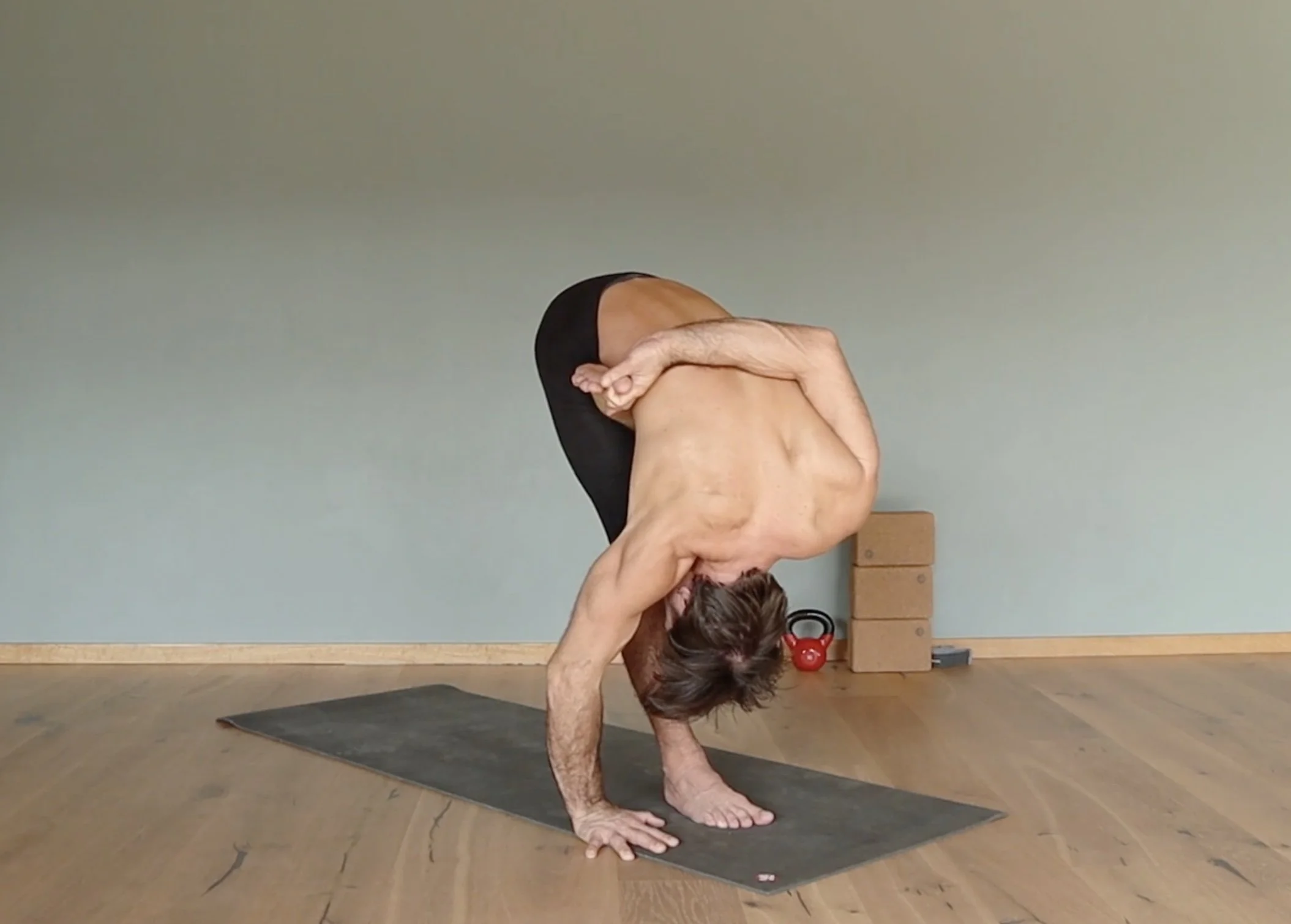
Go slowly coming back to postures such as Ardha Baddha Padmottanasana
If you are an Ashtanga Yoga practitioner you will need to modify your practice a lot to give your knee the sufficient space and time to fully recover. This can take some time as I said, depending the type of injury so make sure you use the correct modifications. My version of Primary Series as part of my Online Studio has various alternatives to aid in the healing process.
Ashtanga Made Available
Also as an alternative I have created The Element Series. The Element Series are my own Vinyasa Sequences that have the same energy of Ashtanga but with postures that are more available for different body types and are excellent as a practice if you have a knee injury.
The Element Series Vinyasa Yoga
Take your time with the recovery and build the legs up slowly and strongly with your yoga practice so you have healthy and robust knees.
Also as part of my Online Studio are additional drills and support work to help strengthen your knee and stabilise the joint.
Knee rehab with The Asana Guide