How to Pincha Mayurasana
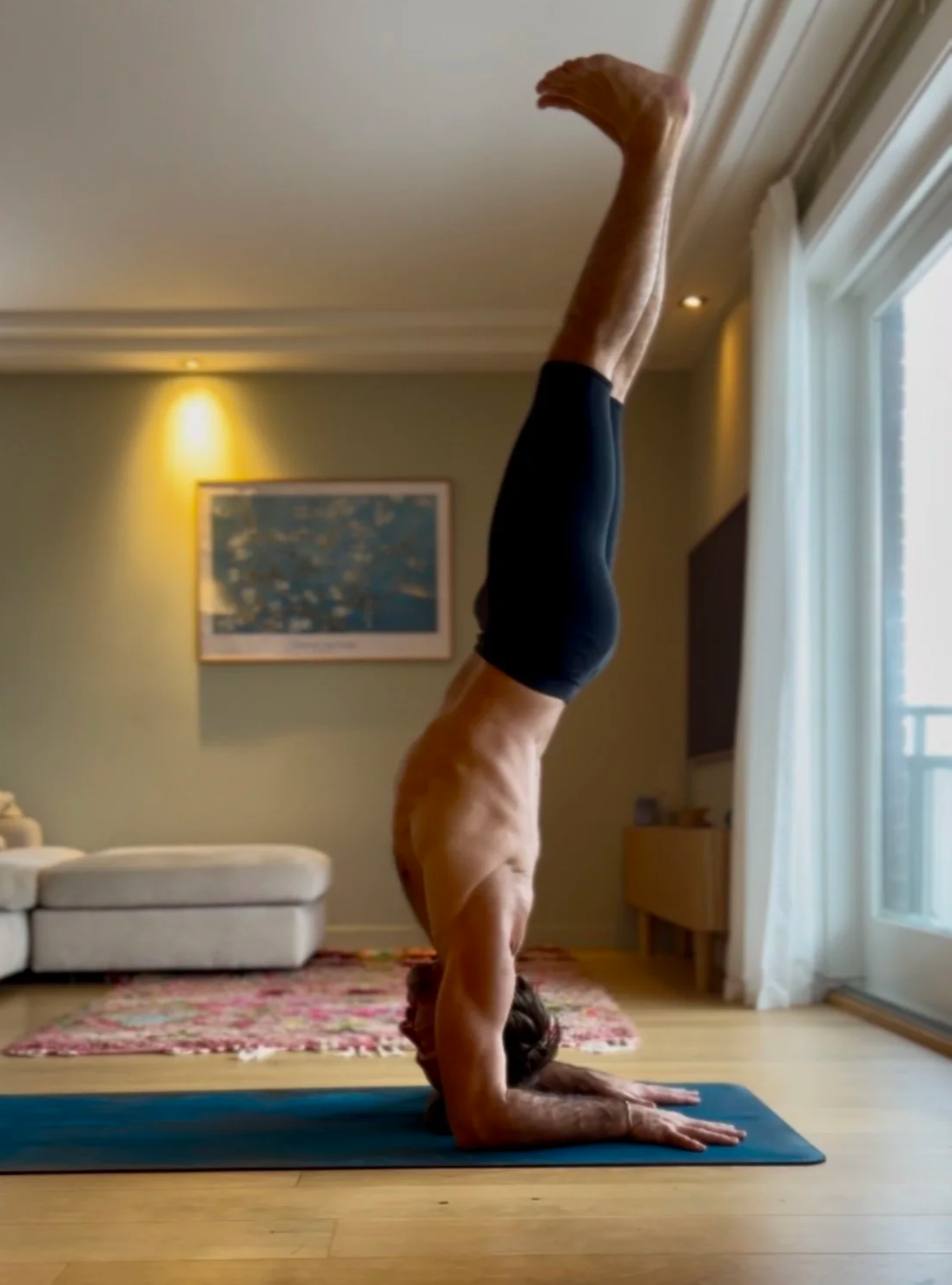
Pincha Mayurasana
Unlike most arm balances which can potentially add tension to the shoulder girdle, Pincha Mayurasana is excellent at opening the shoulders. But this is also why it can be tricky to learn for some practitioners as you need very good external rotation and flexion of the shoulders.
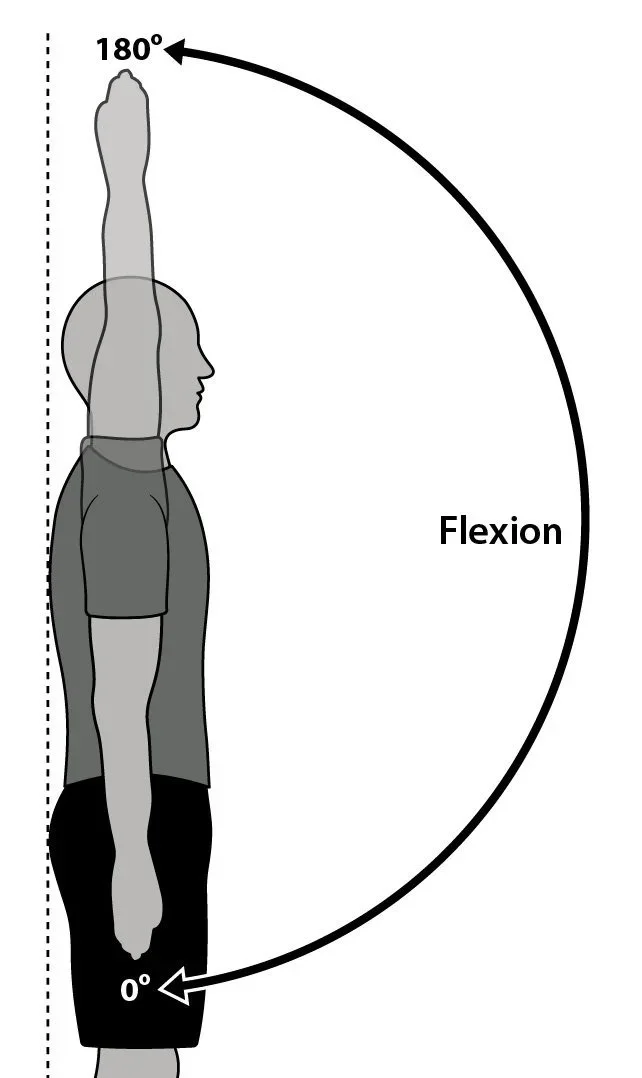
Bringing the arms up over our head into flexion
Assessing our shoulder flexion we will see if it is difficult to bring our arms over our heads without our ribcage flaring out or going into a backbend. This is necessary to practice Pincha correctly.
As much as we need good shoulder flexion, we also require external rotation of the scapula. Being able to bring the elbows into the correct position with stability is essential to be able to balance with control.
In the Ashtanga Yoga system you learn Kapotasana first which requires a lot of shoulder flexion and external rotation to practice fully which prepares your shoulders for Pincha.
You don’t need to have learned Kapotasana in other yoga styles to practice Pincha, but it is necessary to have these prerequisites in place so the shoulder is able to move into the correct position.
What usually happens with Pincha for most students is thier elbows flare to the sides due to a lack of strength and shoulder mobility.
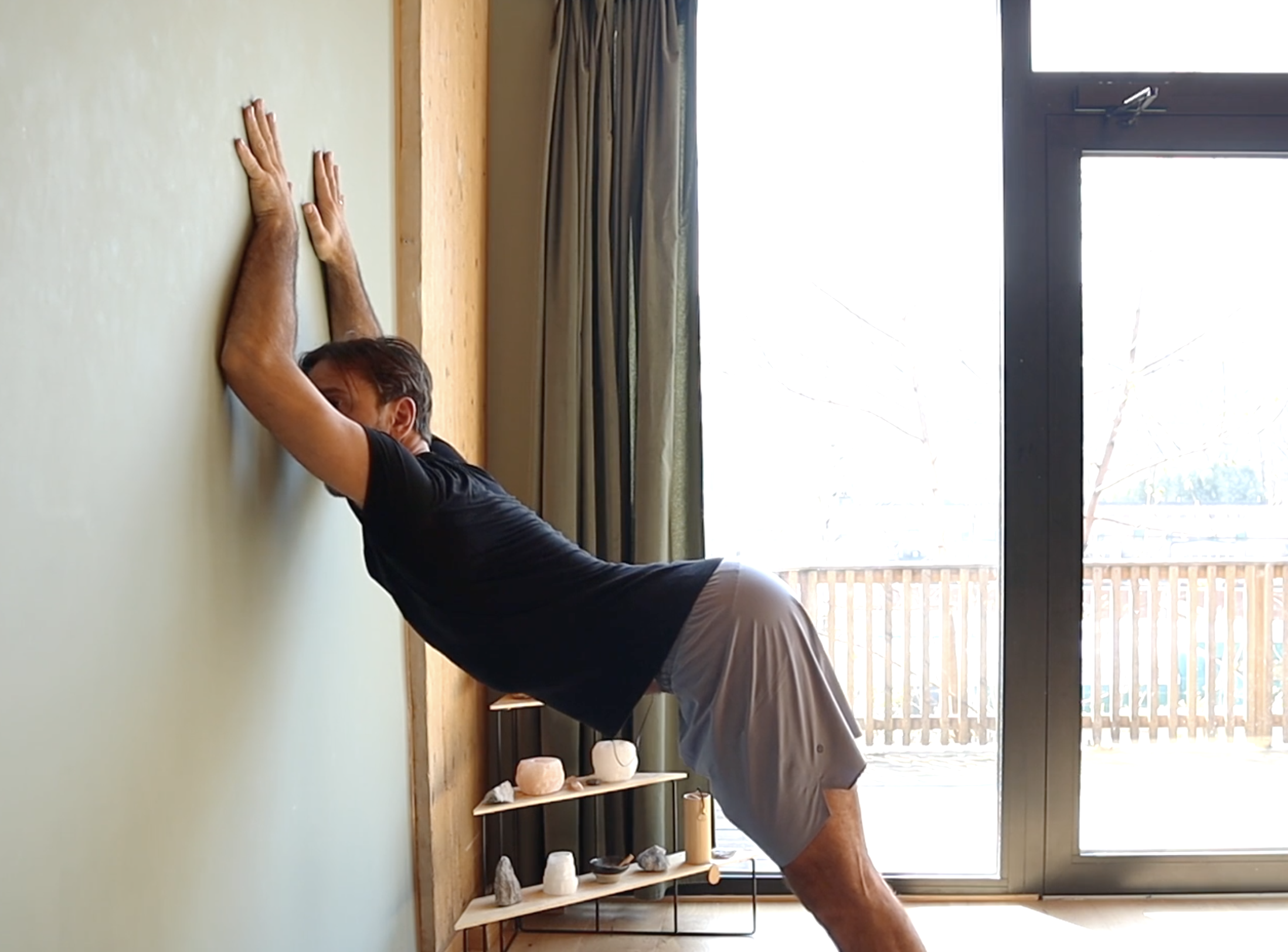
Elbows flared out incorrectly
A good way to check in on your shoulder mobility is to try against the wall as shown above. If this is difficult to keep them in the correct position, try with a block as shown below:
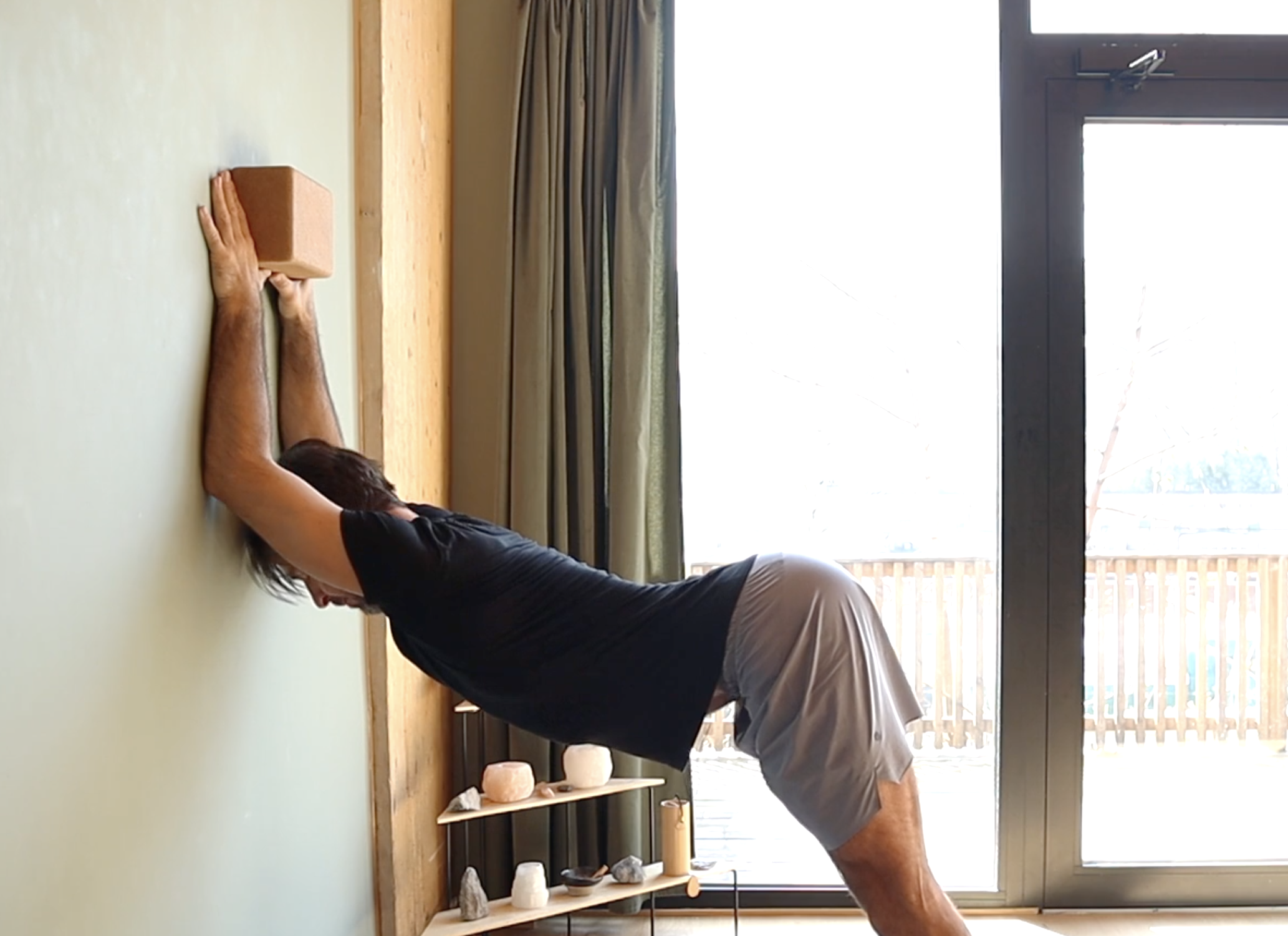
Pincha with a block
In this position we can see where we might be lacking in mobility. For a full breakdown of this drill head here:
Aside from the correct shoulder mobility we need the necessary balance and strength to lift up and hold the position.
Pincha is easier than a handstand in essence, but requires more shoulder mobility. I would say that your headstand ( Sirsasana ) should be easy and you can hold this very comfortably with complete control.
So what creates stability in Pincha?
As with all arm balances, your stability and strength comes from pressing down into the earth. In Pincha, our hands should be completely flat with your fingers spread wide. Press down specifically into the thumbs, wrists, and the inside of your elbows. Never lift these.
As you kick up, your fingers gripping strongly is what initiates the control. Stability comes from the hands and then up into your shoulders. More about this here:
To stabilise the shoulder girdle you need to push very strongly through the eblows into the floor which engages your latissimus dorsi ans shoulders. This engagement of such large muscles is what stabilises your scapula creating the necessary tension to balance.

The big wing shape muscles in your back.
At no point are you resting. You always want the feeling of pressing into the floor. This in turn opens the shoulders more and generates more lift as you press into the earth. Bandha.
Initially you can kick up with the wall behind you for stability to practice. Once you can hold for 5 to 10 breaths here you can try without the wall.
The ribs are pulled in. You can also engage your gluteal muscles if you feel you are going too much into a back bend and arching. Legs and feet pressed together.
A good test to see if your shoulders are open fully is to be able to look behind you. This requires more control but will also encourage you to press more into the earth the generate the correct amount of lift and counters any arching of the back.
The exit shown here is practiced within the Ashtanga Yoga system.
Another tip if you are struggling with strength in Pincha is to practice Sirsasana C. This will help build the necessary strength in your upper back and lats but giving you the ability to balance more easily.
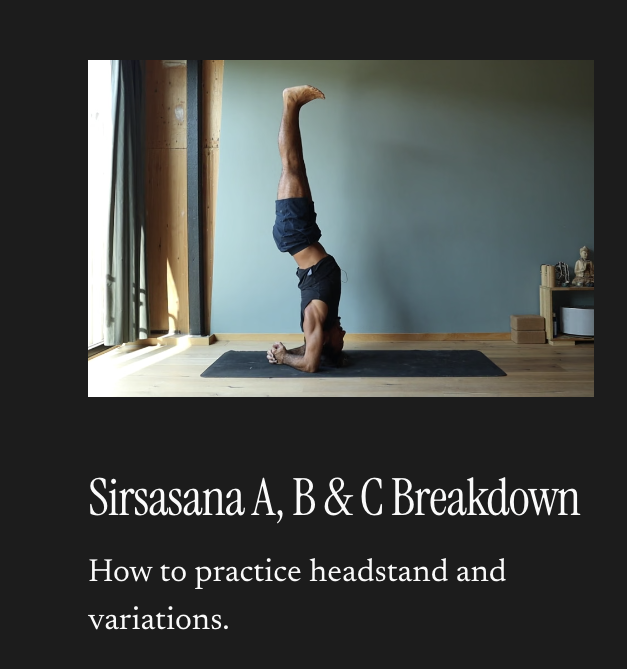
Sirsasana C Tutorial
For a full breakdown of how to practice Pincha, check out the following tutorial.
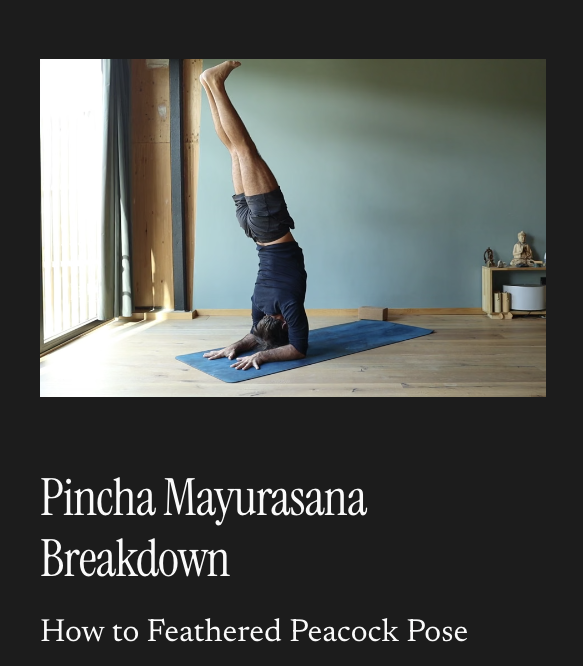
Pincha Mayurasana Tutorial