How to Pancake
Some students struggle with the correct method on how to progress in your wide leg forward folds such as Upavistha Konasana. Below is a guide on how to work with this and what we are stretching in this pose.
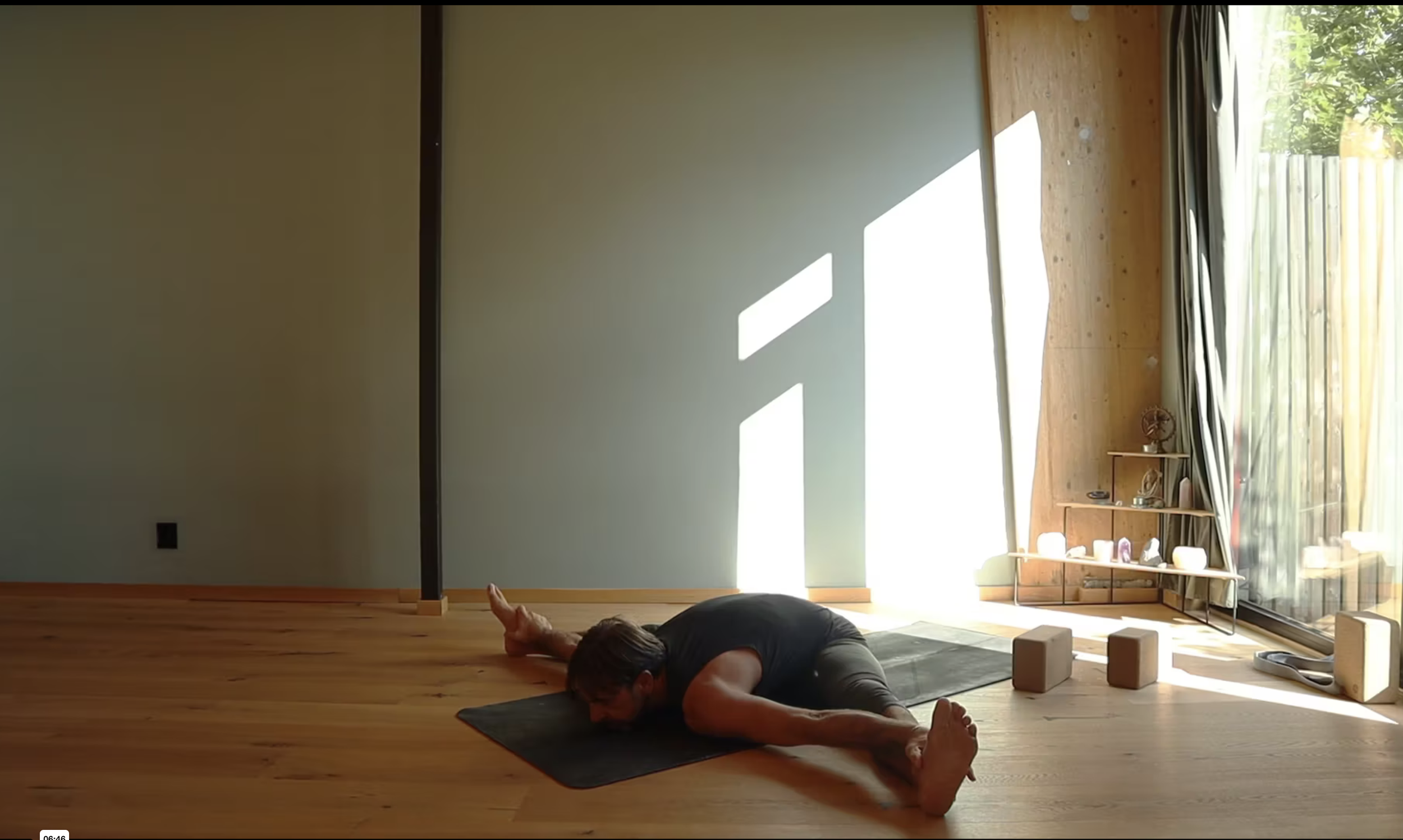
Upavistha Konasana.
Initially we want to be able to fold forward ‘well’ in general. For a guide on how to embody this correctly, check out the following article.
To work correctly in your pancake ( seated wide leg forward fold ) you will want to be proficient in the standing version first. Prasarita Padottanasana.
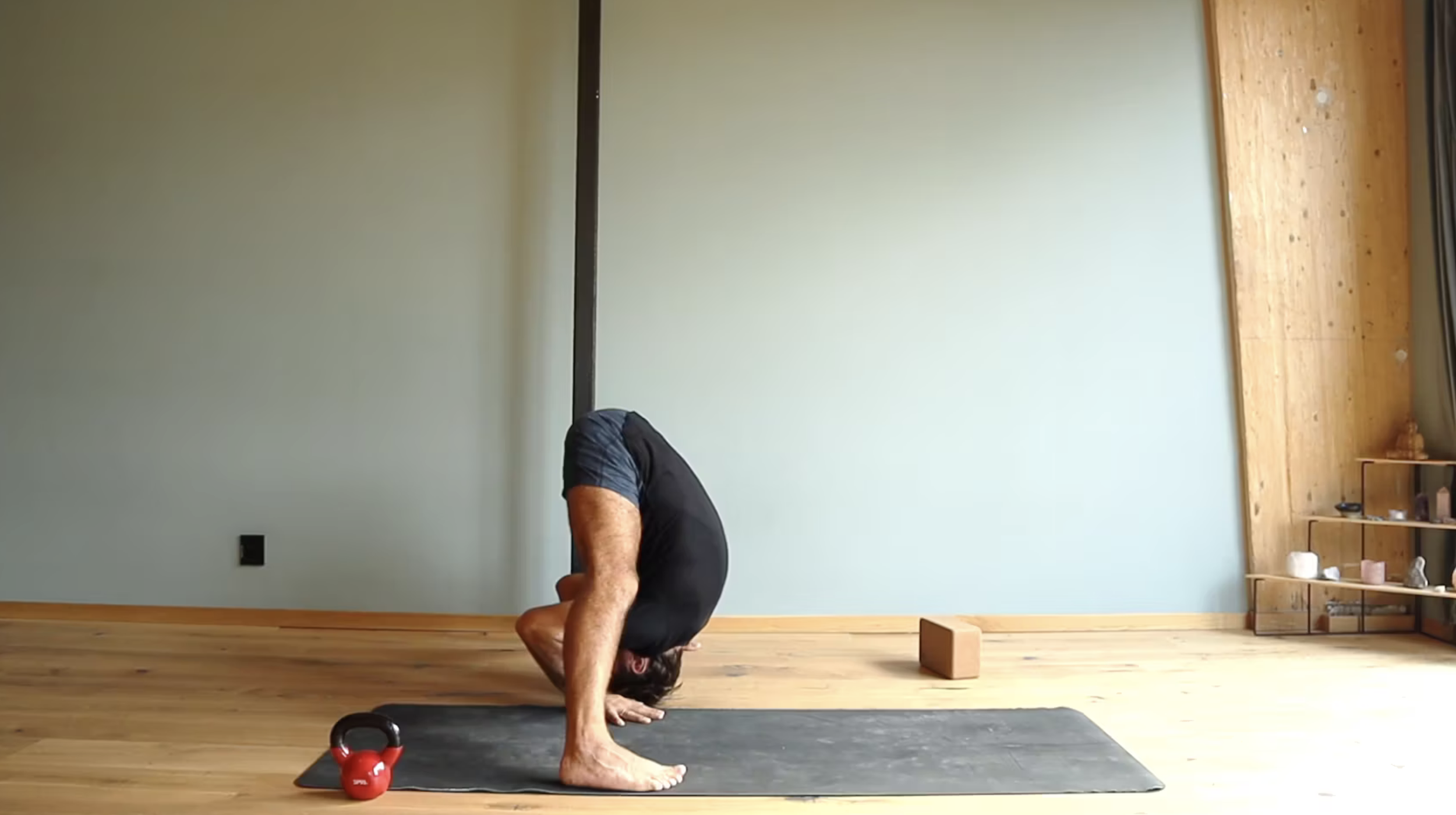
Prasarita Padottanasana
It is much easier to fold forward correctly from a standing position because of gravity. It aids in shifting your weight forward and is easier to practice the correct technique. You can work on the standing and seated together, but be mindful of how much you ‘push’ if you are a new to yoga.
For a full breakdown of Prasarita Padottanasana, check out the following:
Initially I recommend students try to work using a block as shown below with a straight back. This will help tilt your pelvis into the correct position so that your weight is shifted forward and gravity starts to help you, rather than hinder you.
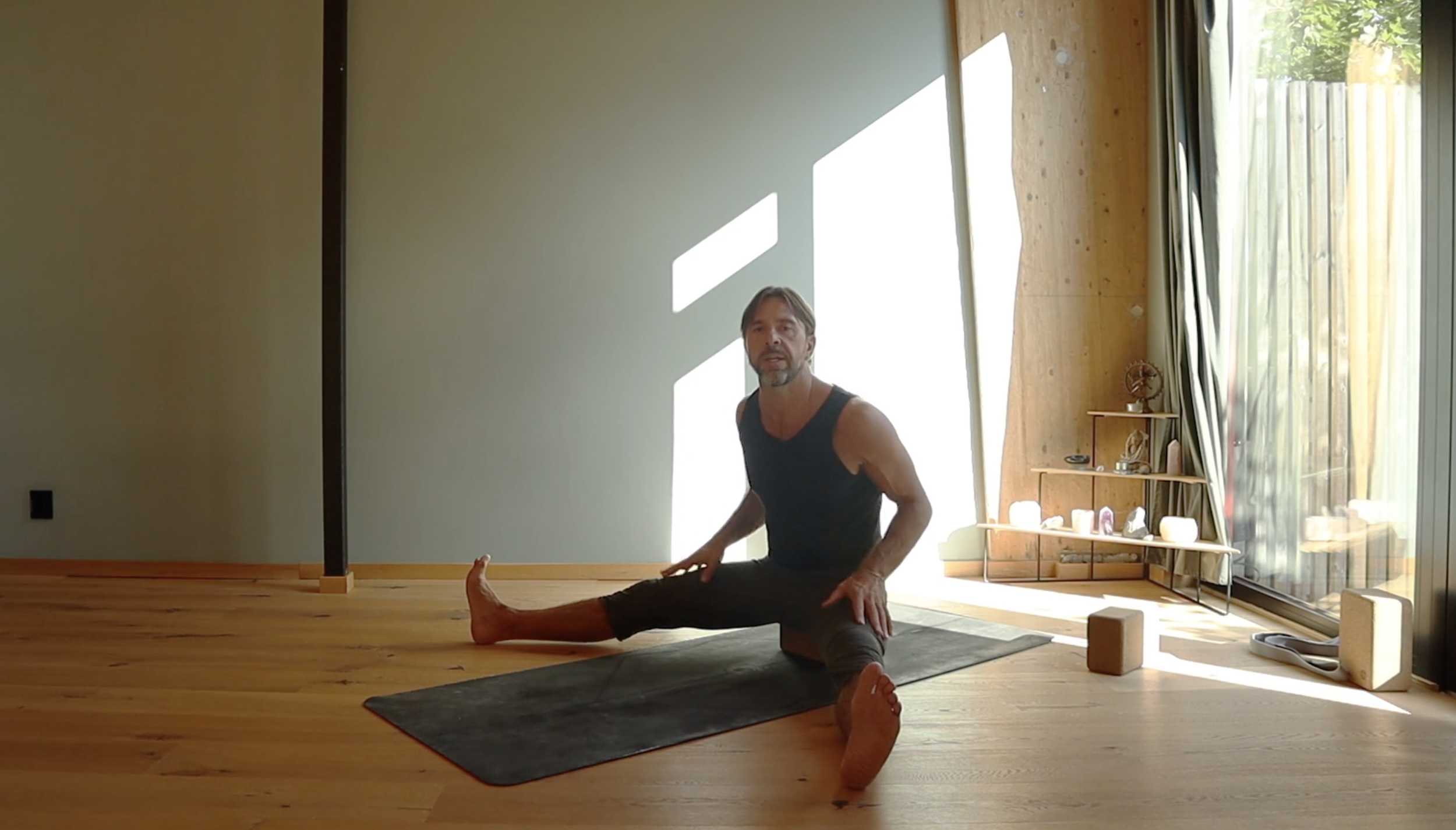
Wide leg forward fold.
From here you will be able to place your hands forward so you can start working towards taking your chest flat on the floor.
So what are we stretching in this pose?
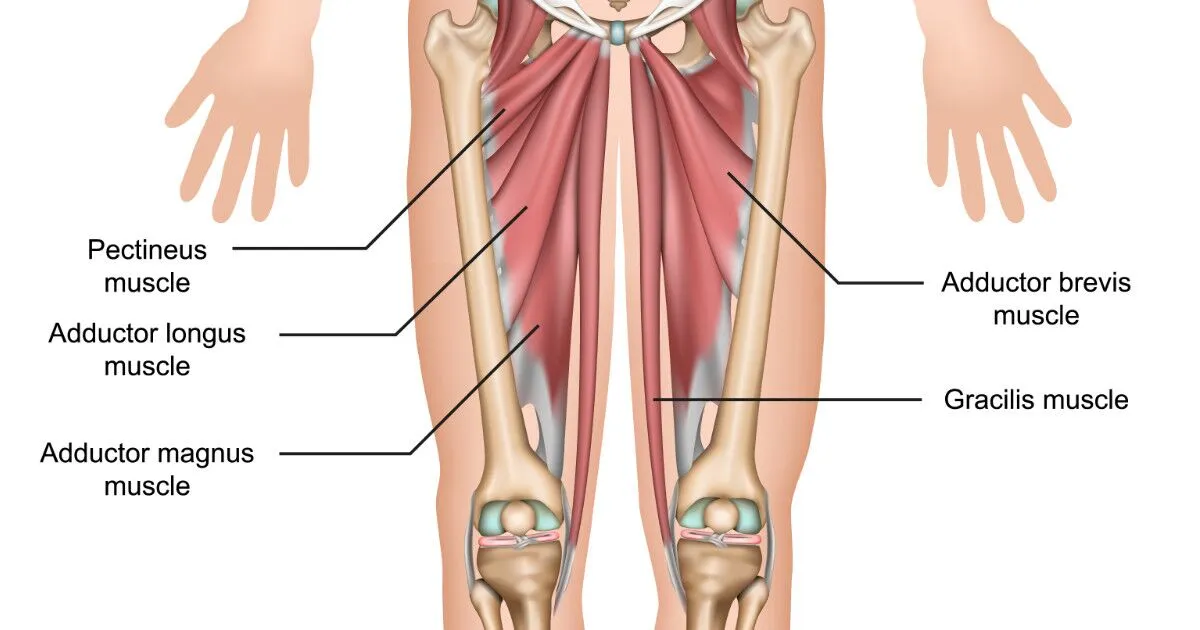
The adductors
Largely, we are stretching the adductors here which can be very tight if you have a background in various sports such as running, skiing, horse riding etc where these are active and contracted.
It can take some time for these muscle groups to lengthen as it is easy to reach your threshold quite quickly and they can be sensitive. You will also want to be very warm before hand. A yoga sequence such as The Element Series is ideal for this.
To complement stretching this area is an excellent posture, Baddha Konasana, which targets similar areas and can be used in conjunction with your pancake.
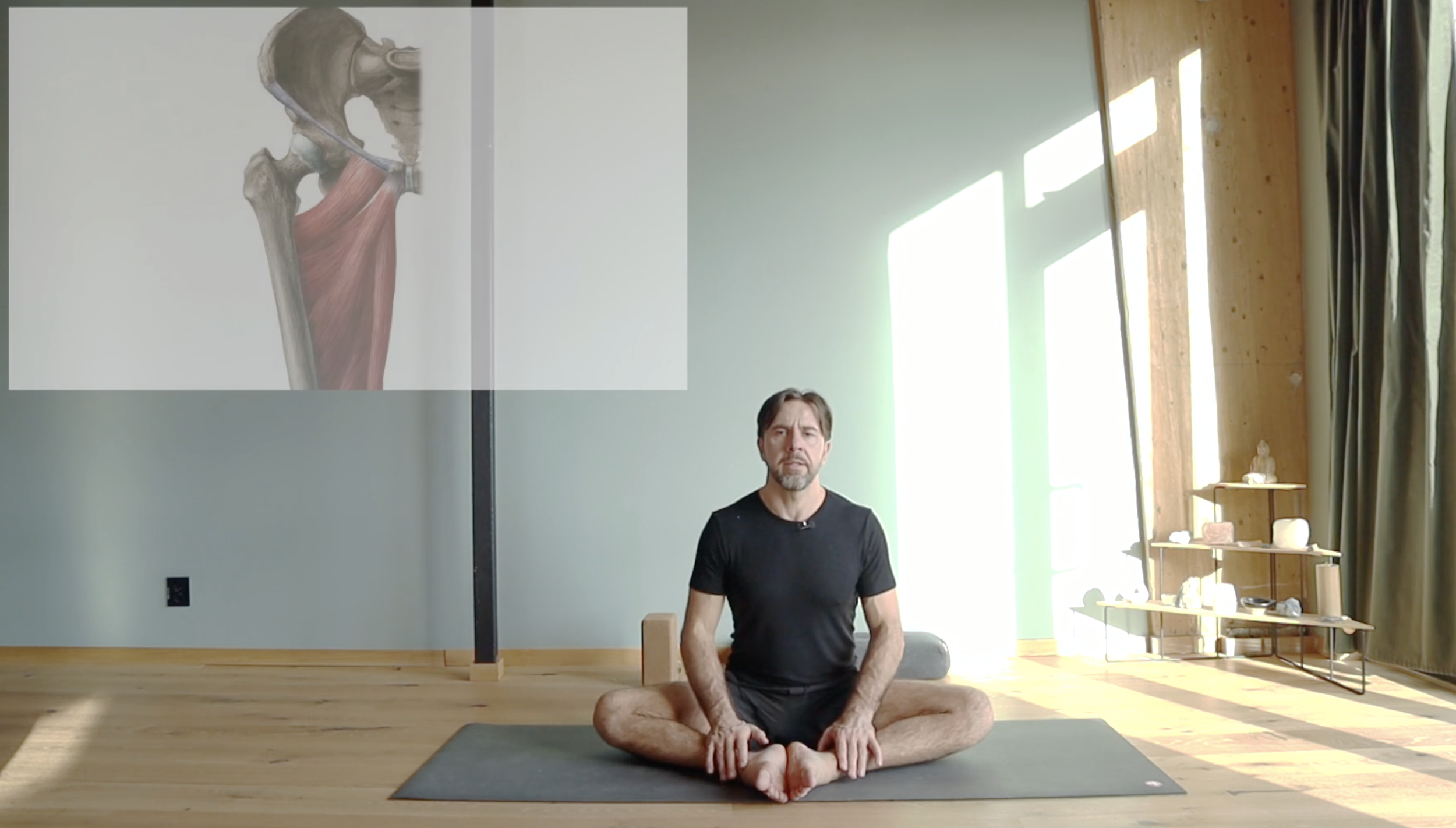
Baddha Konasana.
For a full breakdown of Baddha Konasana head to the following:
Along side the aductors we are lengthening the hamstrings.
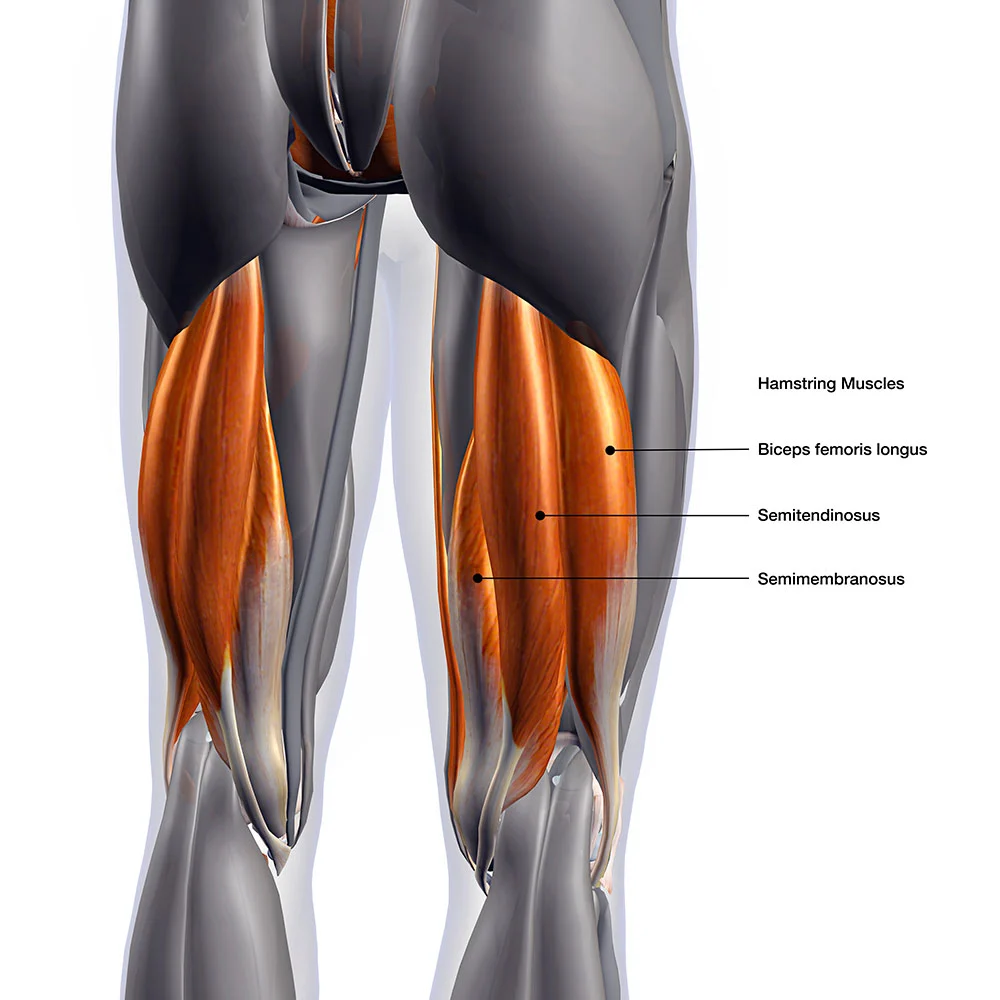
Hamstrings
I would say the hamstrings are more sensitive to stretch compared to the adductors, and like the inner thighs you should be nice and warm before stretching this musle group.
Technically to go forward so the hamstrings are safe you will want to have the legs engaged. When the muscles of the legs are active, we eccentrically stretch them which means to lengthen a muscle while it's under tension. This decreases the risk of a pull, or tear, and enables us to go deeper with more confidence.
To activate the legs you can either flex, or point your feet. Pointing is usually best, but can also cause cramps for some students so it’s best to experiment. You can also play with activating your quadricrpes which are your hamstring antagonists and helps stop a bad technique of the thighs rolling in.
When pointing the feet I would recommend digging your heel into the floor which also helps with the necessary activation.
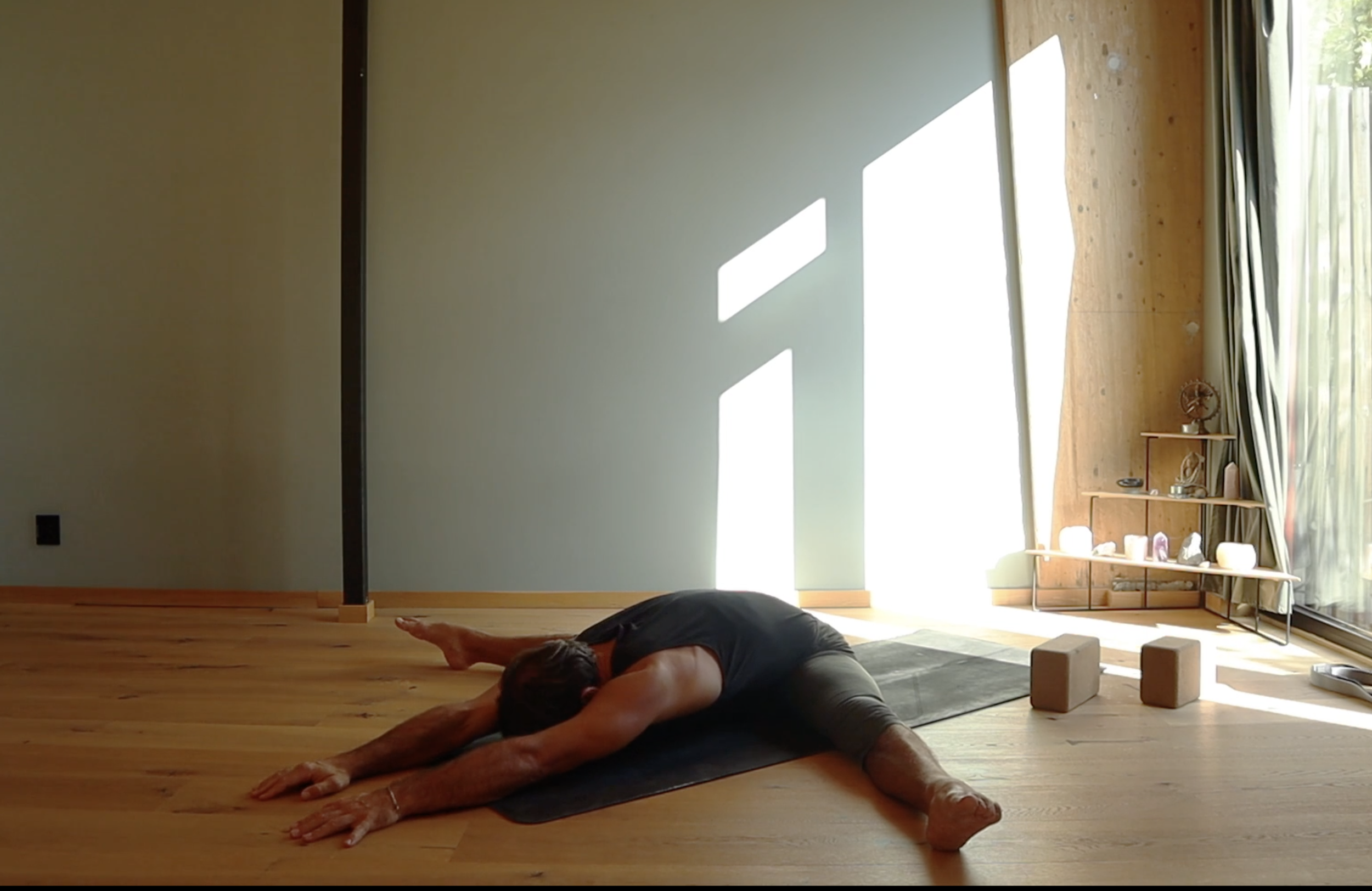
Pancake
As you start to take your weight forward you can start crawling with your hands as shown above until you reach your maximum. Keep your back straight as you go down and only round your back when you have reached the floor flat as shown.
Go slowly with this as I said it’s easy to find your limit very quickly with the hamstrings. For a full tutorial on how to work on this head to the following:
To work on this and many more postures in yoga head to The Online Studio and start practicing The Element Series Vinyasa Yoga.
My Online Studio