Accessing the hip flexors in back bends
One of the main muscle groups that we need to access to back bend fully is the Iliopsoas.
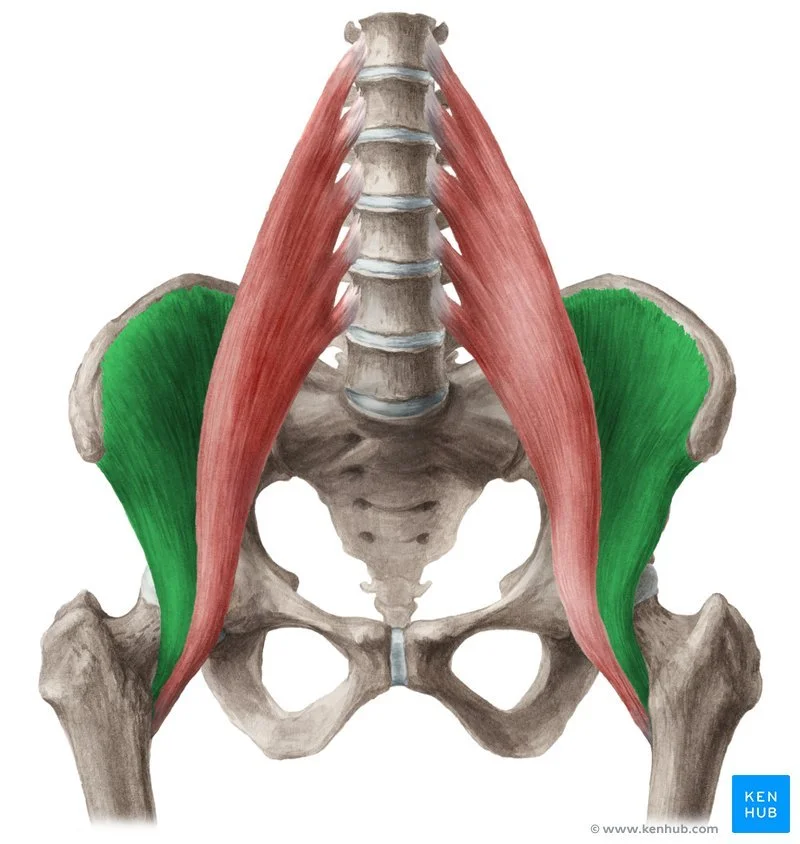
Iliopsoas
To be able to stretch this area fully in a back bend we need to learn how to move our sacrum correctly, and the action of Bandha to move our pelvis in the right direction.
Initially when we extend our hip forward in a back bend we must nutate our sacrum. Nutation of the sacrum is the anterior-inferior (forward-downward) tilting movement of the sacral base relative to the ilium (pelvis), while the coccyx moves posteriorly. This nutation of the sacrum allows us to open the upper back and start the process of moving the coccyx forward and up toward the pubic bone.
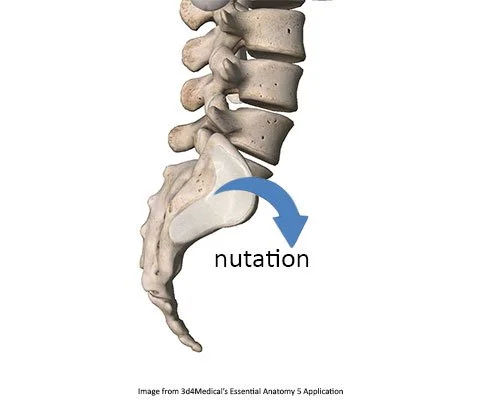
Nutation
When the sacrum nutates as shown in the above image, this allows our spine to move into it’s natural curve in the lumbar region of our back.
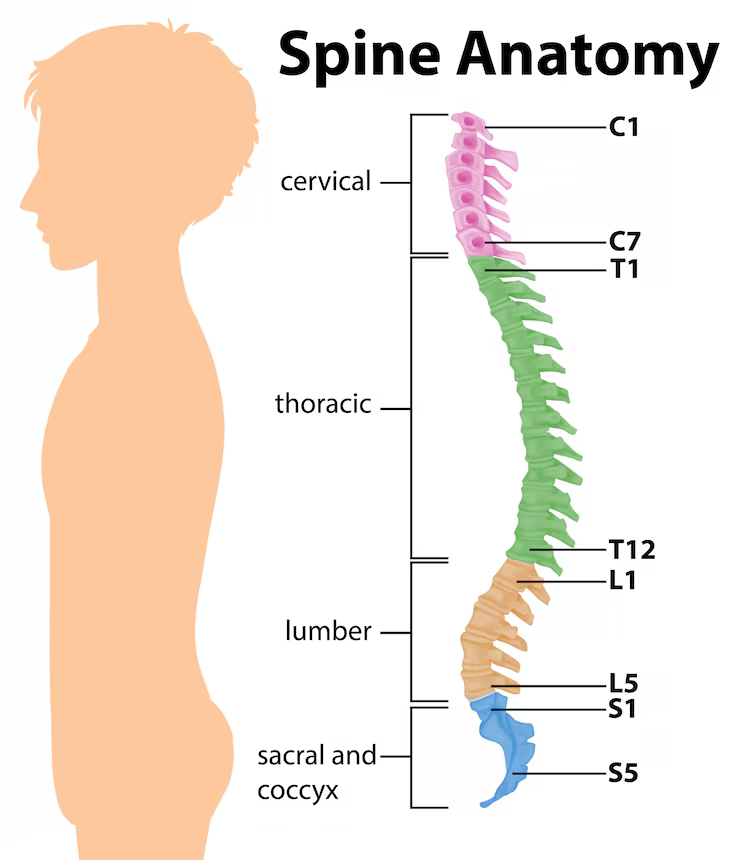
The natual curve of the low back
From here we can extend the hips forward and start to stretch the hip flexors at the front of our hip, especially the Iliopsoas.
What we are looking for from here internally is to drop the front of the hip down, lengthening the front of our hip. As the front of the hip goes down, we then start to bring the coccyx forward and up as if we want it to meet the pubic bone.
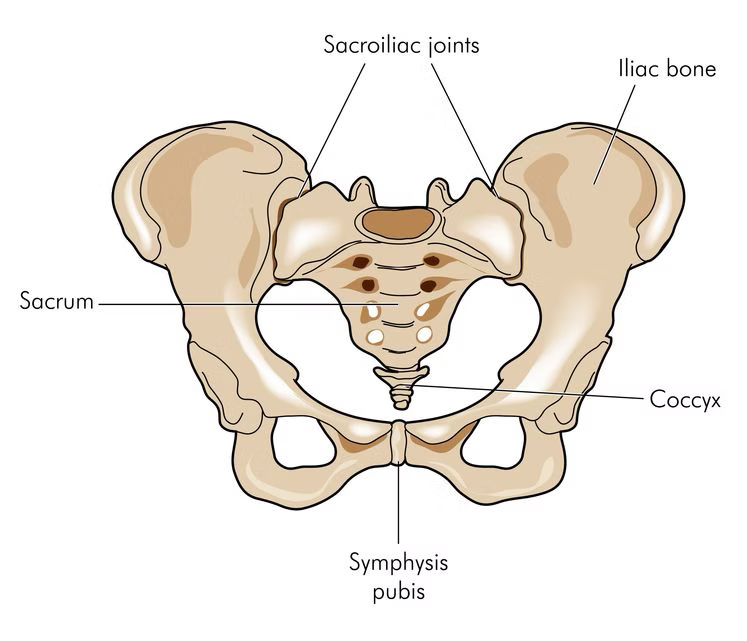
Pubis ( pubic bone ) and Coccyx
An excellent place to practice this is Ustrasana ( or a variation shown below Laghu Vajrasana ) and Dhanurasana.
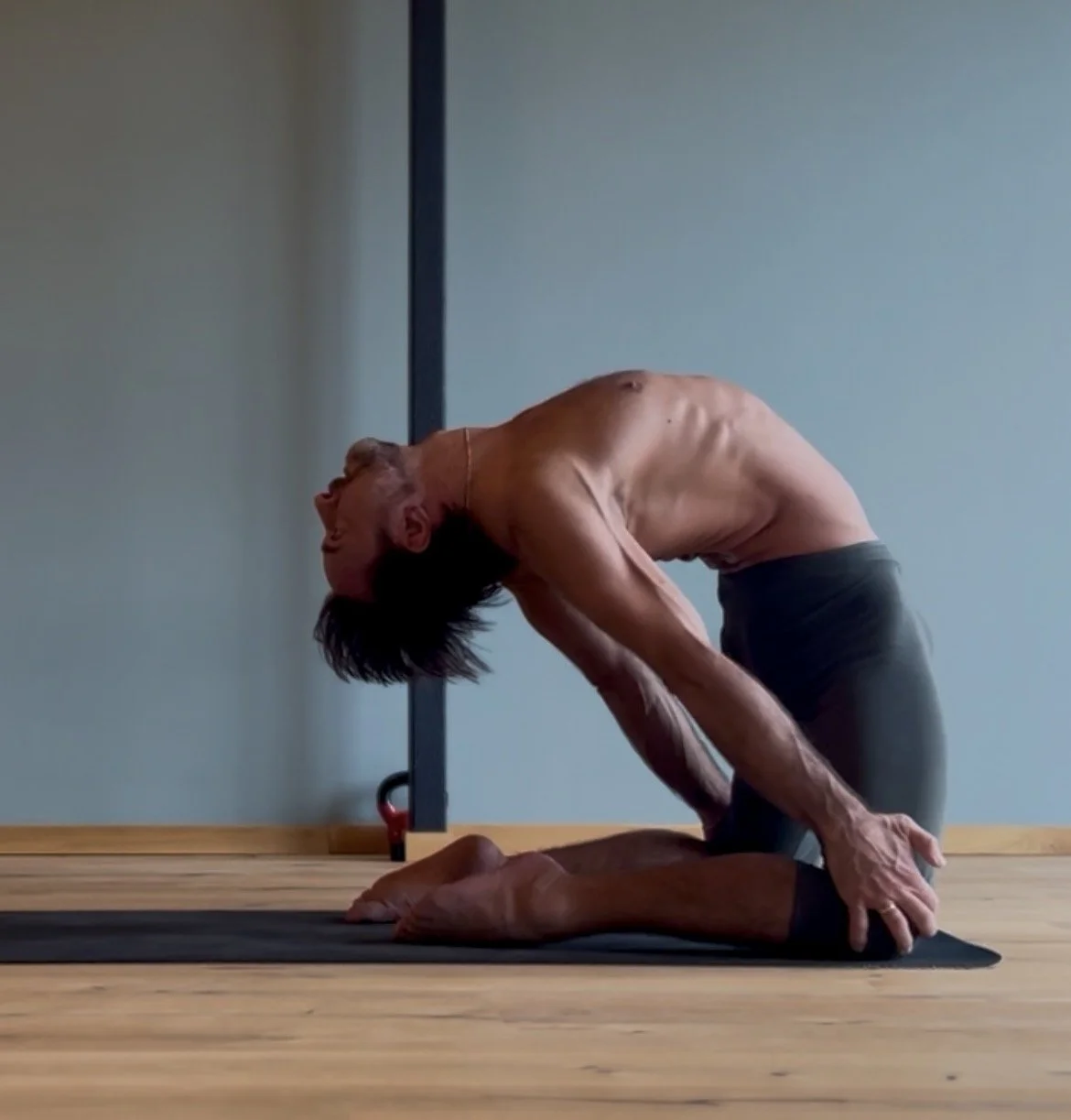
Laghu Vajrasana
Nutation of the sacrum opens the upper back and allows me to breathe fully into my diaphragm.
My hip is extending forward and energetically the front of my hip is tipping down and forward towards the earth. This keeps the weight into my knees and my legs fully engaged keeping my low back safe.
Now how do we bring the Coccyx and Pubis towards each other?
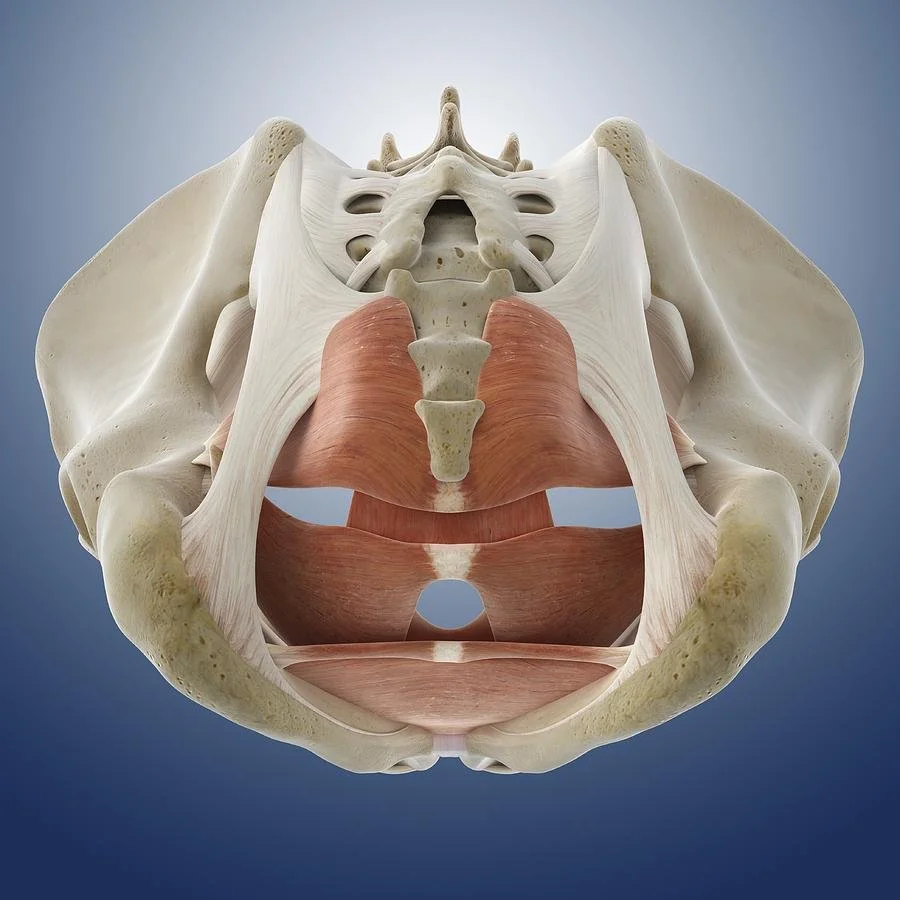
Male pubococcygeus (PC) muscle.
Activating our pelvic floor muscles such as the pubococcygeus (PC) muscle we initiate the feeling of the coccyx and pubis moving towards each other ( Mula Bandha ). This feeling of the pubis moving down, and the coccyx moving forward and up is what allows us to access our hip flexors in back bends without compressing our lumbar region.
This can take some time for students to cultivate and is actually a subtle and refined feeling, rather than an overactivation of muscular tension.
Along side the activation of Mula Bandha we can focus on the inner thighs and in particular the groin area in back bends to access the iliopsoas.
When extending your hip forward you will want to engage and push forward from the hip through the groin area. When this is done correctly with the sacrum, coccyx and pubis moving into thier correct position you wil feel a deep stretch of the iliopsoas.
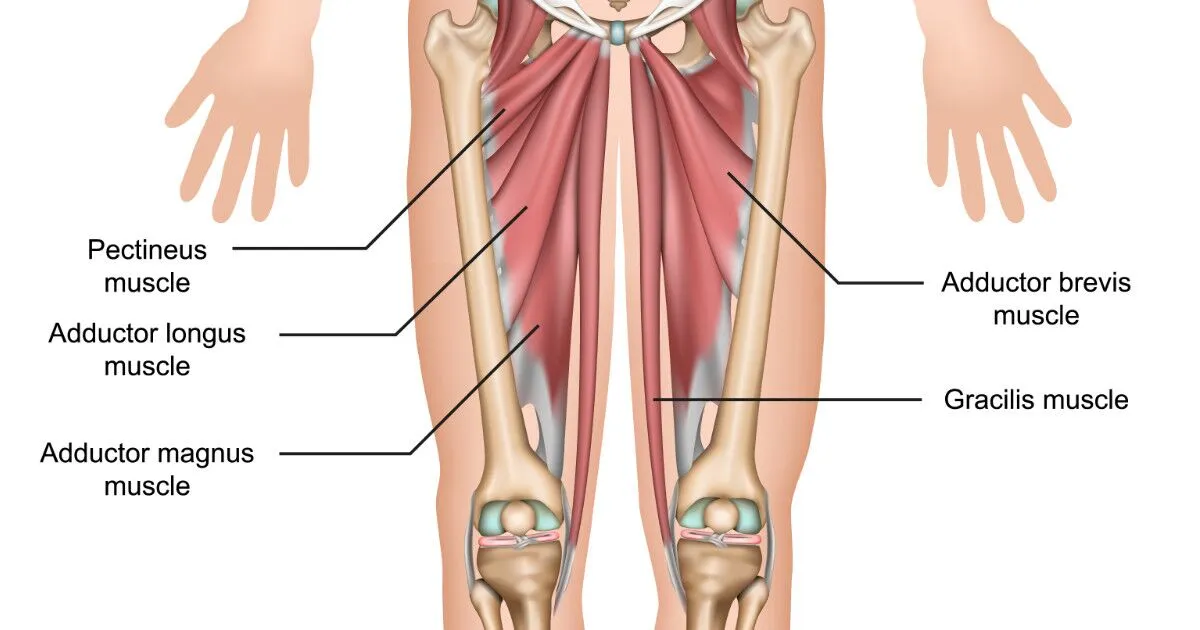
The adductors / Groin muscles
A good place to practice this is Dhanurasana. Often students will keep thier legs wide as this alleviates pressure in the low back, but to fully access the iliopsoas you will want to engage the adductors as shown above and bring the feet closer together. This action along with the instructions above on the pelvis will again allow you to access the iliopsoas.
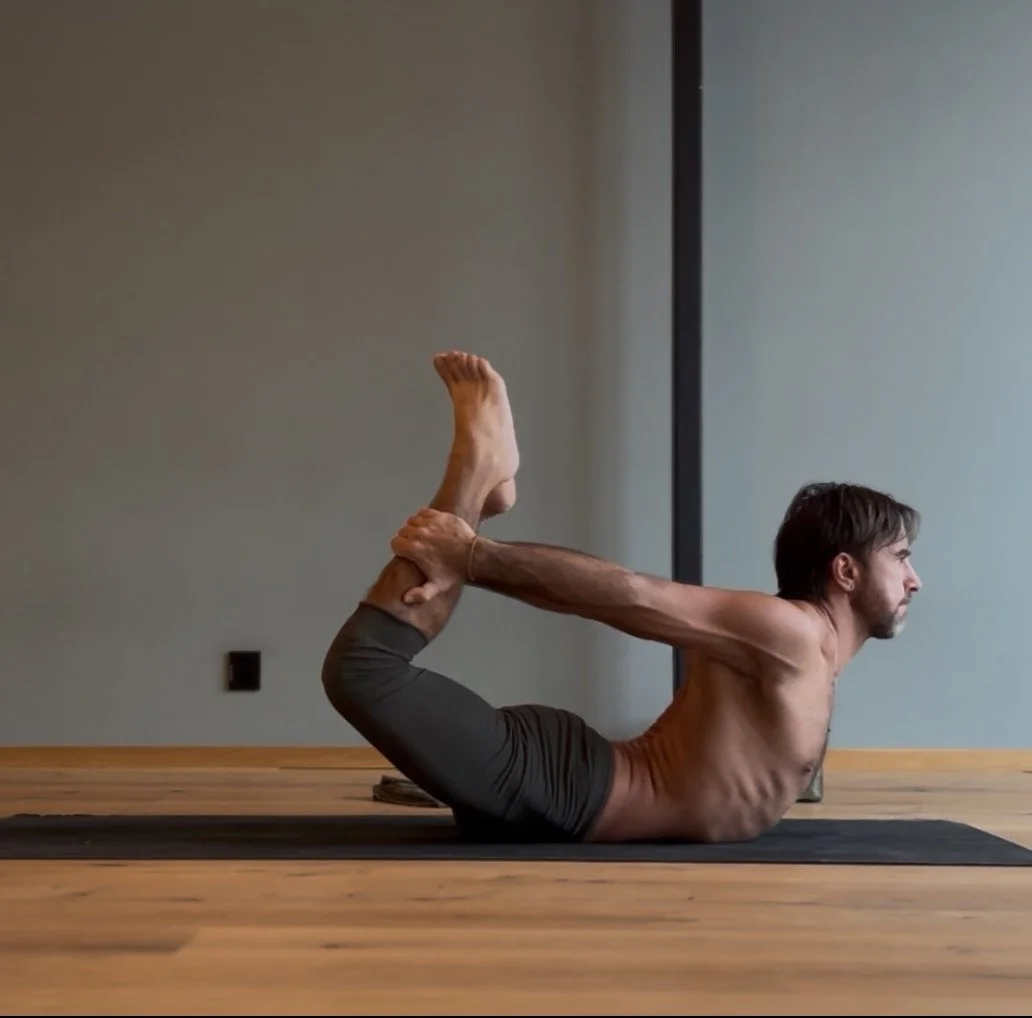
Dhanurasana
When all of these actions are in play you will be able to deeply stretch the front of your hip without compressing the low back.
Lastly, and probably the easier place to practice this is in Urdhva Dhanurasana. Using the same actions as above you want to fully push up and out from the groin area by pressing down through the heels. Thighs will be internally rotating with your quads working strongly.
Some students can place a block between thier legs to cultivate this feeling, but I prefer to focus on the actions above with the pubis and coccyx to find this feeling through the groin.
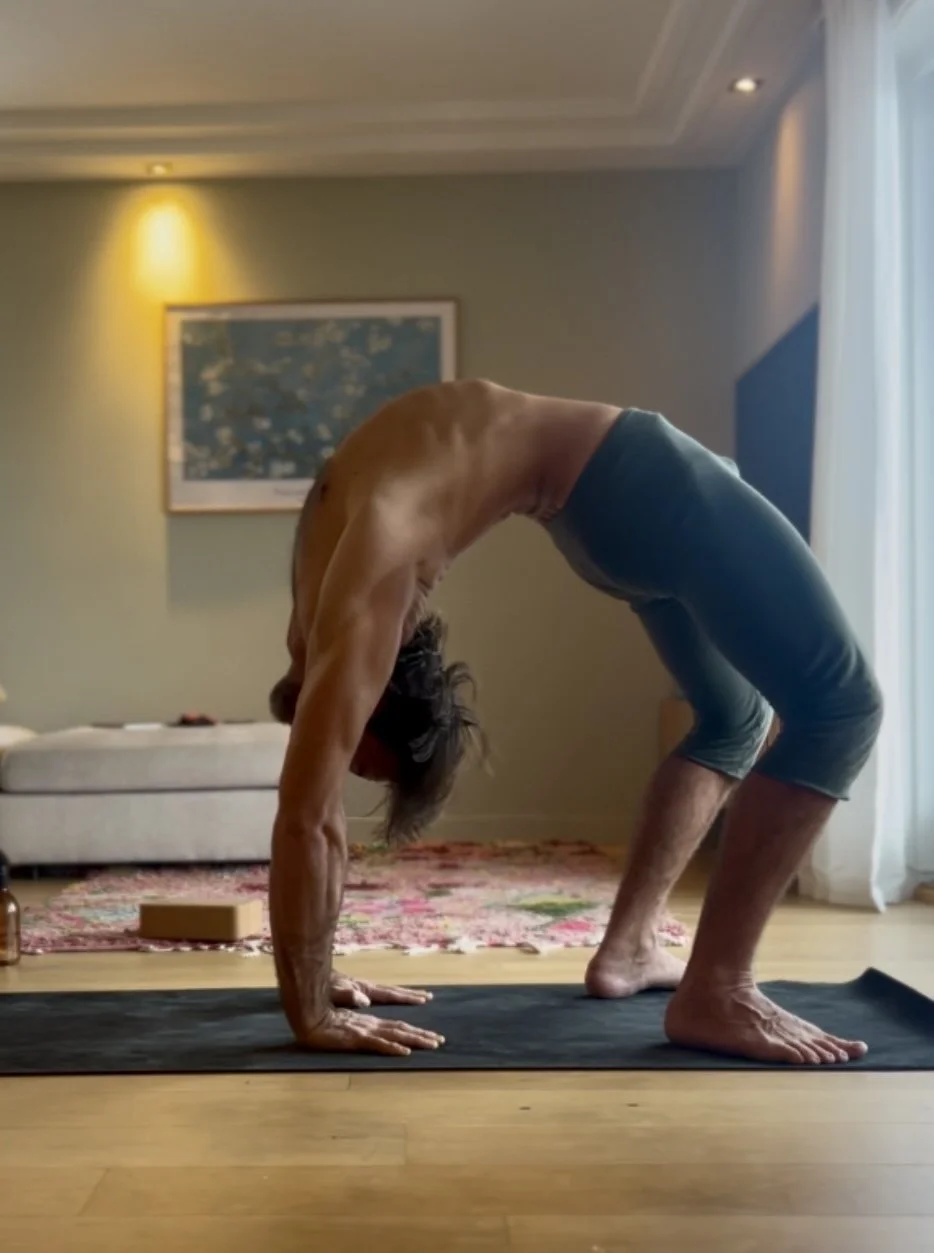
Urdhva Dhanurasana
Some students will not need so many instructions in back bends as they do these movements more naturally, but for a lot of us these actions are necessary to back bend safely so your pelvis is stable, and you are able to strongly push into the iliopsoas which is largely responsible for tightness at the front of the hip.
Don’t be put off if this takes some time as some of these movements are quite complex and will requirte lots of practice to fully emobdy.
I often teach back bending workshops on these principles here in Oslo as back bending requires more details than other movement patterns.