How to Savasana
“If I die today, everything will be alright. Everyone will be alright. The world will continue without me as I am.
”
I would say Savasana is one of the most overlooked postures to practice in yoga. It is mostly described to ‘take rest’ at the end of practice and most commonly thought of as literally resting after potentially a strenuous physical practice.
But is it more than that? I would say yes.
We could say that there are many benefits to resting after a physically demanding yoga practice that do the following:
Lowering of the heart rate and blood pressure
Feeling more rejuvenated with less fatigue
Cooling down
Muscle relaxation
Feeling more calm ( parasympathetic state )
Allowing the work of our practice to do it’s magic and embody
These are to name but a few of the benefits that are obviously true, but in this post I would like to explore some of the deeper aspects of Savasana ( Corpse Pose ).
Specifically to the Ashtanga Yoga system and The Element Series, the finishing sequence starts much earlier in the practice before we arrive at Savasana. We have spent some time bringing our nervous system down and slowly lengthening our breath. By the time we reach Savasana we should already be in a very calm state. Especially if one has had a very demanding practice it is best to take an even longer finishing sequence with a potentially longer period spent in Sirsasana and Padmasana.
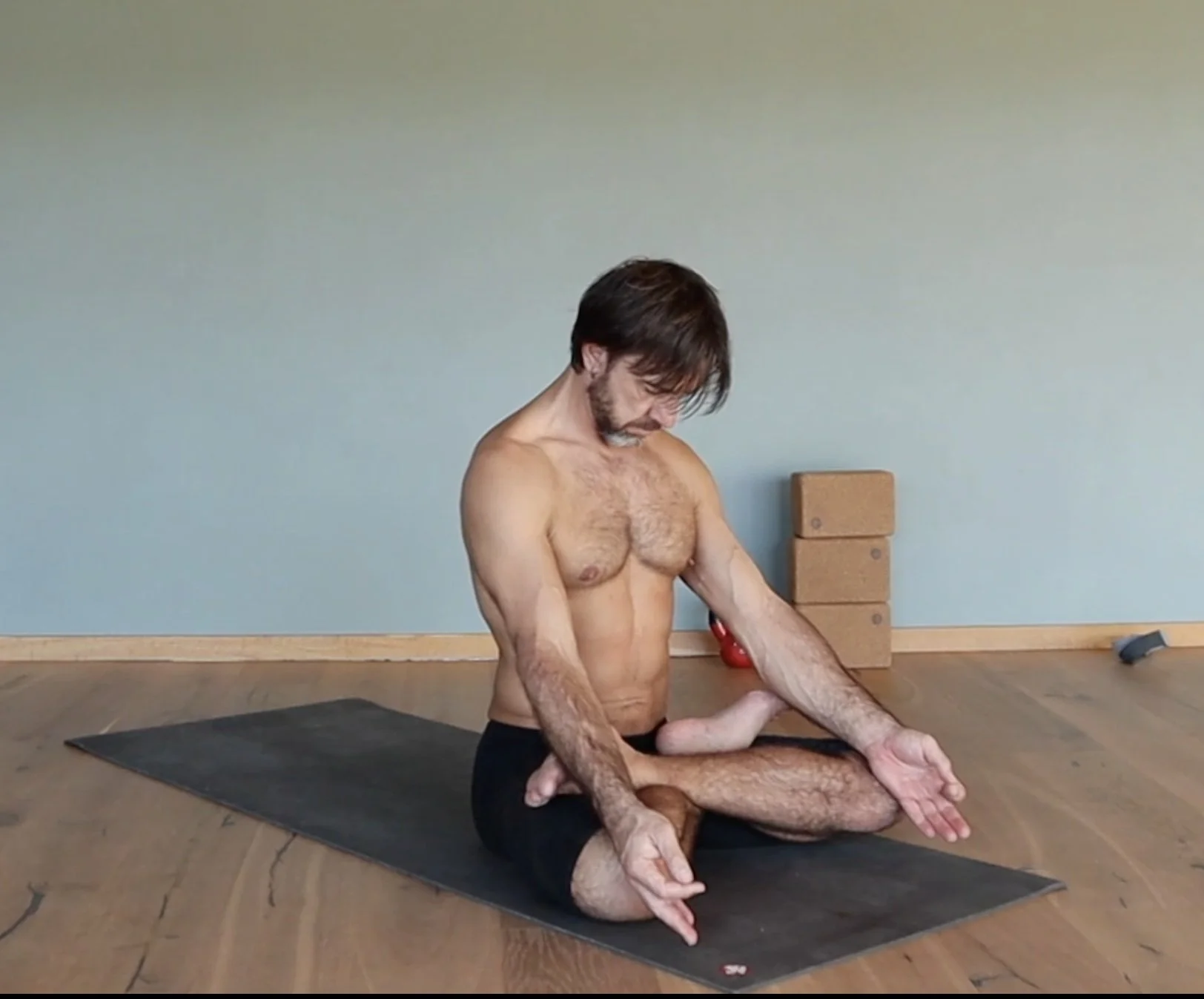
Padmasana
After practicing Uplithi do we then take rest. I’m often asked ‘why do we practice Uplithi after Padmasana?’
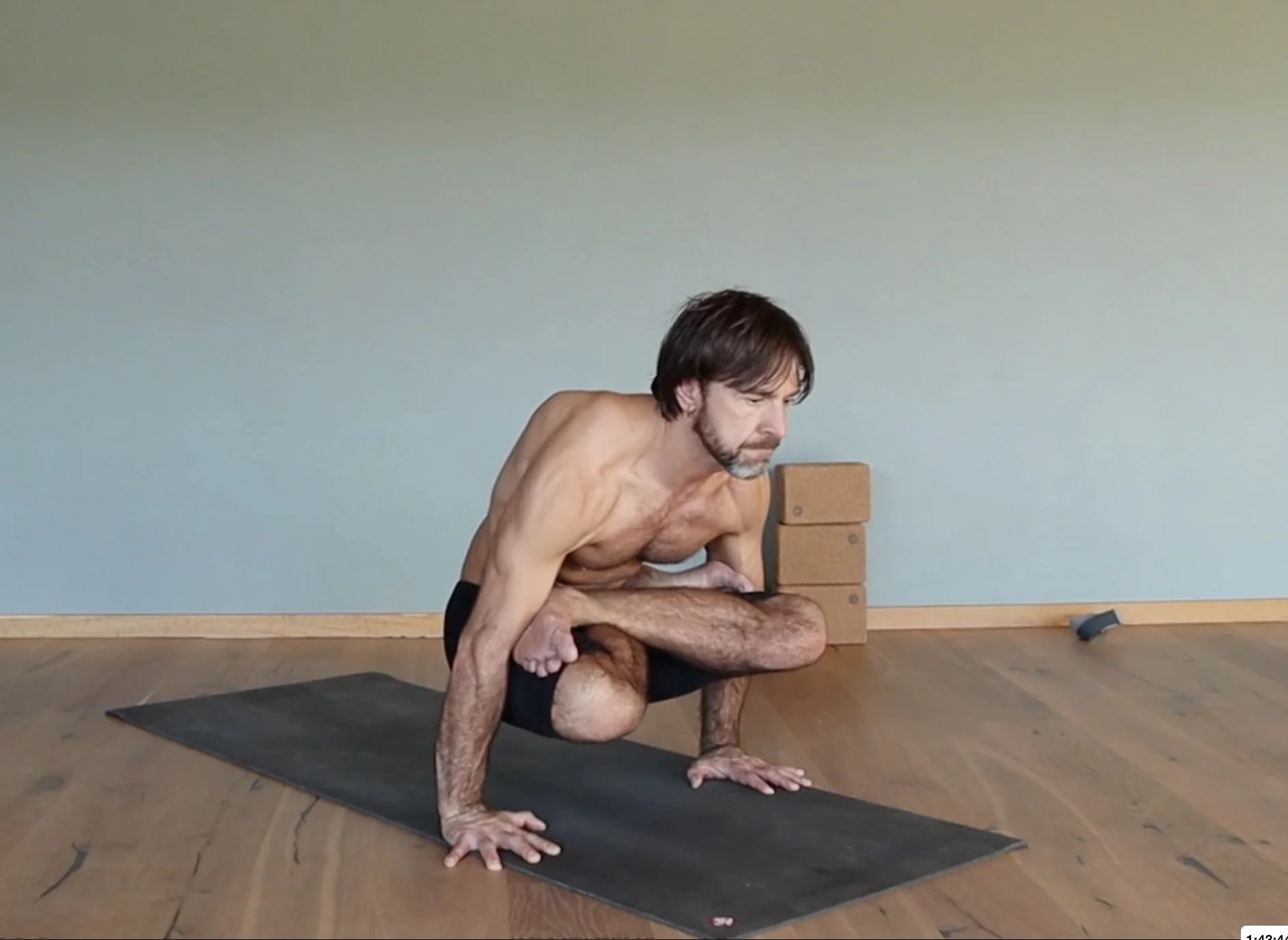
Uplithi
This is a very good question. We have just spent all this time winding our body and breath down and then we practice this strong contraction of our core and Bandha’s.
Bandha being the focus. I believe the reason for this is to strongly stimulate Mula Bandha and our central energy channel ( Sushumna ) just before to lie down and observe what comes up in this state of nothingness. I have personally had many deep and interesting yogic experiences in this state that I feel comes from the combination of these processes which is one of the reasons I focus so much on Bandha in my personal practice and teaching style.
‘It’s good to die a little every day’
This was a term that I practice in Savasana. How many of us truly let go at all in our day to day lives or even in our yoga practices? To be dead is to be fully relaxed. A dead body does nothing. No action. It is dead. No doing. No thinking. No planning. If were to truly die in this moment the world would carry on, and it’s ok.
Yoga prepares us for death
I believe the following podcast episode discusses this in more detail. It was recorded some time ago now:
To practice Savasana to me is to pretend to die. No worrying. Nothing. Sunyata. Sunyata being the concept of emptiness in Buddhism, which is one of my main meditations.
A lot happens in empty space. Nothingness.
Sunyata
The combination of a balanced yoga practice that focuses on the philosophy of Bandha and balancing the energies of the body such as the Ashtanga Yoga system and Element Series, together with the breath in a focused and intentional way has a very profound effect on our being. This combined with the the concept of emptiness that we can practice in Savasana takes a practitioner into the deeper aspects of yoga, beyond the physical and more into the subtle body. What you can’t see or touch but what you can sense.
More on the subtle body in my podcast episode you can find here:
The Yogi Within Podcast
Stimulating our body through the central channel from our pelvic floor up has been practiced for thousands of years potentially across many different traditions as a way to gain deeper insights into ourselves and the true nature of reality. The Ashtanga Yoga method and it’s finishing sequence is one method.
In Tibetan Buddhism for example, practitioners of Tsalung Trulkhor would jump into the air crossed legged from a standing position with the breath held in a vase in the lower abdomen and land on their bum in Padmasana, called yogic drops or beb, as a way to stimulate thier energy channels to direct it into their central channel or Sushumna as a way to induce and expand states of awareness. There are many examples across other traditions.
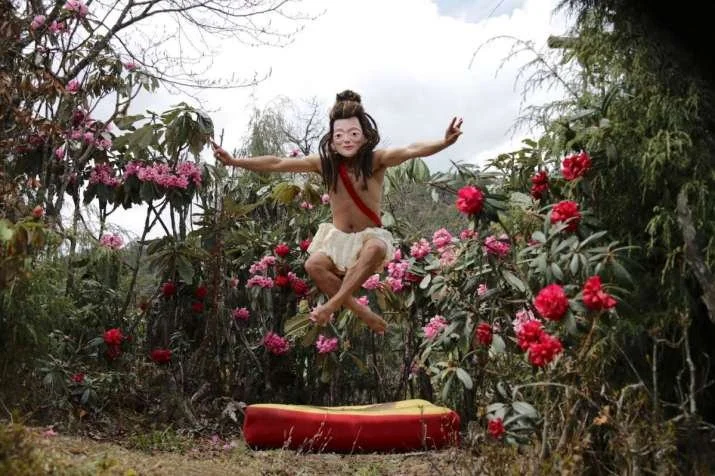
Beb, Yogic Drops
After these stimulation exercises we perform in yoga we then have the opportunity to practice nothingness. To free our minds of the day to day and observe what is there and what comes up from our subtle body from emptiness. This inbetween state of consciousness and sleep where a lot happens with the power of our subconscious and imagination is a practice in itself.
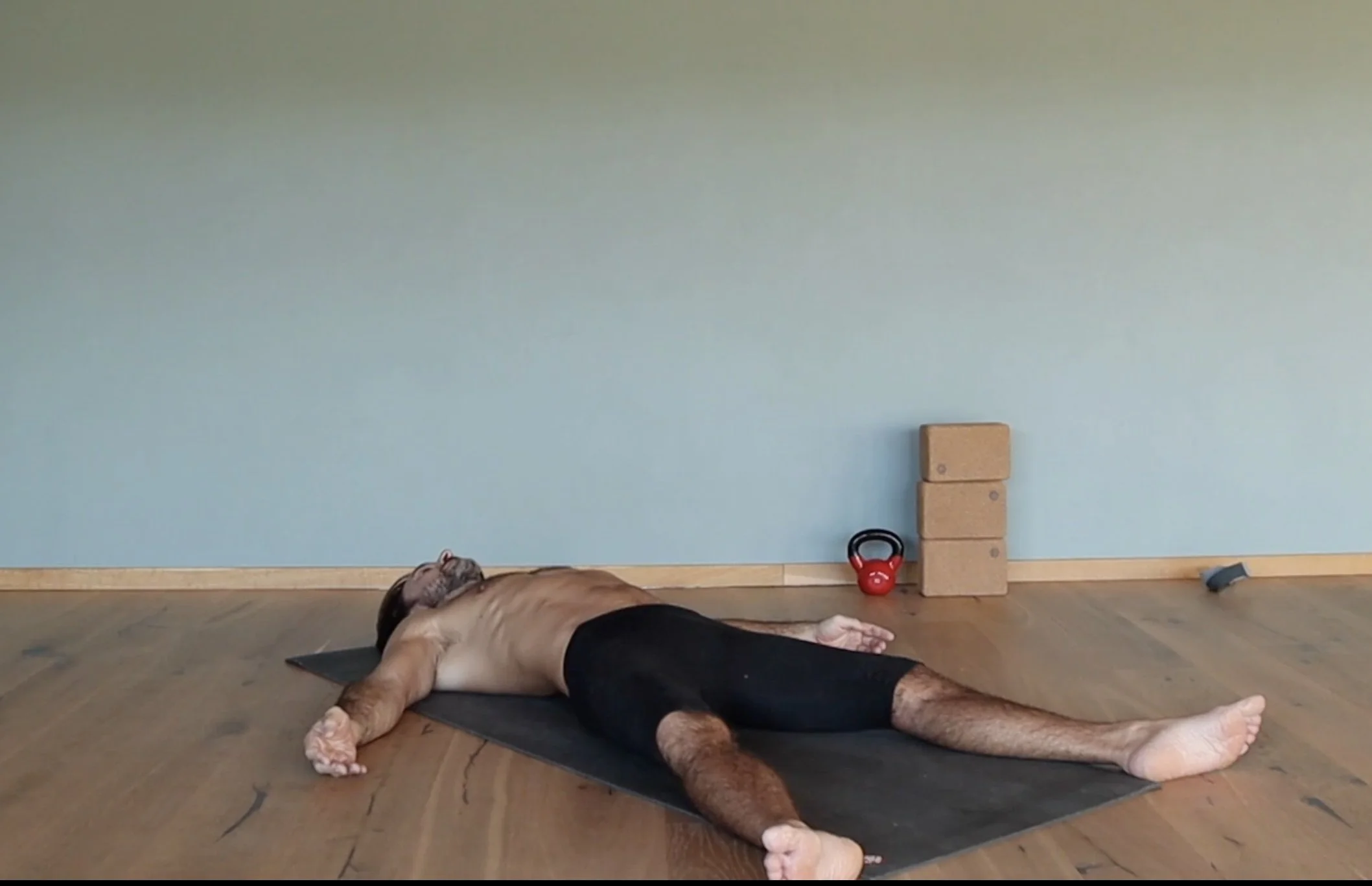
Savasana
Asana, Pranayama, Bandha, Sunyata, Prana. These are aspects of our yoga practice we can pay attention to in a myriad of ways and explore in different states of awareness and consciousness. Savasana is a certain type of consciousness. There are some yogi’s who practice dream yoga solely. A different state of practice for example.
Yoga is not just stretching
If you would like to learn more about Bandha and Pranayama check out my Online Studio for practice material.