Back bending in Primary Series
I would say for most students who are practicing Ashtanga Yoga it is difficult to come into Urdhva Dhanurasana at the end of Primary Series. In this post I’ll explain why, and what you can do about it to make it more accessible for your body.
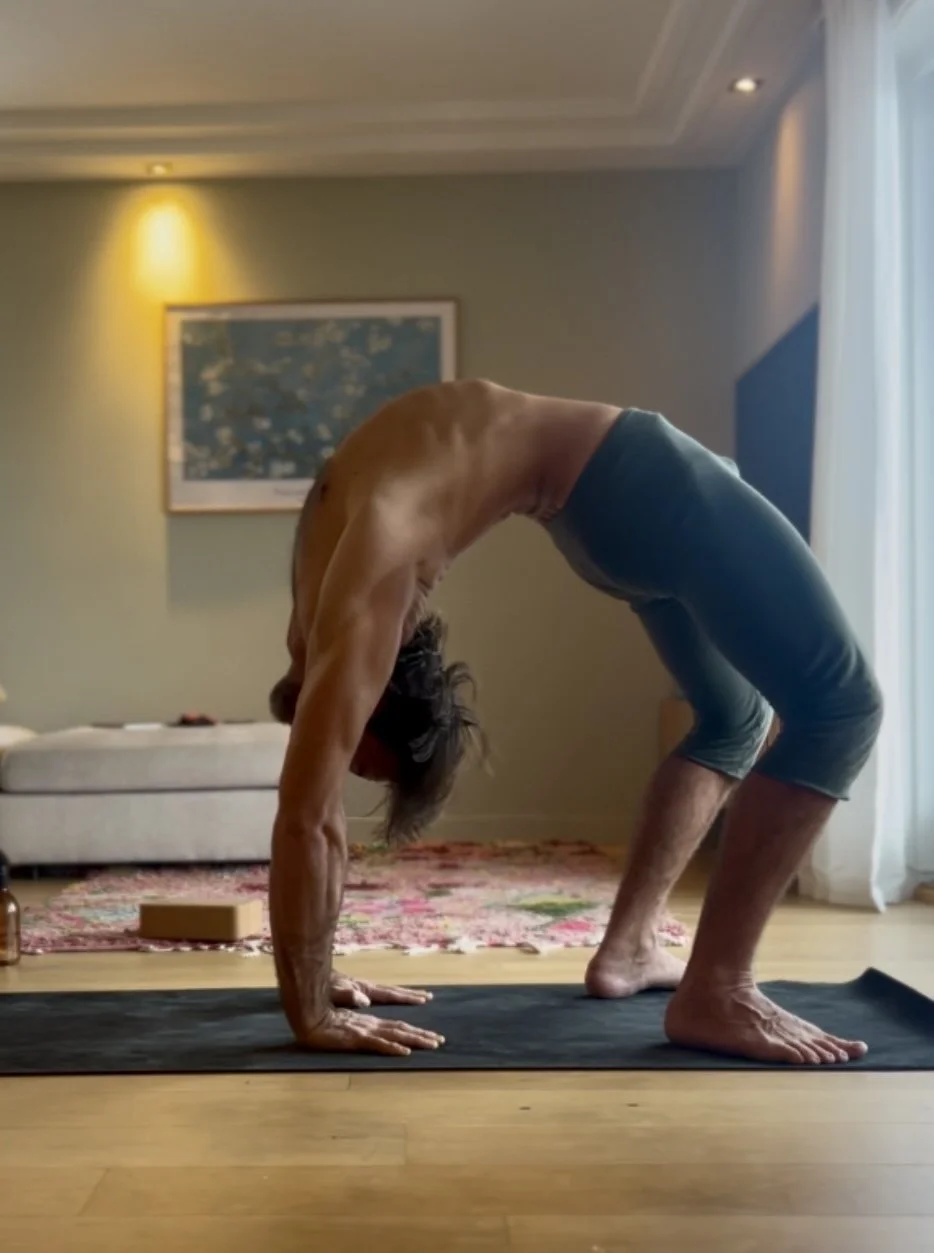
Urdhva Dhanurasana / Bridge Pose
Primary Series in Ashtanga Yoga is an excellent system of postural yoga designed to open the body in a progressive way that calms the nervous system and prepares the body for deeper movements for those that are inclined to do so.
Primary Series is also pretty much all forward folds during the whole sequence, apart from the transitions into updog during the vinyasa’s between each side and postures.
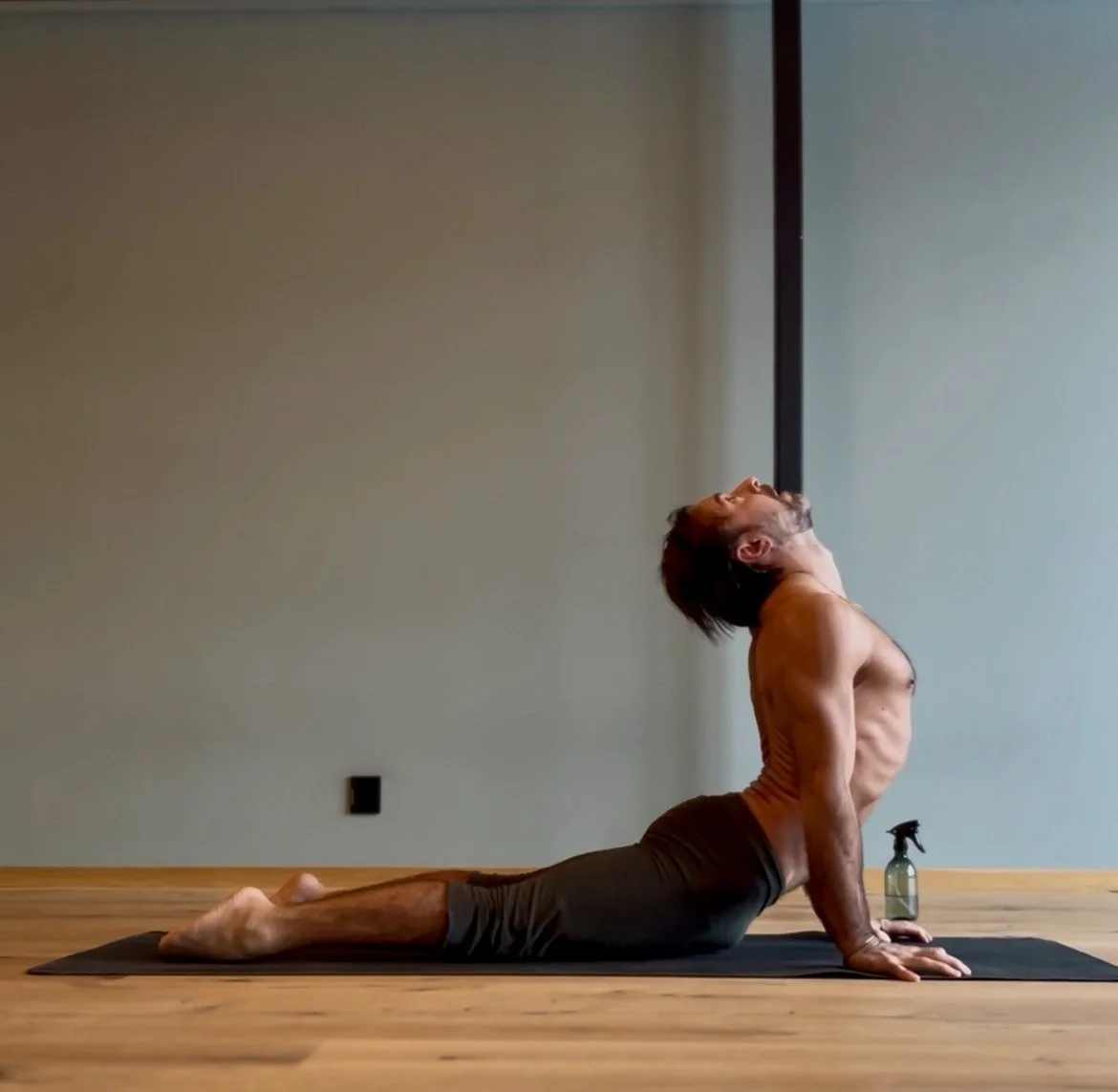
Urdhva Mukha Svanasana / Updog
Because of this, it can make coming into Urdhva Dhanurasna at the end of the series challenging to say the least for most people, unless you are ‘natural’ back bender and extension of the hip and spine comes more easily to you. This is not the case for most people, and here is a list of the potential reasons why:
You have tight hip flexors, and more so from sitting most of the day in your job.
You have tight shoulders, especially in external rotation and bringing your arms over your head.
You have had some kind of back injury in the past, and through imbalances in the body extending the hip is difficult.
You have some form of Scoliosis and it doesn’t feel ‘natural’ at the end of the series.
Your body doesn’t feel prepared for back bending at the end of the series.
In general, most students doen’t feel thier body is prepared enough to come straight into Bridge Pose at the end of the series and for good reasons. It’s most likely not.
Most students in my opinion need extra postures, openers and more help to open thier hip flexors, shoulders, and to strengthen thier posterior chain of muscles to bridge up safely without crunching thier low back and compressing the lumbar area in general.
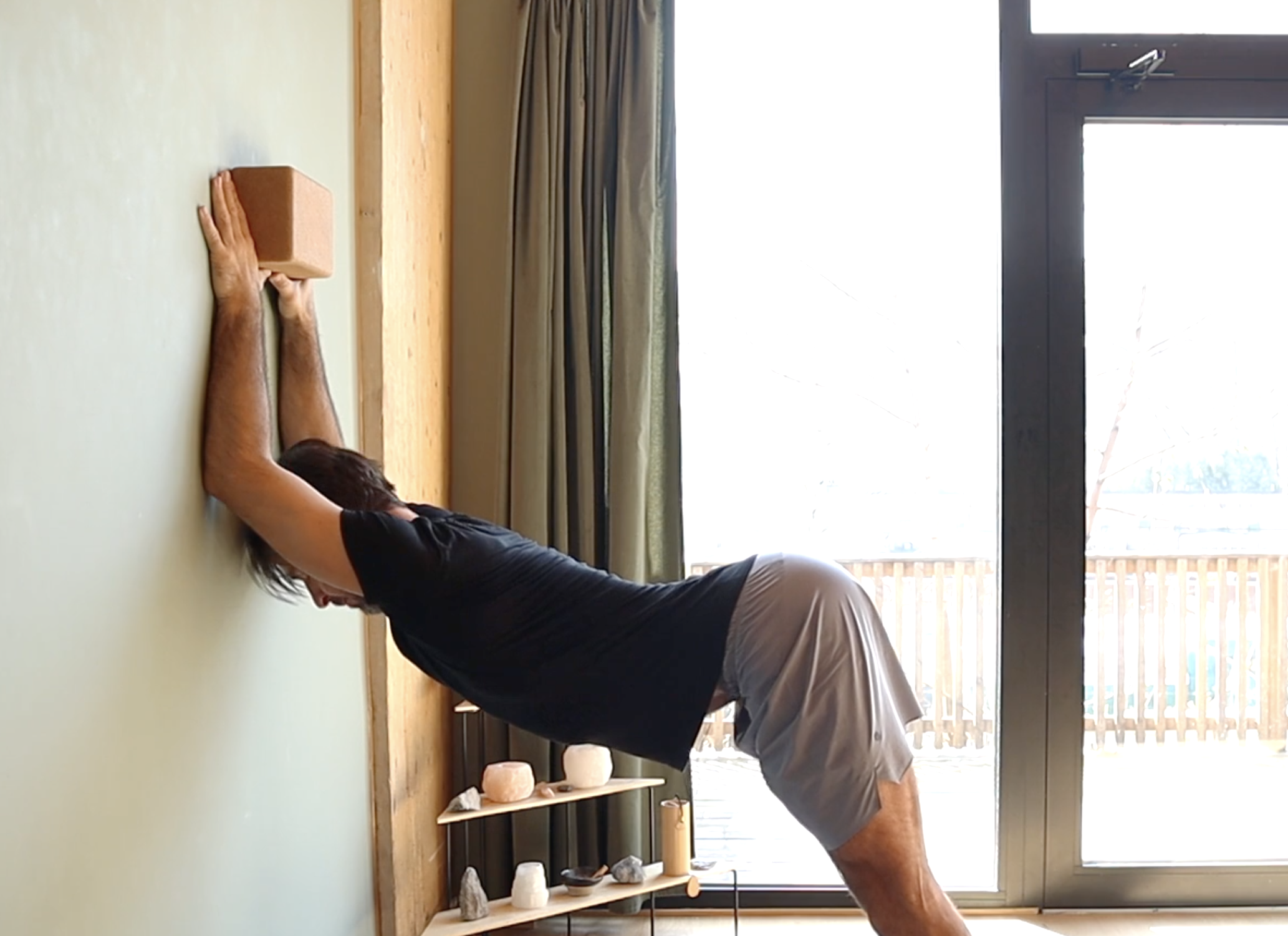
Using alternative methods to prepare the body for back bending is essential for more students.
Also, if you are working on the strength side of your vinyasas in Primary Series like the lift up and jump back, this will also not prepare you for back bending. That’s not to say you shouldn’t be working on the jumping element. In my opinion this is a very important part of Ashtanga Yoga, but because of the nature of the forward folding in the series, and the amount of vinyasas there are, the body can feel ‘stuck’ in a Apanic ( downward energy like a forward fold ) movement pattern, which is hard to shift into an Pranic ( upward energy like bridge pose ) movement pattern.
Unfortunately there is a large amount of dogmatism in teaching the Ashtanga Yoga system, and a lot of students are somewhat ‘forced’ into this without any extra help, and even dropping back from standing and coming up without any other back bends to prepare the body, which for me as a teacher I find harmful and injurious for most students, which is why I don’t teach the method this way.
Check out my Podcast episode here for a breakdown of this:
There is an alternative
If you are this situation I would thoroughly recommend finding a school and teacher that will help you through the system in a more holistic way and to be able to see you individually. There are schools and teachers out there like myself who prescribe the method in this way if you look hard enough.
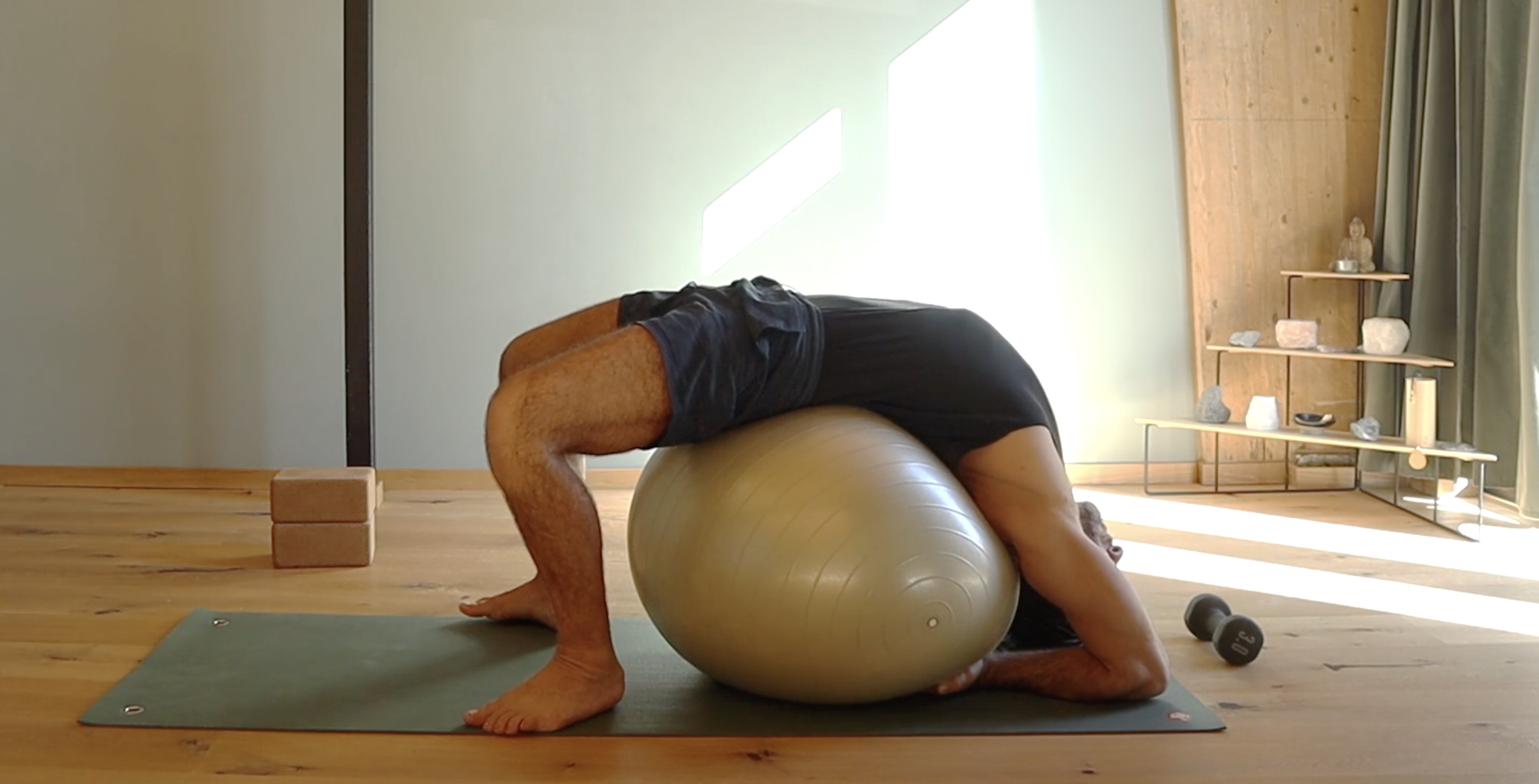
The Asana Guide: Teaching you alternative ways to open your back in a safe and holistic way.
We’re looking for Pragmatism over Dogmatism in Yoga. More on this here:
If you are a home practitioner, or are just looking for help preparing your body for back bending, check out The Online Studio here on my site. I have designed the guide to take students correctly through Primary Series and there is an extensive list of preparatory postures / openers and rehab and prehab exercises to help prepare your body for Ashtanga Yoga and Urdhva Dhanurasana at the end of the sequence.
Included in The Online Studio is my alternative to Primary Series called The Element Series which is more balanced in nature and excellent for students as an alternative, or who don’t have access to a teacher / Mysore room.
To have full access to all of my online tuition, breakdowns, courses and classes head to my Online Studio to become a member.
My Online Studio